
Last updated November 14, 2026
 Wrought iron
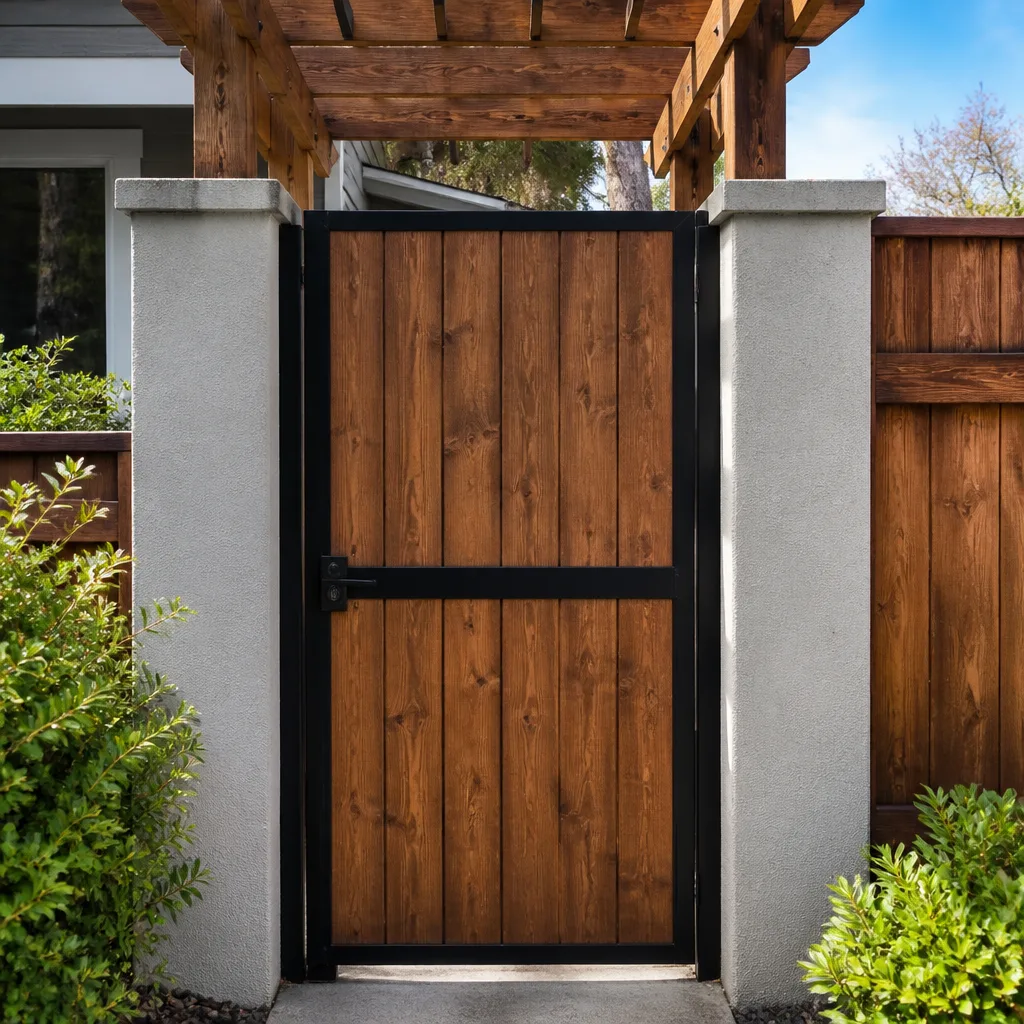 Wood & steel frame
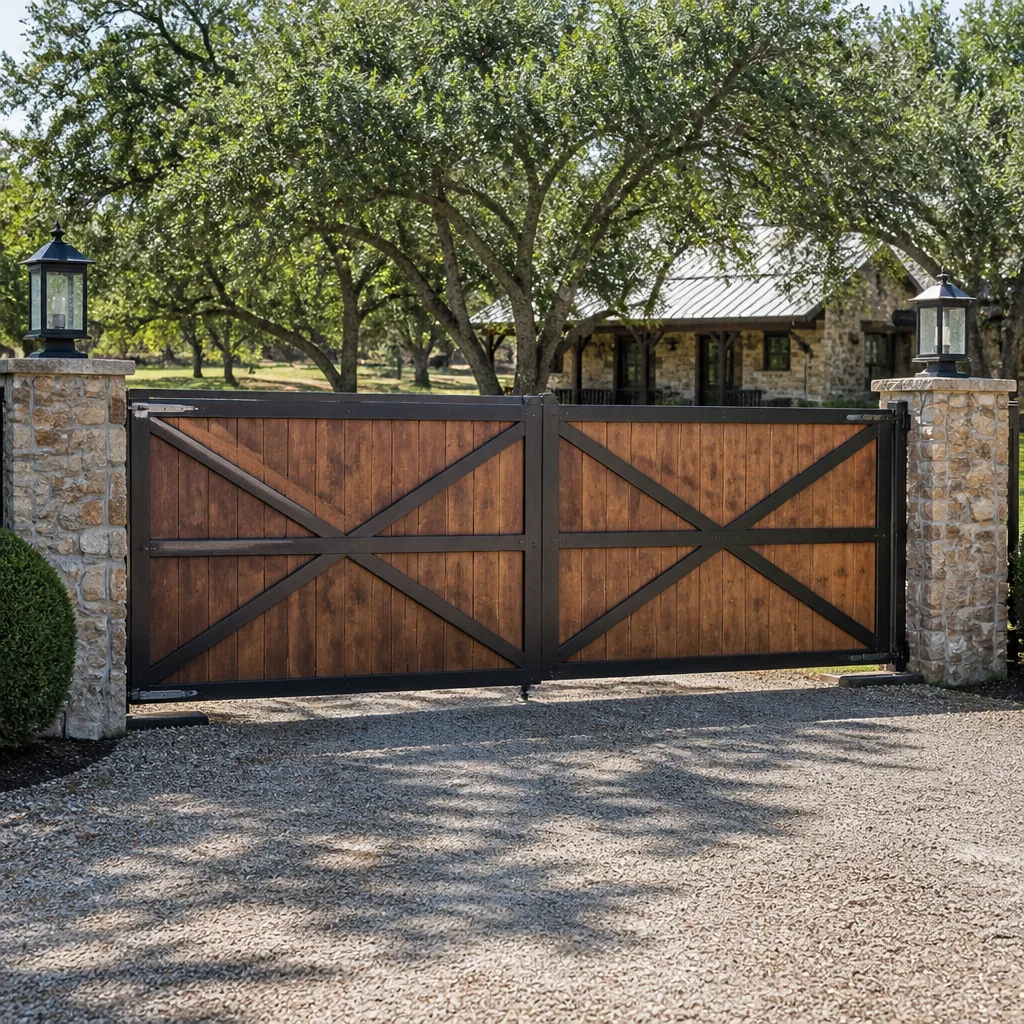 Farm & ranch
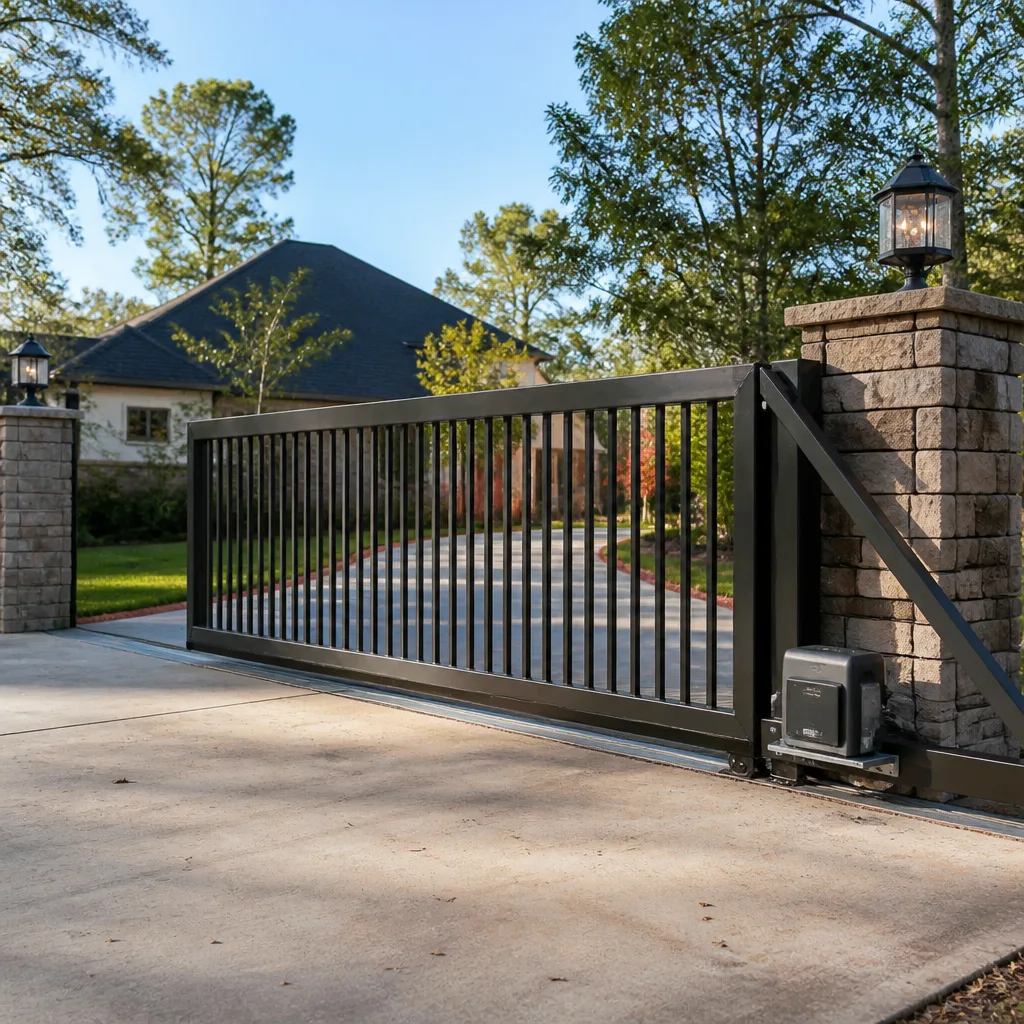 Sliding driveway gates
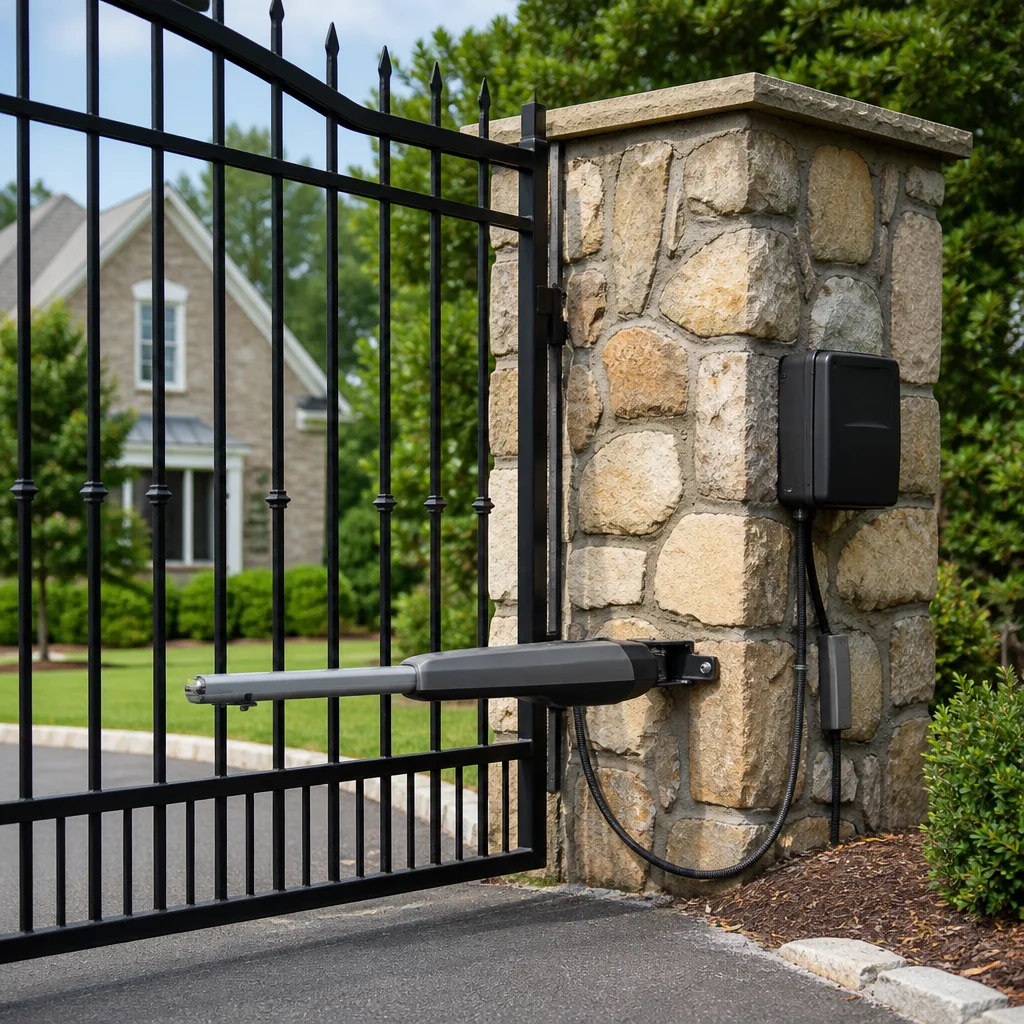 LiftMaster operators
Free on-site gate assessment - hinges, posts, and your LiftMaster or Nice gate operator checked before anything is quoted
The assessment is free and the quote is the invoice.
Get your free estimateGate Repair Warning Signs: A Visalia Homeowner’s Reference Guide
Most gate failures don’t happen without warning. They happen after months of warnings nobody recognized. A gate that takes three seconds longer to open than it did six months ago isn’t “getting old” – it’s telling you the operator is working against an obstruction or the motor is approaching thermal failure. By the time it stops completely, the repair usually costs more than early intervention would have. The signs that matter most in Visalia aren’t dramatic. They’re sounds you tune out, timing shifts you write off as normal, and visual tells you walk past every morning. This guide teaches pattern recognition, so you can catch a problem while it’s still a scheduled repair instead of a lockout.
Quick Answer
A failing gate announces itself through four channels: sound, cycle timing, visible wear, and control-system behavior. Grinding points to mechanical wear, clicking to electrical or relay trouble, and humming without movement to a seized motor or jammed mechanism. A gate that hesitates, slows, or stops partway through travel is usually fighting an obstruction, a weakening motor, or a failing board. Any gate that has come off its track, drags on the ground, or stops responding to its safety sensors needs same-day attention, not a scheduled visit.
Styles & brands we work with
- Wrought iron
- Wood & steel frame
- Farm & ranch
- Sliding driveway gates
- LiftMaster operators
Table of Contents
- Why Gate Warning Signs Are Easy to Miss
- What Your Gate’s Sounds Are Telling You
- Timing Changes: The Earliest Warning Sign
- Visual Indicators That Matter in Visalia
- Control System Warning Signs
- Planned Repair vs. Same-Day Attention
- A Monthly Inspection Routine
- Why Brand Knowledge Changes the Diagnosis
Why Gate Warning Signs Are Easy to Miss
A gate is the one piece of equipment on your property that runs every single day, often several times a day, and never asks for anything until it fails. You drive through it in the morning, pull in at night, and the cycles blur together. That repetition is exactly why warning signs slip past. The brain filters out routine sounds and routine motion, which means the earliest signals of wear get filed as background noise.
The second reason is harder to admit: most homeowners don’t know what normal looks like. They know the gate opens and closes, but they can’t tell you whether it took nine seconds or twelve last year, whether the motor always made that low hum before it moved, or whether the chain has always had that slight slack. Without a baseline, every change looks like it might be nothing.
There’s also a natural human bias toward the wait-and-see approach. A gate that hesitates once usually works fine the next ten times, which trains you to dismiss the hesitation entirely. But intermittent behavior is the signature of several serious failure modes, not a sign that things are okay. A sticking sensor, a fatigued relay, or a motor approaching thermal shutdown tends to show itself intermittently before it shows itself permanently.
In our experience working on gates across Visalia, the homeowners who catch problems early are the ones who pay attention to pattern changes, not the ones who wait for something to break. Our technicians have up to 14 years of experience, and almost every one of them will tell you the same thing: the cheap repairs are the ones caught early. The expensive ones are the ones caught after the gate stopped moving.
This guide gives you the baseline. Once you know what your gate’s sound, timing, appearance, and control behavior should look like, every deviation becomes a signal you can act on. That’s the whole point of pattern recognition over a generic checklist: you’re not memorizing a list, you’re learning to notice change.
What Your Gate’s Sounds Are Telling You
The single fastest way to diagnose a gate problem is by ear. Each sound family points to a different mechanical or electrical component, and the distinctions are specific enough that an experienced technician can often narrow down the failure before they open a single panel. The trick is knowing what each sound means.
Grinding
Grinding is nearly always mechanical. Metal scraping on metal means something is misaligned, dry, or worn. Common sources include a dry chain, worn rollers or wheels on a sliding gate, a bent track section, or a hinge that’s lost its lubrication. On a swing gate, grinding can come from the operator arm itself if its internal gears are damaged.
Grinding rarely fixes itself. It’s the sound of surfaces removing material from each other, so every cycle does a little more damage. Left long enough, a dry chain can snap, a worn roller can seize and score the track, and a damaged operator gear can strip entirely. When you hear grinding, schedule a repair promptly.
Clicking
Clicking is usually electrical. A rhythmic click when you press the remote but nothing moves often points to a relay, contactor, or capacitor in the operator that’s trying to fire the motor without success. A single loud click at the moment of movement can be a limit switch engaging. On DoorKing and Linear systems, a persistent click before the gate starts can indicate a control board issue that’s not yet fully failed.
Clicking deserves attention because relays and contactors that click without action eventually stop clicking at all. Once that happens, the gate goes dead and the repair moves from a component swap to a full control board replacement. Catching it at the click stage is cheaper.
Humming Without Movement
Humming with no motion is the most urgent of the three. It usually means the motor is receiving power and trying to run, but the mechanism is jammed, the gate is locked, or the start capacitor has failed. Sometimes the gate has dropped slightly onto the track or the ground, or the operator arm is seized.
A humming motor that doesn’t move is generating heat without doing work. Left on, it can trip thermal protection, overheat the winding, or damage the motor permanently. If your gate hums and doesn’t move, stop pressing the button and have it looked at. If it hums and the gate is physically jammed, it needs same-day attention, especially if the gate is stuck open and your property is exposed.
Squealing, Squeaking, and Rattling
These point to lubrication and loose hardware. Squealing on a swing gate is often a dry hinge or a worn operator arm bushing. Rattling on a sliding gate is typically a loose chain guard, a loose bracket, or panels that have worked loose over the years. None of these are emergencies, but each one accelerates wear on the part next to it. A rattle in the chain area will eventually wear the track and the drive sprocket.
Muffled or scraping sounds that only appear in cold weather can indicate chain tension issues that show up when metal contracts. Since Visalia winters are mild, this is less common here than in colder regions, but it’s worth knowing.
Timing Changes: The Earliest Warning Sign
If sound is the fastest diagnostic, timing is the earliest. A gate’s cycle time is remarkably consistent when everything is healthy. Once you know how long a normal open or close takes, any change is data. This is the sign homeowners most often miss, because a few extra seconds per cycle feels trivial. It isn’t.
Gradually Slower Cycles
A gate that takes fifteen seconds to open today and took twelve seconds a year ago is fighting something. Common root causes include:
- Rollers or wheels wearing flat spots on a sliding gate, which increases friction on every cycle
- Chain tension dropping as the chain stretches, which forces the motor to work harder
- A motor losing torque as windings age or a capacitor weakens
- Hinges stiffening on a swing gate, adding resistance the operator has to overcome
- Debris in the track causing micro-obstruction that the motor pushes through slowly
- Slight post lean altering the geometry of the whole mechanism
What makes slower cycles so important is that the operator’s bypass or safety threshold is usually fixed. As friction increases and speed decreases, the operator works harder and closer to the point where it trips its own safety reversal or overload cutoff. One day, a small additional obstacle (a little more debris, a colder morning, a low battery in the remote) tips a marginal system over the edge.
Hesitation at Open or Close
A pause between pressing the remote and gate movement, or a pause mid-cycle, is a distinct warning sign. If the pause happens at the start, the operator is waiting on a signal that’s arriving late: a weak remote, a misaligned sensor, or a control board that’s slow to respond. If the pause happens at a specific point mid-travel, something along the path is triggering the obstruction detection for a fraction of a second.
Common mid-travel hesitation causes include a roller binding at a joint in the track, a slight dip in the ground pulling the gate into contact with a guide, or a photobeam sensor getting partially blocked by a small object. Each is minor on its own. Collectively, they’re the gate telling you that something in the travel path has changed.
Partial Travel Stops
A gate that opens halfway and reverses, or closes halfway and stops, is showing a hard fault. On swing gates this is often a limit switch issue, an encoder problem, or an obstruction detection event. On sliding gates it’s typically a track obstruction, a rack misalignment, or an operator that’s hitting its overload threshold. Partial travel stops should not be ignored: they usually indicate a safety system doing its job, which means the gate is flagging a real obstruction that your eye can’t see.
Visual Indicators That Matter in Visalia
Some of the most useful warnings are visible. They just aren’t obvious until you know what to look for, and this is where Visalia’s local conditions shape what you’ll see on your gate. The valley’s dry, hot summers and mild wet winters work on metal and soil in specific ways, and the signs reflect that.
Rust Bleed Patterns on Wrought Iron and Steel
Rust is expected on any outdoor metal gate, but where the rust shows matters. Early surface rust is cosmetic. Rust bleeding out of weld joints, hinge eyes, post anchors, or bolt heads is different. It means water is getting inside a joint that shouldn’t be wet, and the rust is being pushed out from the inside.
Common high-risk locations include the base of hinge posts, the anchor bolts holding the posts to concrete, the seams where decorative scrollwork is welded to the vertical pickets, and the mounting points where the operator arm attaches to the gate frame. A small rust bleed at a weld is a future structural failure waiting to happen. In Visalia, a gate that shows rust bleed at the weld points after a wet winter is telling you that the joints are holding water and the protective coating has failed.
Post Lean and Soil Movement
Visalia’s soil behaves differently across the city’s neighborhoods. Properties near the St. Johns River corridor and in older parts of central Visalia tend to have soil that moves more with seasonal moisture than the harder soils found on higher ground toward the east side. A gate post that has developed a lean is the visible sign of that movement.
The measurement is simple: hold a four-foot level against the post, face on and side on. A post that shows any visible gap between the level and the post face has moved. Even a small lean puts new stress on hinges and operators, and it changes the geometry the gate was designed around. Post lean that keeps getting worse over a season is a soil issue, not a hardware issue, and it needs to be corrected before the gate hardware is repaired. Otherwise the repair will fail too.
Water Staining Around Underground Conduit
Electric gates run wire through underground conduit from the house or a pedestal to the operator. The conduit’s job is to keep moisture away from that wiring. When you see water staining, moss growth, or a damp patch around where the conduit emerges from the ground, it usually means the conduit has a break, its seal at the operator box has failed, or its below-grade run has settled. Water following a failed conduit into the operator enclosure is a slow-motion circuit board killer, and it’s especially common after a wet winter in Visalia.
Other Visible Signs
- Scuff marks or metal shavings on the track: a roller or wheel is binding, or the gate has dropped onto the track slightly
- Fresh gap between panel and frame: fasteners have loosened, or the frame has moved
- Sun-faded or hardened safety decals: the decals themselves are cosmetic, but the fading tells you how much UV the operator and its seals have absorbed over the seasons
- Dirt rings at the base of posts: water is pooling at the post base, which accelerates corrosion at the anchor bolts
- Ground disturbance along the travel path: something is undermining the pavement or slab the gate runs on, which is a subsurface repair
Control System Warning Signs
Control systems are where diagnosis gets interesting, because the symptoms overlap. Erratic remote behavior can be a battery, an antenna, a stuck button, or a failing board, and telling them apart takes method, not a guess. This is also the layer of the gate where a misdiagnosis costs the most, because a generalist who doesn’t know your system may recommend replacing a board that only needed a battery and a re-pair.
Erratic Remote Response
A remote that works from the driveway but not from the house, or works sometimes and not others, is usually one of four things: a battery running down, a stuck button on the remote itself, an antenna that’s misaligned or damaged, or interference from another signal source nearby. The first test is simple: walk up close to the operator and press. If it works close and not far, suspect the antenna or the receiver. If it works intermittently at any distance, suspect the battery first and the remote button second.
The distinction matters because the fix for a battery is a battery, and the fix for a damaged control board is a board. A technician who skips the simple tests will sell you the wrong repair, which is exactly what our specialists work to avoid. When the same remote acts up on multiple gates or you notice the gate triggering on its own, that shifts suspicion to the board or the receiver.
False Triggers
A gate that opens or closes without any input is showing a false trigger. Common causes include a photobeam that’s misaligned or getting intermittent sun or reflection, a safety loop detector (underground sensor) that’s picking up adjacent vehicles or is out of tune, a stuck button on a wall station, or a faulty control board. On commercial and multi-user systems running DoorKing entry units, false triggers are sometimes caused by a keypad or access control panel that’s failing.
False triggers are more than a nuisance. A gate that opens on its own is a security problem, and a gate that closes on its own is a safety hazard if a person or vehicle is in the path. If your gate moves without a command, that’s a same-day call, not a scheduled visit.
Keypad Failures
A keypad that rejects the correct code is usually a worn key or a failing keypad board. A keypad that works in dry weather and fails after rain points to moisture in the keypad housing. On Viking and Linear systems, keypad issues sometimes trace back to the low-voltage wire running from the keypad to the operator, especially if the wire was run without proper conduit or has been disturbed by landscaping. The diagnostic order matters: test the code, test the power at the keypad, test the wire, then test the operator.
Other Control Warnings
- Safety sensor (photobeam) trips: a gate that reverses when nothing is in the path is protecting against a sensor misalignment or failure. Do not tape over or bypass a safety sensor to “fix” it
- Intercom or call-box issues: on commercial gates, a call box that drops audio or refuses to connect is often a wiring or board issue, not a phone line
- Frequent remote re-pairing: if you keep having to re-pair your remotes, the operator’s memory or receiver is failing
- Gate “walking” during an open or close: a gate that drifts or reverses slightly before continuing often has an encoder or limit issue
- Board LED behavior: if you have access to the operator’s indicator LEDs, note which lights are on when the gate misbehaves. That’s the most useful information a technician can get
Planned Repair vs. Same-Day Attention
Not every warning sign needs the same response. Some give you weeks or months of margin, and scheduling a repair on your timeline is better than an emergency call. Others need attention that day. Getting the classification right saves money and, in some cases, avoids an injury. Here’s how we sort them in Visalia:
Scheduled Repair (Weeks or Months of Margin)
- Slowly increasing cycle time with no other symptoms
- Squealing hinges or dry chain (lubrication and adjustment)
- Surface rust on paint, without bleed at welds
- A single stuck button on a remote (swap the remote and schedule the rest)
- Cosmetic fence or panel wear that doesn’t affect travel
Same-Day Attention (Hours, Not Days)
- Gate hums but doesn’t move
- Gate stuck open, leaving a property or business exposed
- Gate opens or closes without a command
- Safety sensors tripping with nothing in the path (do not bypass)
- Gate has come off its track or has dropped onto the ground
- Grinding that has developed suddenly and is getting louder
- Any suspected electrical fault, exposed wire, or damaged conduit
The two categories aren’t just about urgency. A safety issue needs a same-day visit because the gate is now a hazard to family, employees, or vehicles. A mechanical problem that’s degrading needs a same-day visit because the failure mode is unpredictable. A slow, mostly cosmetic decline can wait until you have a clear window. Either way, the principle is: don’t let a small repair become a big one because you waited.
One note on urgency. Fast dispatch from 7am to 7pm, Sunday through Friday, gets a technician to your gate on the same day in most cases. When you call, be ready to describe what the gate is doing, when it last worked properly, and what brand or model of operator you have if you know it. That information is what gets a first-visit repair instead of a diagnostic visit followed by a parts order.
A Monthly Inspection Routine
The best way to catch warning signs early is to build a five-minute monthly walk-through into your routine. You don’t need tools. You need your eyes, your ears, and a habit. Here’s the sequence we recommend to Visalia homeowners and property managers:
- Stand at the gate and watch one full open and one full close. Count the seconds. Note any hesitation, any stutter, any sound that’s new. Compare to last month.
- Listen. Stand back a few feet. Do you hear grinding, clicking, or humming at any point in the cycle? Note which part of the travel it happens on.
- Check the travel path. Look at the track on a sliding gate or the arc on a swing gate. See any debris, metal shavings, scuffs, or fresh gouges?
- Look at the post bases and anchor bolts. Any rust bleed, any sign that water is pooling around the base, any new lean to the posts?
- Test the safety sensors. Block the photobeam (or step in front of it) during a close and confirm the gate reverses or stops. If it doesn’t respond, that’s a same-day call.
- Test your remotes and keypad. Do they respond from your normal distance? Do they take more than one press? Do they ever trigger the gate without your input?
- Look at the conduit. Any damp patch, moss, or staining where conduit emerges from the ground near the operator?
- Write one line in your notes app. Date, cycle time, anything new. That log is what lets you say “it’s been slowing down for three months” instead of “it just started.”
That’s five minutes a month. In our experience, a homeowner who does this catches the vast majority of problems at the stage when repair is quick and cost is low. The pattern doesn’t have to be dramatic to be important.
Why Brand Knowledge Changes the Diagnosis
Gate operators are not interchangeable. Each brand has its own control logic, its own fault indicators, its own quirks, and its own common failure points. A technician who works on gates every day and knows your system’s brand recognizes the failure mode quickly. A technician who mostly does general handyman work or services a single brand will be guessing on anything else.
Our technicians are familiar with the equipment from LiftMaster, FAAC, BFT, Linear, Viking, Ghost Controls, DoorKing, Elite, and Mighty Mule. When we arrive at a Linear swing operator that hums and won’t move, or a DoorKing entry system with a false trigger, or a Ghost Controls solar gate that behaves differently in the summer heat than in winter, we’ve seen it before and we know where to look first. That saves diagnostic time and reduces the chance of an unnecessary board replacement.
That brand familiarity is why we recommend tracking your operator’s brand and model. If you have the manual, keep it in a folder near the entry. If you don’t, take a photo of the operator housing and the control board label, and save it to your phone. When you call for service, that photo replaces a half hour of onsite discovery.
We also work on gates that were installed by someone else, serviced by someone else, or repaired by someone else. We’re not tied to a single brand, and we don’t push replacements because we make more on a new install than a repair. The right repair for your gate is the one that fixes the actual problem, and that’s the work we do every day.
Common Mistakes to Avoid
- Ignore a slow cycle until the gate stops. A cycle time that’s climbed from twelve seconds to fifteen is a warning, not a phase. Waiting for the full stop usually doubles the repair cost.
- Bypass a safety sensor to “fix” a tripping gate. The sensor is doing its job. Taping over a photobeam or disconnecting a loop detector removes the one thing keeping a moving gate from hitting a child, a pet, or a car.
- Lubricate with whatever’s in the garage. WD-40 on a chain or a hinge removes what’s left of the original lubricant and collects dust. The wrong lubricant accelerates wear on the very parts you were trying to protect.
- Assume the remote is the problem when the gate doesn’t respond. In our experience, most “remote problems” in Visalia turn out to be a battery, an antenna, or the receiver, not the remote itself. Test close-up before you buy new remotes.
- Let a leaning post go until the gate drags. Post lean changes the geometry the entire gate was built around. A post that’s fixed early is a hinge and post repair. A post that’s fixed after the gate drags is hinges, operator stress, and possibly track damage.
- Choose a generalist because they’re cheaper. On anything with a control board or an underground safety loop, a misdiagnosed repair is more expensive than a correct one. Paying twice is the most common cost mistake on automated gates.
- Wait until the gate stops working to have it inspected. Monthly observation catches nearly everything. An annual technician inspection catches what you can’t see, like board-level early failures and loop detector drift.
See the difference
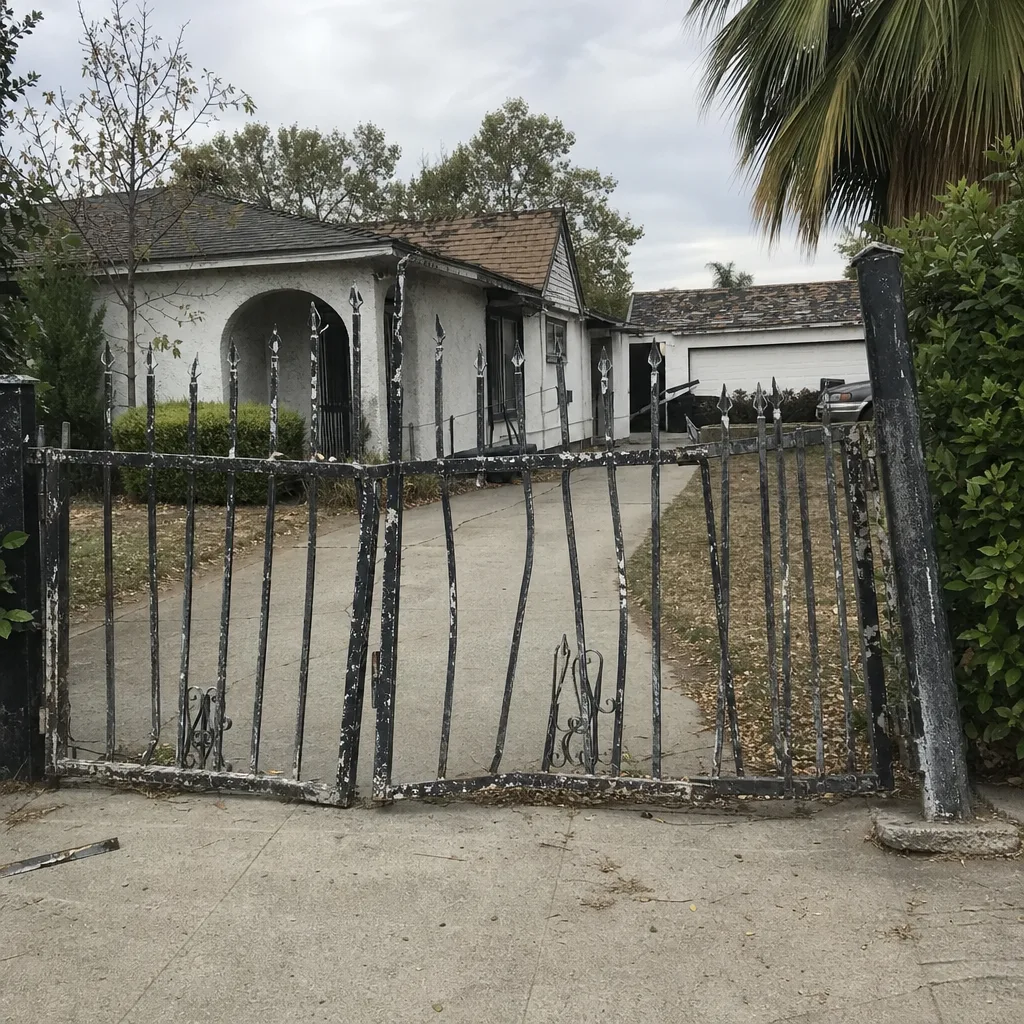 Before
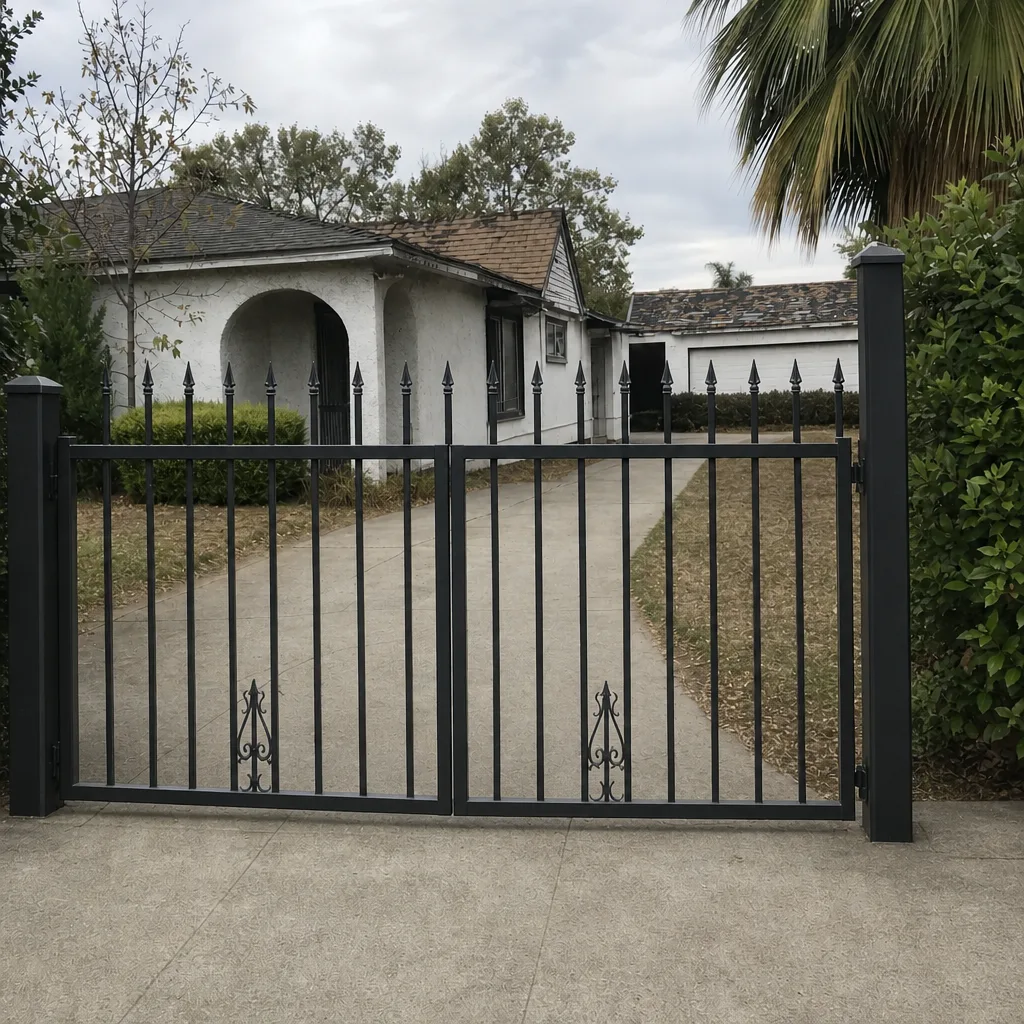 After
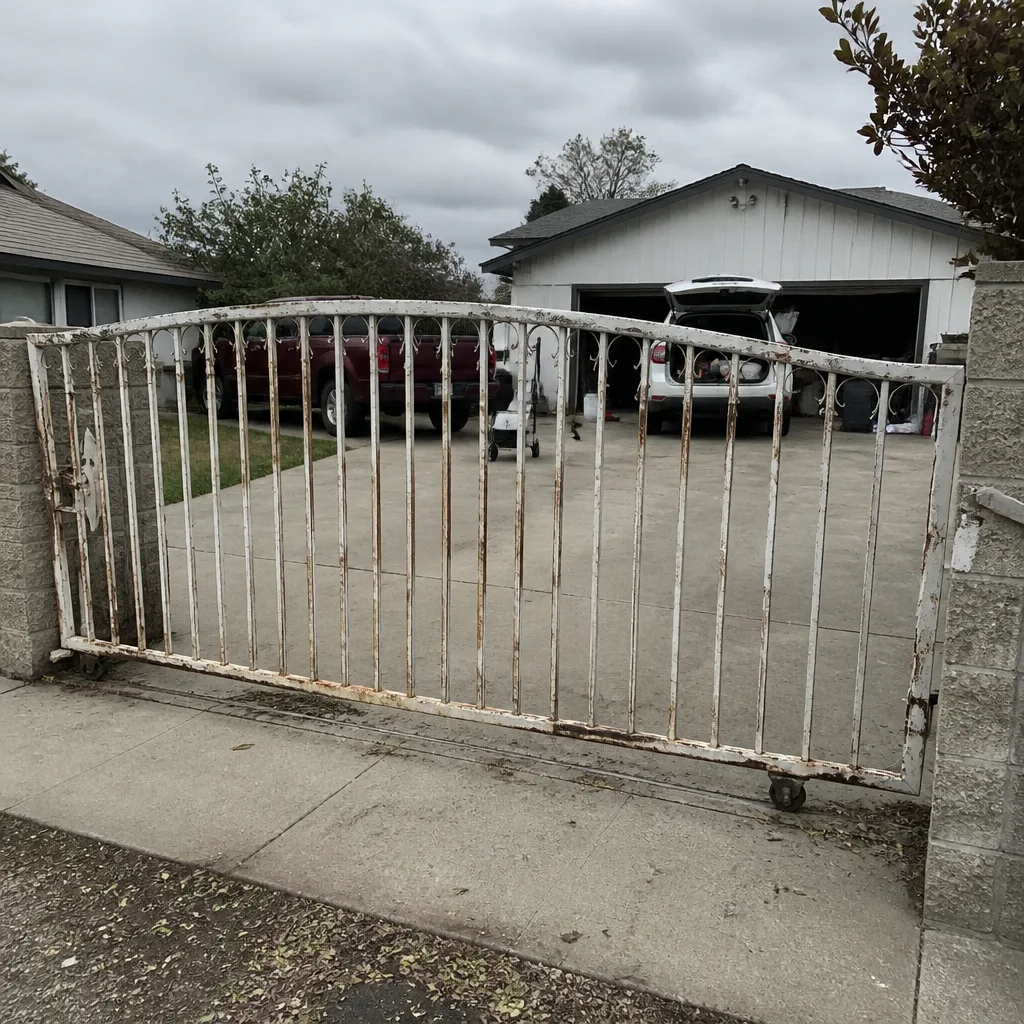 Before
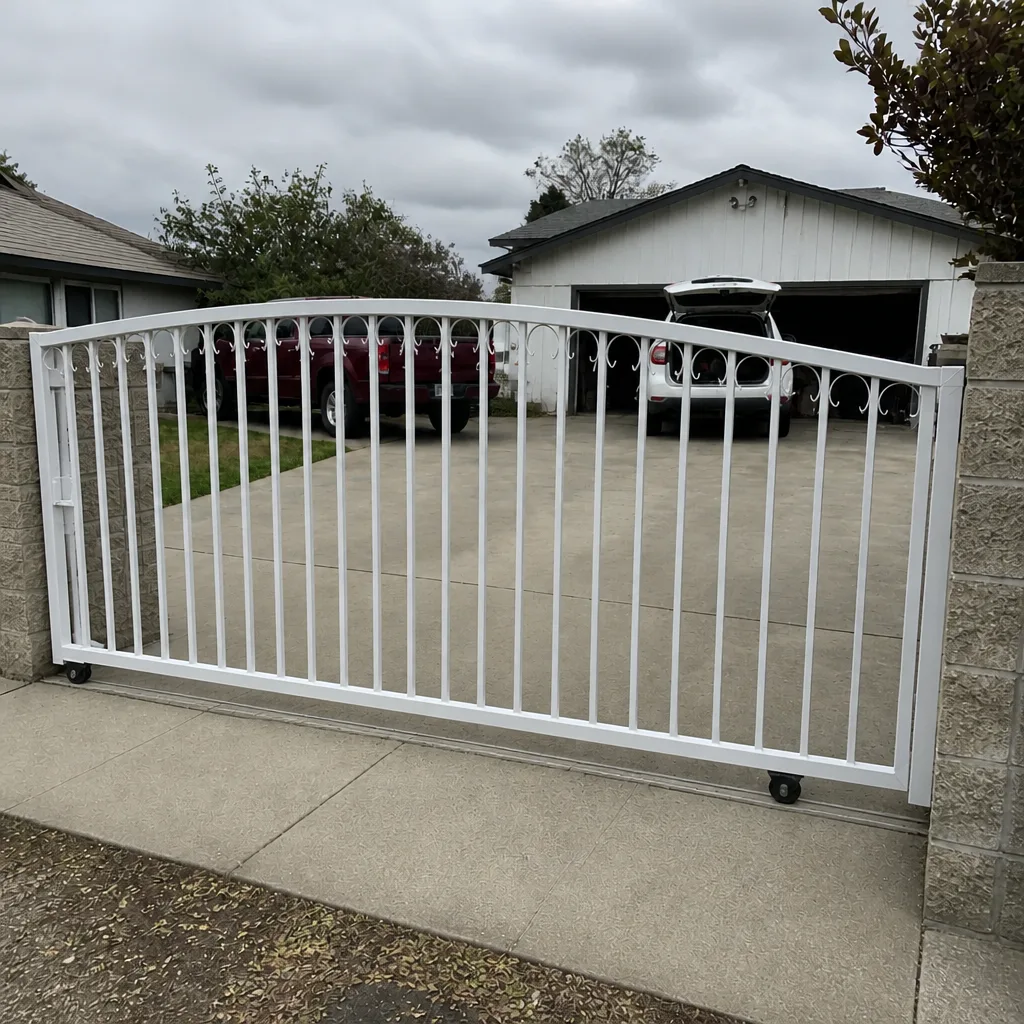 After
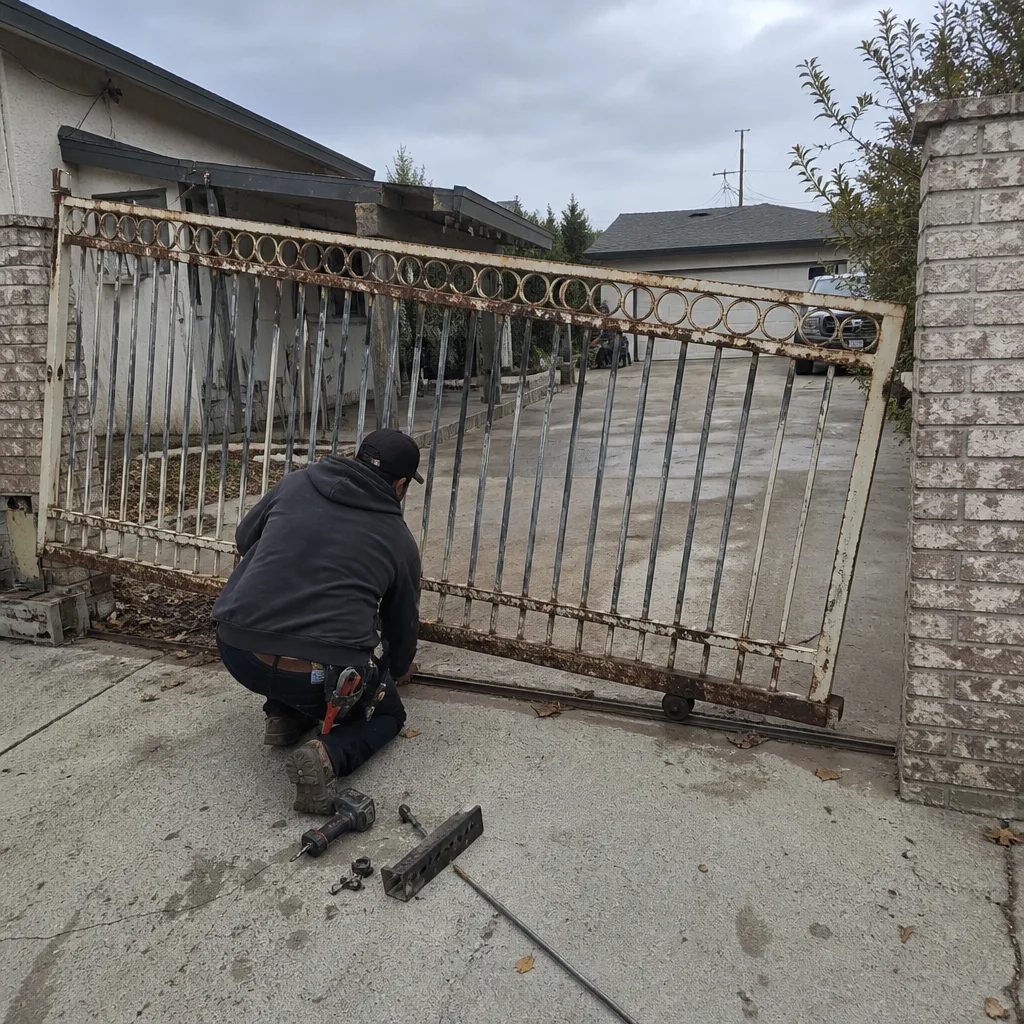 Before
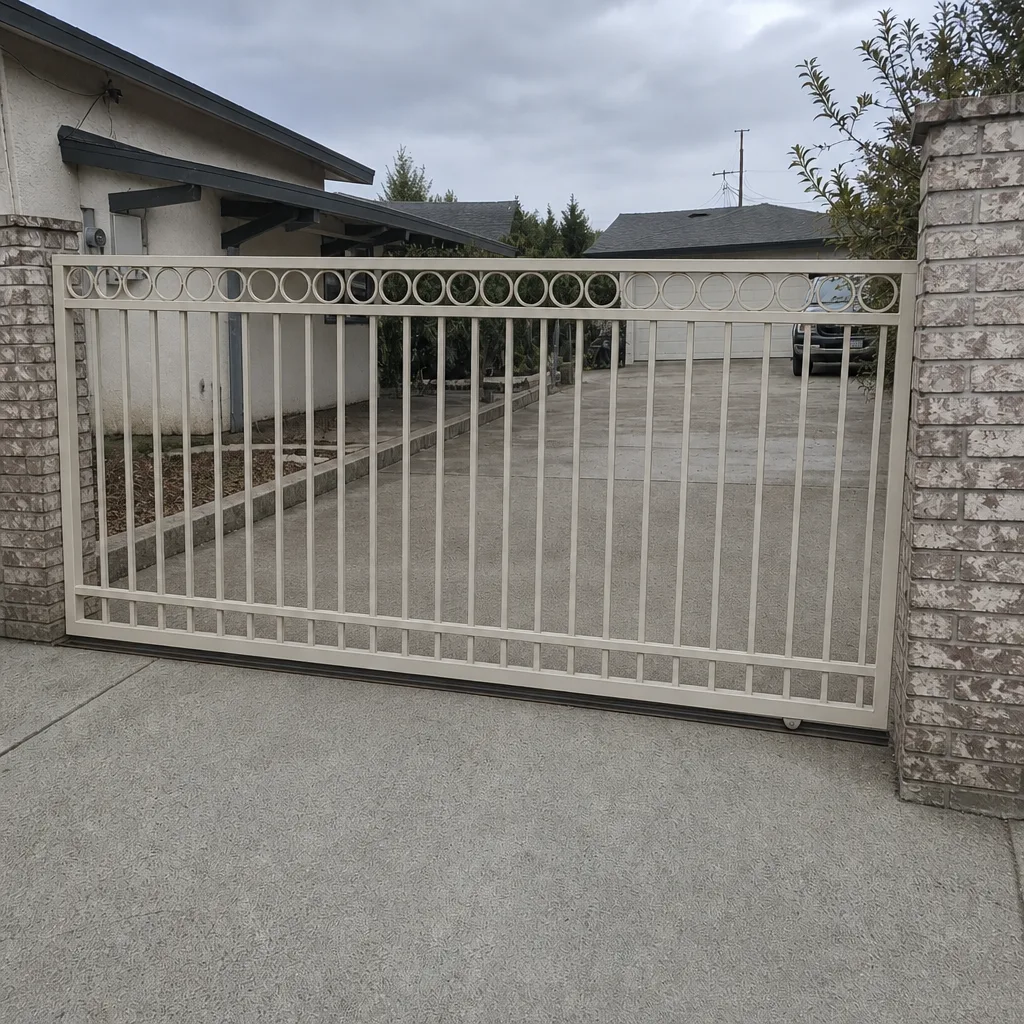 After
When to Call a Professional
Some warning signs, you can watch. Others mean stop what you’re doing and call. Call us when your gate hums without moving, moves without a command, has come off its track, or shows any sign of damaged wiring or a compromised conduit. Call us if the safety sensors trip with a clear path or fail to trip when you test them, because a safety failure on a moving gate is a risk to people, not just property. Call us if the gate is stuck open and your property is exposed, or if the operator has started grinding more loudly than a week ago.
We answer 24/7. A call outside dispatch hours is booked into the next opening, Sunday through Friday, 7am to 7pm. Gate Repair Visalia offers free estimates in Visalia – call (844) 702-1433. Whether it’s a Linear home driveway gate or a DoorKing commercial entry system, we’ll tell you what the sign is pointing to and what the repair involves before any work starts, and the price on your written estimate is the price we agree on before we begin.
Frequently Asked Questions
A slowing cycle time is usually the earliest warning. If your gate takes noticeably longer to open or close than it did months ago, something has changed in the mechanism, and the operator is working harder than it should. Count the seconds once a month and compare.
Yes, treat it as one. A humming motor that isn’t turning is generating heat and can damage the windings or trip thermal protection permanently. If the gate is also stuck open, it needs a same-day visit. Stop pressing the button and call (844) 702-1433 for a free estimate.
No. Grinding can come from dry lubricant, but it can also come from worn rollers, a bent track, a seized operator gear, or a loose chain guard. Lubricating a grinding gate that has a worn part can hide the sound long enough to do more damage. Have it diagnosed before you grease it.
Post lean that gets worse over time is usually a soil movement issue, not a hardware issue. Visalia’s soil shifts with seasonal moisture, and posts near the St. Johns River corridor or in older parts of the city are more prone to it. A post that leans needs to be corrected at the footing before the gate hardware is repaired, or the repair will fail too.
Never. Safety sensors on an automated gate exist to stop the gate from closing on a person, a pet, or a vehicle. Bypassing them turns a working gate into a hazard and usually isn’t legal on commercial systems. If the sensors are tripping with a clear path, the sensors need repair, not removal. Call us for a same-day visit.
We work on the nine major brands, including LiftMaster, FAAC, BFT, Linear, Viking, Ghost Controls, DoorKing, Elite, and Mighty Mule. Our technicians are experienced with the specific control logic and common failure points of each. We don’t require you to replace your gate to switch brands. Call (844) 702-1433 for a free estimate on your system.
The Bottom Line
Gate failure is rarely silent. It’s a slow cycle time you stopped noticing, a grinding sound you filed as normal, a post that’s been leaning for two winters, or a remote that works from the driveway but not from the porch. The signs are there. The skill is knowing what to look for on the front end so you’re not diagnosing from scratch on the back end. Visalia’s climate shapes what your gate will show you first: rust bleed at welds after a wet winter, soil movement at the posts, and water staining at the conduit. Sound, timing, appearance, and control behavior are the four channels that tell you what’s happening. Our technicians have up to 14 years of experience with the gate trade and the major brands. If you’re seeing a warning sign and want it looked at, call (844) 702-1433. We answer 24/7. Fast dispatch from 7am to 7pm, Sunday through Friday. Free estimates, and the price is set before any work starts.
Written by the team at Gate Repair Visalia.