
Last updated November 14, 2026
 Wrought iron
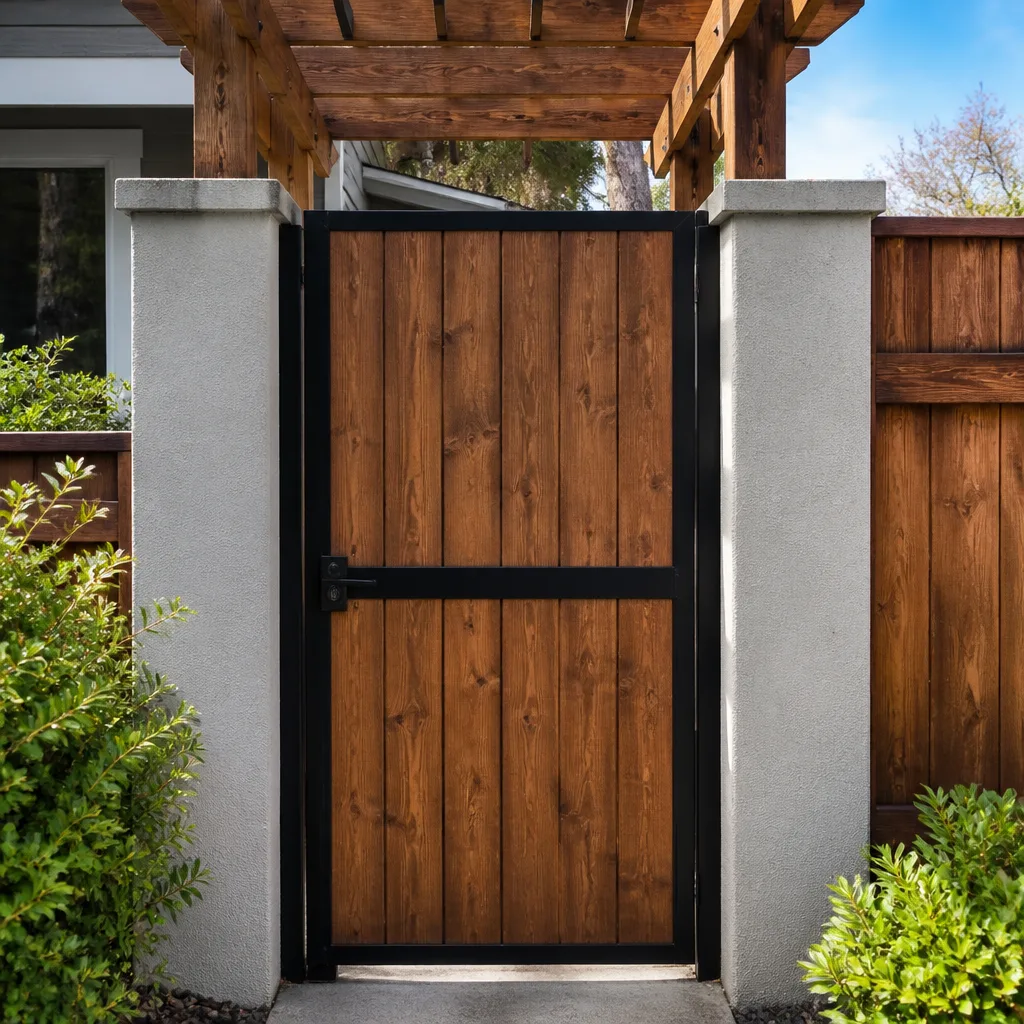 Wood & steel frame
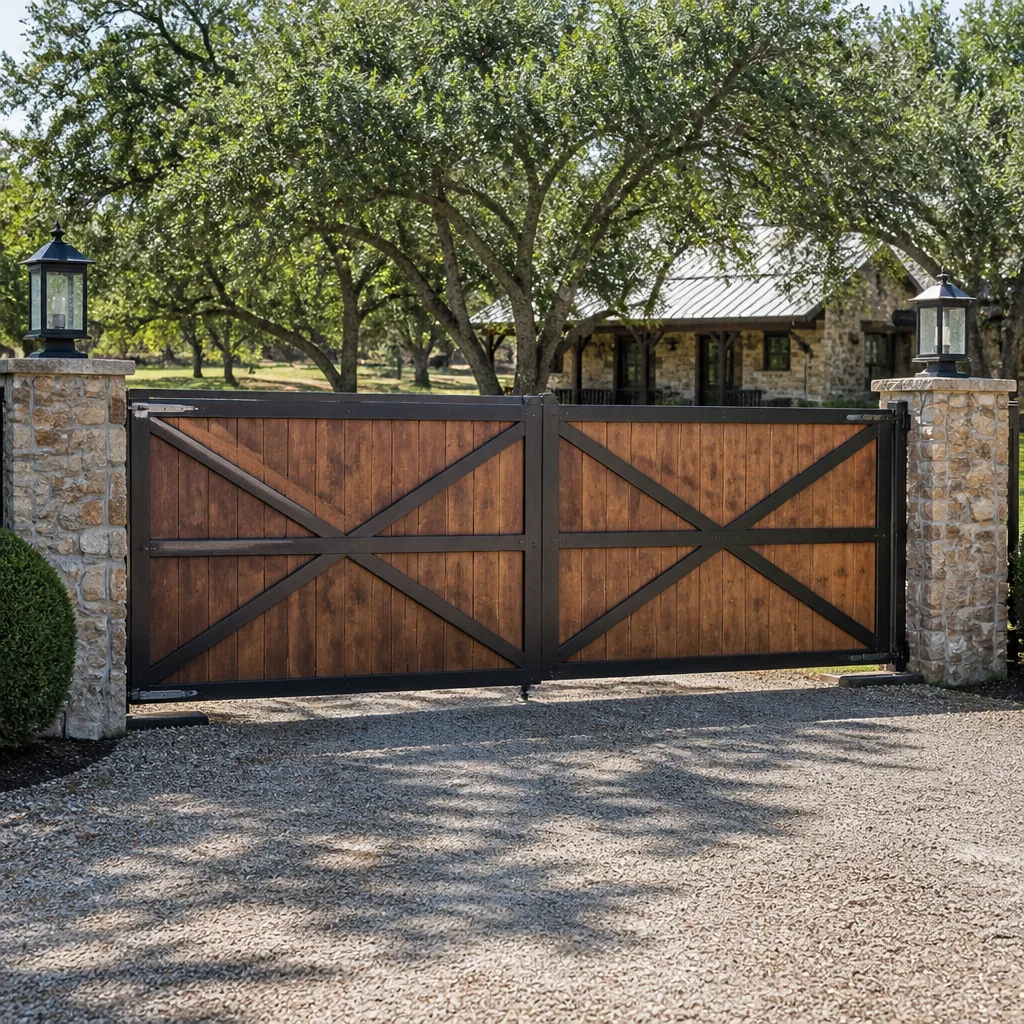 Farm & ranch
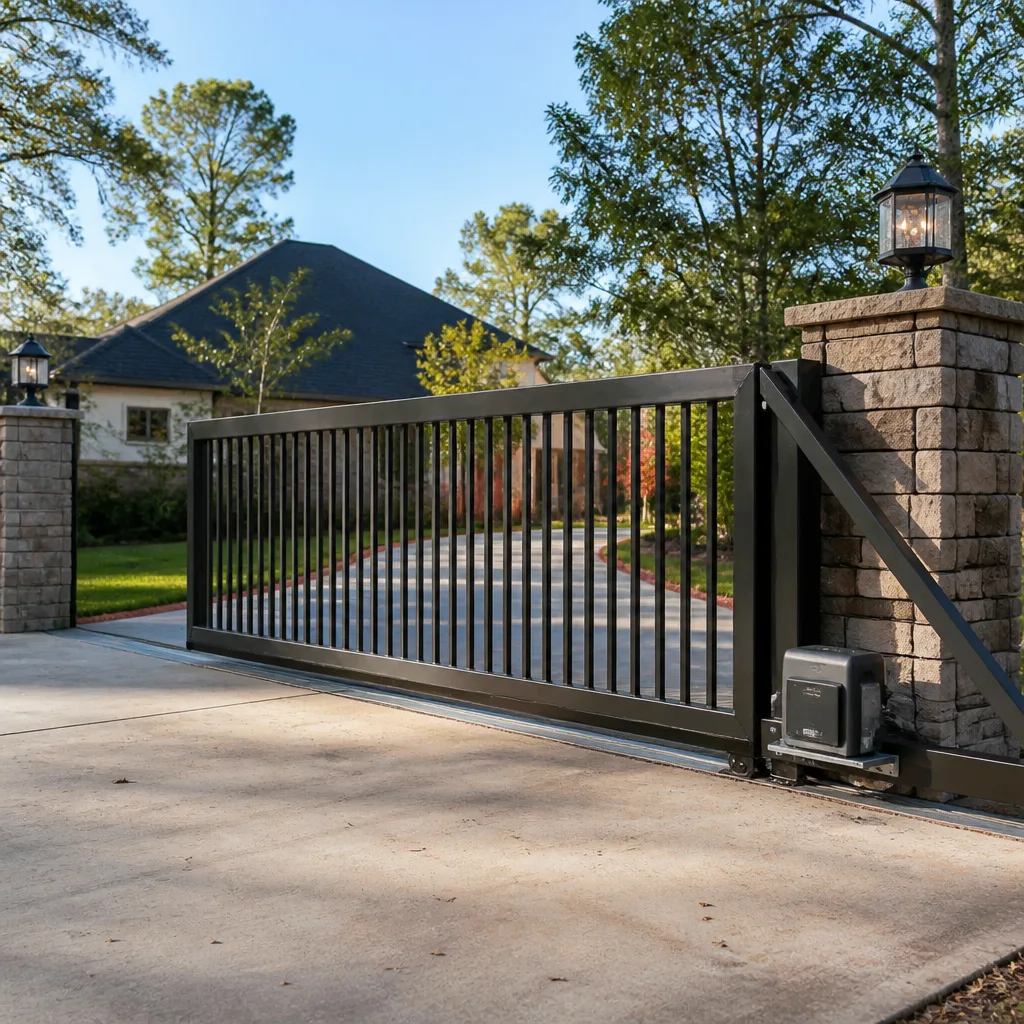 Sliding driveway gates
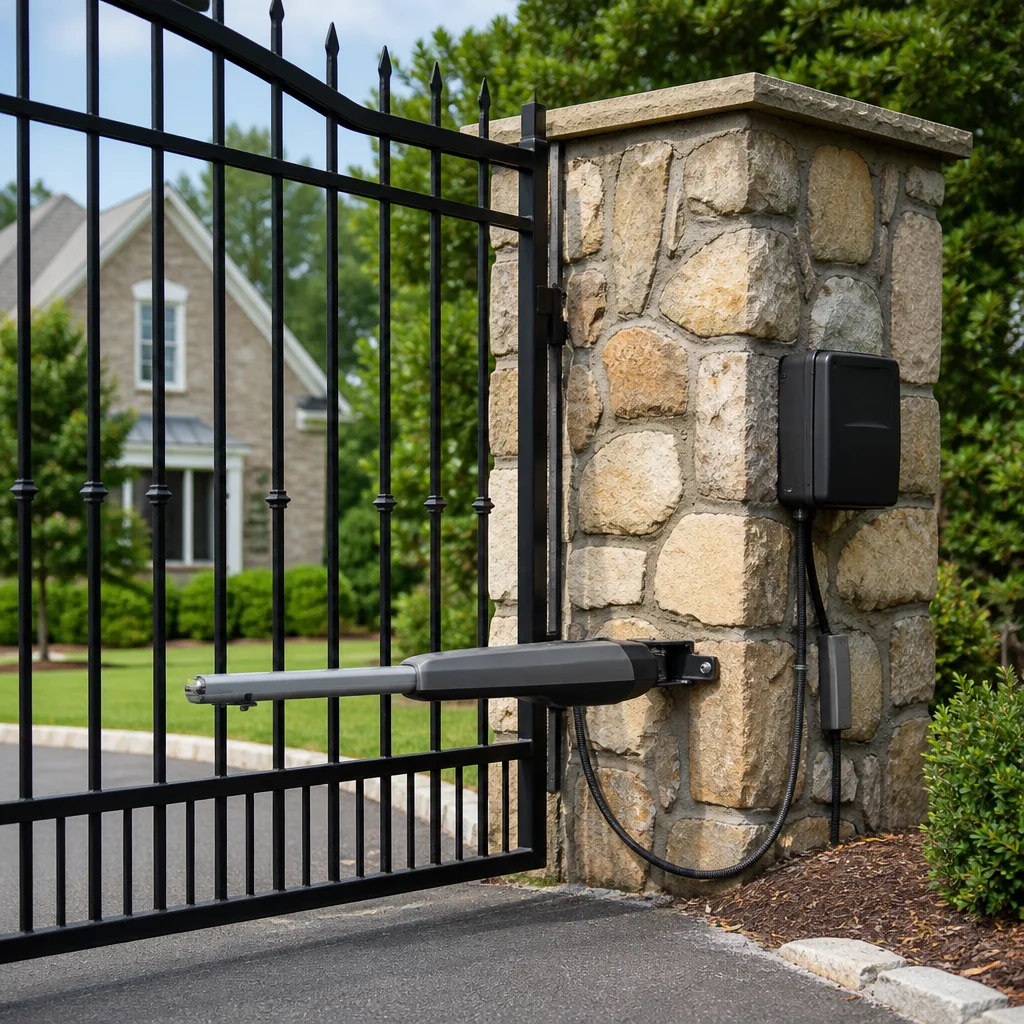 LiftMaster operators
Free on-site gate assessment - hinges, posts, and your LiftMaster or Nice gate operator checked before anything is quoted
The assessment is free and the quote is the invoice.
Get your free estimateGate Repair Troubleshooting in Visalia: Common Problems and How to Fix Them
A gate that reverses a second after it starts opening usually isn’t broken. It thinks something is in its path. That single misread symptom sends more Visalia homeowners to the phone than any other gate problem, and it often ends with a service call for a gate that just needed its safety sensors cleared. Reading the symptom instead of reacting to it is the whole game in gate repair. This guide maps the five root causes behind most gate failures here, shows you which checks are safe to do yourself and which aren’t, and tells you how to document the problem so the first visit is the fix, not just the diagnosis.
Quick Answer
Most gate failures in Visalia trace back to one of five root causes: a triggered or misaligned obstruction sensor, a weak battery or failing capacitor, a drifted limit switch, a control board vs. power supply fault, or a mechanical problem at a hinge, wheel, or post. The symptom tells you which one you’re dealing with – a gate that reverses on opening points to the sensor, one that moves slowly points to battery or capacitor, one that drifts off position points to the limit switch, and total silence points to power or the board. Match the symptom to the cause before you spend money, and always confirm the price in writing before any work starts.
Styles & brands we work with
- Wrought iron
- Wood & steel frame
- Farm & ranch
- Sliding driveway gates
- LiftMaster operators
Table of Contents
- Symptom-to-Cause: What Your Gate Is Telling You
- How San Joaquin Valley Heat Stresses Your Gate
- Operator Failure vs. Mechanical Failure
- Checks You Can Do Safely vs. What Needs a Technician
- No Response: Diagnosing Control Board vs. Power Supply
- Brand-Specific Quirks We Watch For
- Documenting Symptoms Before You Call
- What Gate Repair Costs in Visalia
Symptom-to-Cause: What Your Gate Is Telling You
A gate does not fail randomly. It fails in patterns, and each pattern points to a specific component. If you can describe the symptom accurately, you’ve already done the hard part of diagnosis. In our experience, a homeowner who says “it reverses about two feet in and the light on the box blinks four times” gets a faster, cheaper repair than one who says “it doesn’t work.” Here is the mapping we work from every day.
- Reverses immediately after starting to open – obstruction sensor obstruction, misalignment, or a photo-eye knocked out of line. The gate is doing exactly what it was designed to do: refusing to close or open when it thinks the path isn’t clear.
- Moves visibly slower than it used to – a weakening battery on a solar or battery-backup operator, or a capacitor that’s losing its ability to give the motor its startup surge. Slowing is an early signal, not a final failure.
- Drifts past the open or closed limit, or stops short – a limit switch that has moved out of adjustment, often from vibration or a track that’s warped. The operator is fine; the position reference is wrong.
- No response at all – no click, no hum, no light – start with power supply, then control board. A blown fuse, tripped breaker, or dead low-voltage transformer looks identical to a dead board from the outside.
- Grinding, dragging, or sagging on one side – mechanical: hinge, roller wheel, post footing, or a track that’s shifted. This is the failure that gets misdiagnosed as an operator problem most often.
The key insight is that “it won’t open” is not a symptom – it’s a category. Narrow it down to the specific behavior and you’ve cut diagnostic time roughly in half. Our technicians have up to 14 years of experience reading exactly these signals, and it’s how Gate Repair Visalia approaches every job: diagnose first, then fix the right thing.
How San Joaquin Valley Heat Stresses Your Gate
Visalia summers hit hard, and gates here feel it differently than gates in cooler climates. The San Joaquin Valley heat does two things to a gate system over time: it warps aluminum and pulls rubber seals and gaskets out of shape, and it degrades the electronics that run the operator. If your gate lives in full afternoon sun on a south- or west-facing driveway, this is the section for you.
What heat warping looks like on inspection
Aluminum tracks and rails expand and contract across a season. Over time the track can develop a subtle bow or a low spot. You’ll notice it as a gate that binds at the same point every cycle, often with a whisper of metal-on-metal drag just before it slows. Rubber seals around the operator housing, the photo-eye lenses, and the gate’s weather seals dry out and crack faster in this heat than most homeowners expect. A cracked sensor lens is a common cause of phantom obstruction trips – the gate “sees” a reflection it shouldn’t.
Electronics in the heat
Control boards, capacitors, and batteries all run hotter inside an operator housing in valley heat. Battery-backup operators – especially on solar-charged systems – lose capacity faster here, which is why a gate that moved fine in spring starts slowing in midsummer. That slowing is the battery telling you it’s tired, not the motor failing.
What we check first in Visalia
- Track flatness and rail alignment across the full run
- Condition of rubber seals and photo-eye lens clarity
- Battery voltage and capacitor performance on battery or solar operators
- Ventilation and debris inside the operator housing
- Hinge and wheel wear on swing gates, which heat accelerates
None of this is dramatic. It’s what a good on-site inspection catches before these small heat-related problems turn into a failed operator. For a full look at what expert gate repair covers in this climate, that’s where the deep detail lives.
Operator Failure vs. Mechanical Failure
This is the split that decides whether you need a technician or a gate. The operator is the motor, the control board, the battery, the sensors – the electric brain of the system. The mechanical side is the physical gate: hinges, wheels, tracks, posts, and the gate panel itself. Misidentifying which side has failed leads to replacing the wrong component, and that’s a real cost people don’t see coming.
How to tell them apart
Put the operator in manual release mode (the manufacturer’s override that disconnects the motor from the gate). Then push the gate open and closed by hand.
- If the gate moves freely and smoothly by hand, your mechanical side is healthy – the problem is in the operator, sensors, or wiring.
- If the gate drags, binds, or needs real effort, you have a mechanical problem that the operator is being forced to fight. Fix the mechanical side first; otherwise a new operator will just fail against the same resistance.
- If the gate moves freely in one direction but not the other, suspect a failed hinge or wheel on one side, or a post that’s leaning.
This is why we push back on “just replace the operator” advice. A slow gate that fights a warped track will slow a brand-new operator too. Diagnosed and repaired, not just replaced – that’s the rule we work by. Our electric gate repair work always separates the electrical fault from the mechanical one before anything gets ordered.
Checks You Can Do Safely vs. What Needs a Technician
Some gate troubleshooting is genuinely safe for a homeowner. Some is not, and the line between them matters. The dangerous parts of a gate system are the operator’s live wiring, the high-current motor circuit, and the heavy gate panel itself – a swing gate panel can crush a hand, and a slide gate that comes off its track is a serious hazard. Work above ground on the panel and its posts needs care and the right equipment.
Safe homeowner checks
- Visual inspection – look for cracked sensor lenses, debris in the track, obvious warping, sagging panels, worn hinges, or a leaning post.
- Clean the photo-eye lenses – a soft cloth removes dust and pollen. Dust-blown valley air dirties these quickly.
- Power cycle – turn the operator off at its breaker or disconnect and back on after a minute. Some boards reset a minor fault this way.
- Manual release – engage the manual release and feel how the gate moves by hand. This is diagnostic gold and it’s safe if you follow the operator’s instructions.
- Check the remote batteries – if the gate responds to the wall button but not the remote, it’s the remote.
Checks that need a trained technician
- Anything inside the operator housing or the control board
- Live wiring, the power supply, breaker-to-operator circuits, and transformer testing
- Loop detectors and buried sensor wiring
- Adjusting limit switches on a motorized operator
- Working on a gate panel above ground, or a slide gate that’s off its track
Opening a control board or probing live wiring without training risks shock and can void the operator’s warranty. It also creates secondary damage that didn’t exist before. If a check needs you to be inside the housing, that check belongs with a technician.
No Response: Diagnosing Control Board vs. Power Supply
When the gate does nothing – no click, no hum, no light – the cause is almost always in the power chain, then the control board. The trick is to test in order and stop at the first dead point. Jumping straight to the control board is how people replace a working board to fix a tripped breaker.
- Confirm power at the source. Check the breaker or disconnect that feeds the operator. A tripped breaker or an unplugged transformer is the most common “dead gate” cause.
- Test the transformer or power supply output. If the transformer isn’t delivering low voltage, nothing downstream works.
- Check fuses on the board. Many operators have a small blade fuse that blows on a surge and protects the board. That’s a low-cost part, not a board replacement.
- Look for board indicators. A healthy control board usually shows a power LED or an idle status light. No light with confirmed power at the board points to the board itself or its fuse.
- Check the safety chain last. Photo-eyes, loop detectors, and edge sensors can all hold the gate in a fault state that looks dead. A disconnected sensor lead is common after a storm or landscaping work near the gate.
Battery and solar operators invert this order slightly – weak battery first, then board. On a solar operator, a battery that won’t hold charge produces a completely unresponsive gate that looks like a board failure. We test both before quoting anything. Fast dispatch from 7am to 7pm, Sunday through Friday, means a dead gate in Visalia usually gets seen the same day.
Brand-Specific Quirks We Watch For
Every operator brand has its own failure patterns, and knowing them shortens the diagnostic visit. This is where brand familiarity earns its keep. We’re factory-familiar with nine major gate and operator brands, and that list includes LiftMaster, FAAC, BFT, Linear, Viking, Ghost Controls, DoorKing, Elite, and Mighty Mule. A technician who works on these every day doesn’t spend the first hour of the visit reading a manual.
Some quirks we watch for:
- DoorKing – commercial-grade controllers used on multi-unit and access-controlled entries. A fault there can come from the loop detector under the pavement or the access control wiring, not the operator. Diagnosing them as residential is a common mistake.
- Ghost Controls – popular on residential driveways and solar setups. Battery and solar charge behavior shows up here as the “slow gate” symptom long before any motor fault.
- Viking – swing and slide operators where a limit drift from a warped track is easy to misread as a board issue.
- Elite – residential and light commercial operators where sensor misalignment and remote-pairing issues top the list.
Beyond these, we service equipment from a wide range of brands – we work with whatever gate system you already own. That’s a deliberate choice. A single-brand dealer-installer has a built-in interest in selling you their brand. We don’t. The existing gate gets diagnosed and repaired, not replaced to move product. Whether you’re in a residential driveway in a Visalia neighborhood or managing commercial access on a busy property, the same principle applies.
Documenting Symptoms Before You Call
The single best thing you can do for your repair is a 30-second video and a few notes before you pick up the phone. When you can tell a technician what the gate does, when it does it, and what code it flashes, the first visit becomes a repair visit. When you can only say “it’s broken,” that first visit becomes a diagnosis and a second trip. Documenting is free and it saves you real money.
What to capture
- A short video of a full open and close cycle from a safe distance, including the operator housing and any blinking lights.
- The exact behavior – reverses at a specific point, stops short, moves slow, clicks but doesn’t move, does nothing.
- Error codes or blink patterns – count the blinks and note them. If the operator has a display, take a photo of the code. These codes are brand-specific and tell us a lot.
- Timing – does it fail on the first cycle of the day? In the afternoon heat? After rain? After a landscaping visit? Patterns narrow the cause fast.
- What changed – a new remote, a power outage, a repair or paint job nearby, a landscaping crew working near the gate.
- The model label – a photo of the operator’s brand and model plate.
Bring that to the call and the technician arrives already knowing where to look. That’s the difference between a repair visit and an exploratory visit. We answer 24/7, so you can call whenever the gate decides to act up.
What Gate Repair Costs in Visalia
Gate repair in Visalia is priced per job by a written estimate, and it’s always free to get one. The scope of the fault decides the cost far more than the brand does. A sensor realignment and a control board replacement live at opposite ends of the range, and the only honest way to quote is after we’ve seen the gate and confirmed what’s actually wrong. Here’s how the work breaks down by type.
Repair categories
- Sensor and photo-eye issues – generally the lightest repair: cleaning, realignment, or replacing a cracked lens, plus a wiring check.
- Battery and capacitor service – replacement of the component that’s causing the slow-movement symptom, plus a recharge or solar check.
- Limit switch and travel adjustment – adjustment on the operator, sometimes with a hinged or track correction.
- Control board and power supply – the heavier electronic repairs, including fuse, transformer, and board replacement.
- Mechanical repairs – hinge, wheel, track, or post work on the gate structure itself, which can range from a single part to a larger correction.
What the estimate covers
We give you a written estimate before any work begins, and we don’t start until you’ve approved it. The number on the estimate is the number you’re billed – no surprise line items after the fact. That’s the policy, and it’s the reason we ask so many questions on the phone: the more we know, the more accurate the estimate. Free estimates mean you can confirm the price before committing to anything. For a free estimate on your gate in Visalia, call (844) 702-1433. We answer 24/7. Fast dispatch from 7am to 7pm, Sunday through Friday.
Common Mistakes to Avoid
- Replacing the operator before checking the mechanics. A gate that fights a warped track will burn out a new motor just as fast. Diagnose the mechanical side first.
- Assuming a dead gate is a dead board. Tripped breakers, blown fuses, and dead transformers mimic a failed control board. Test the power chain before you order a board.
- Ignoring a slowing gate in summer. Slowing is the battery or capacitor telling you it’s failing. Waiting until it stops entirely is how a small repair becomes a bigger one.
- Bypassing the safety sensors to “make it work.” Disabling photo-eyes or edge sensors removes the protection that stops the gate on a person or car. Get them fixed instead.
- Calling a general handyman for an electric gate. Control boards, loop detectors, and operator wiring are a specialty, and generalists often won’t touch them. A gate specialist diagnoses the right fault the first time.
- Skipping the video. A 30-second clip of the fault tells a technician more than ten minutes of description. Skip it and you’ll pay for a diagnosis visit.
- Letting the heat win without a check. In valley summers, an annual look at seals, track, and battery capacity catches heat-related wear before it strands your gate.
See the difference
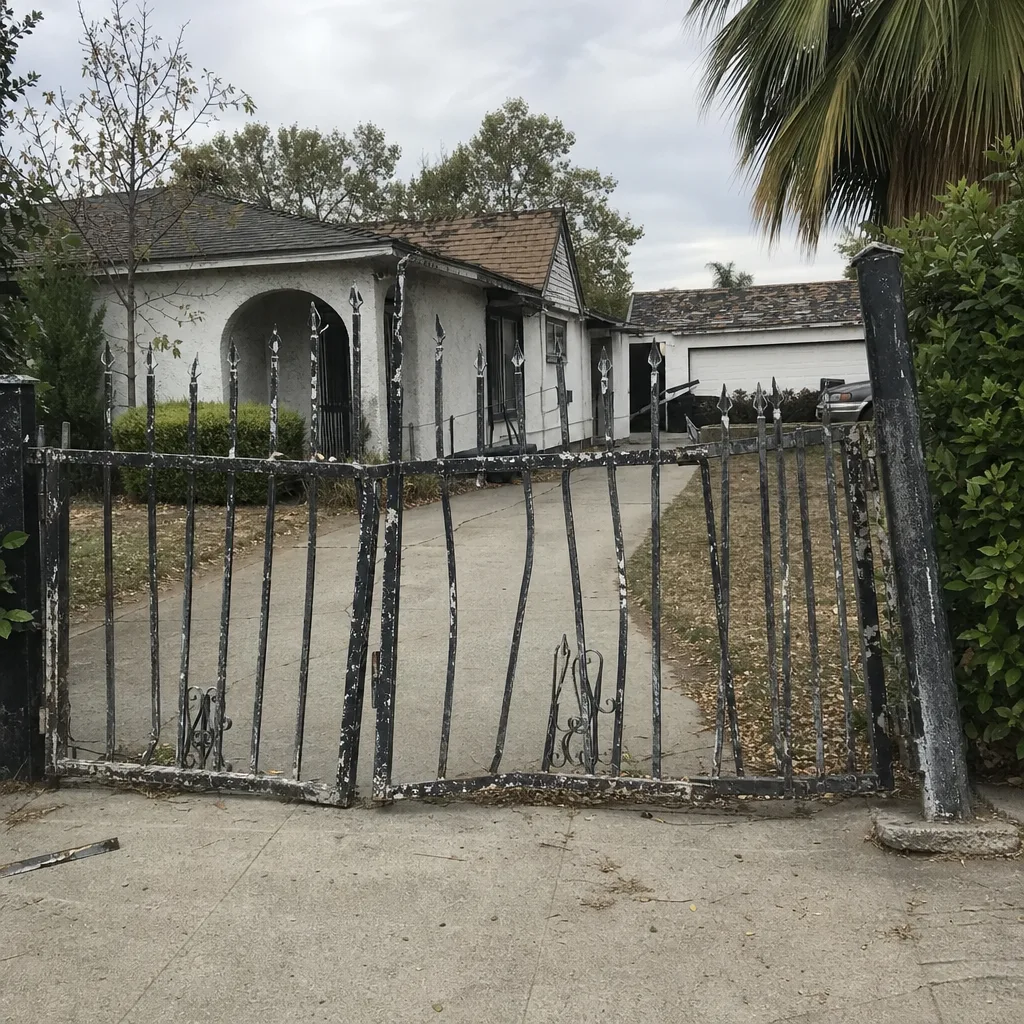 Before
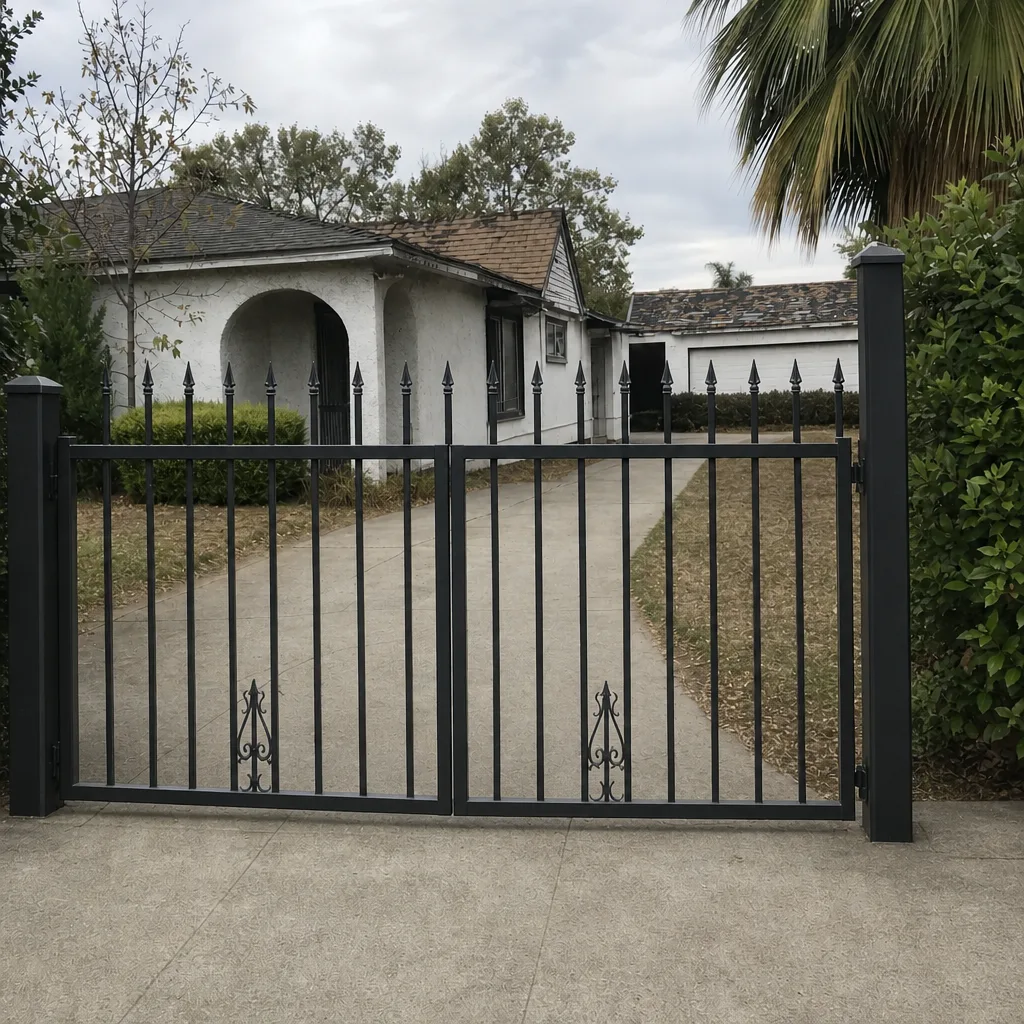 After
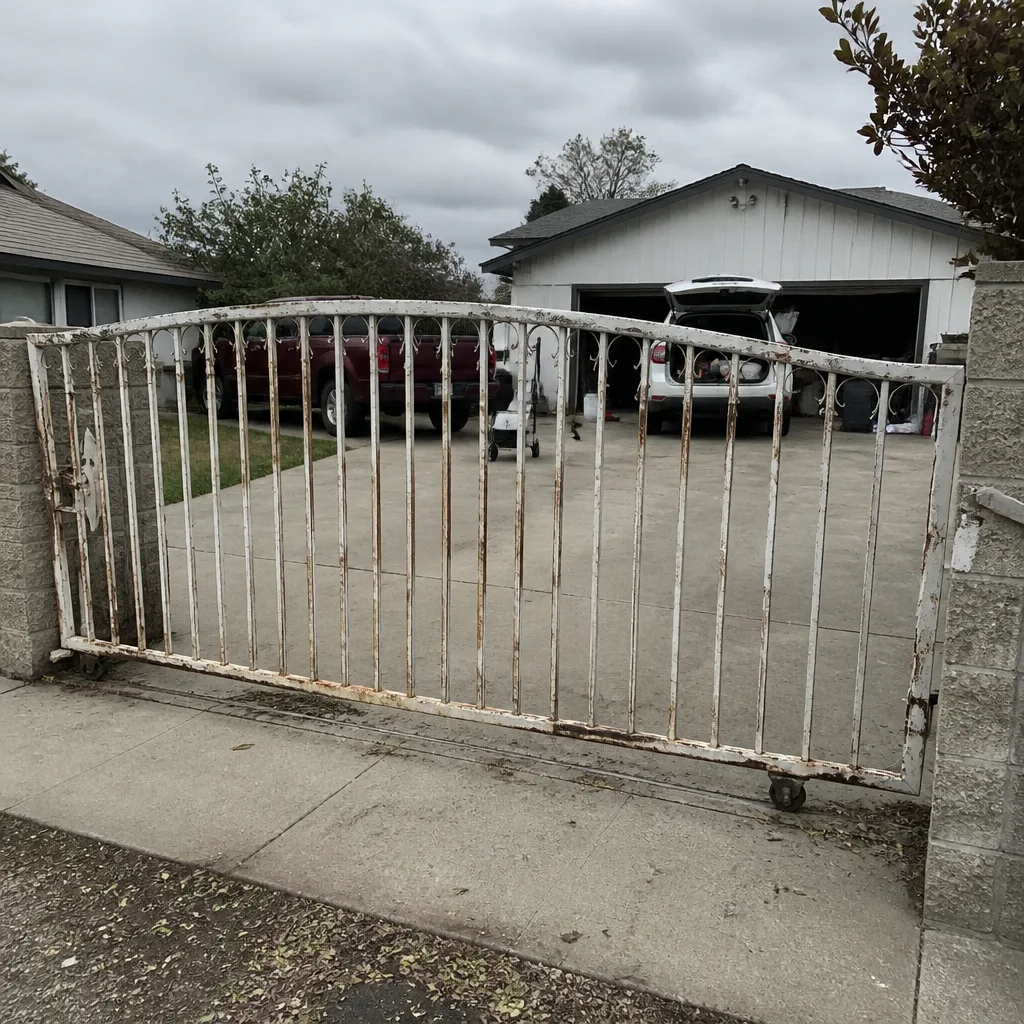 Before
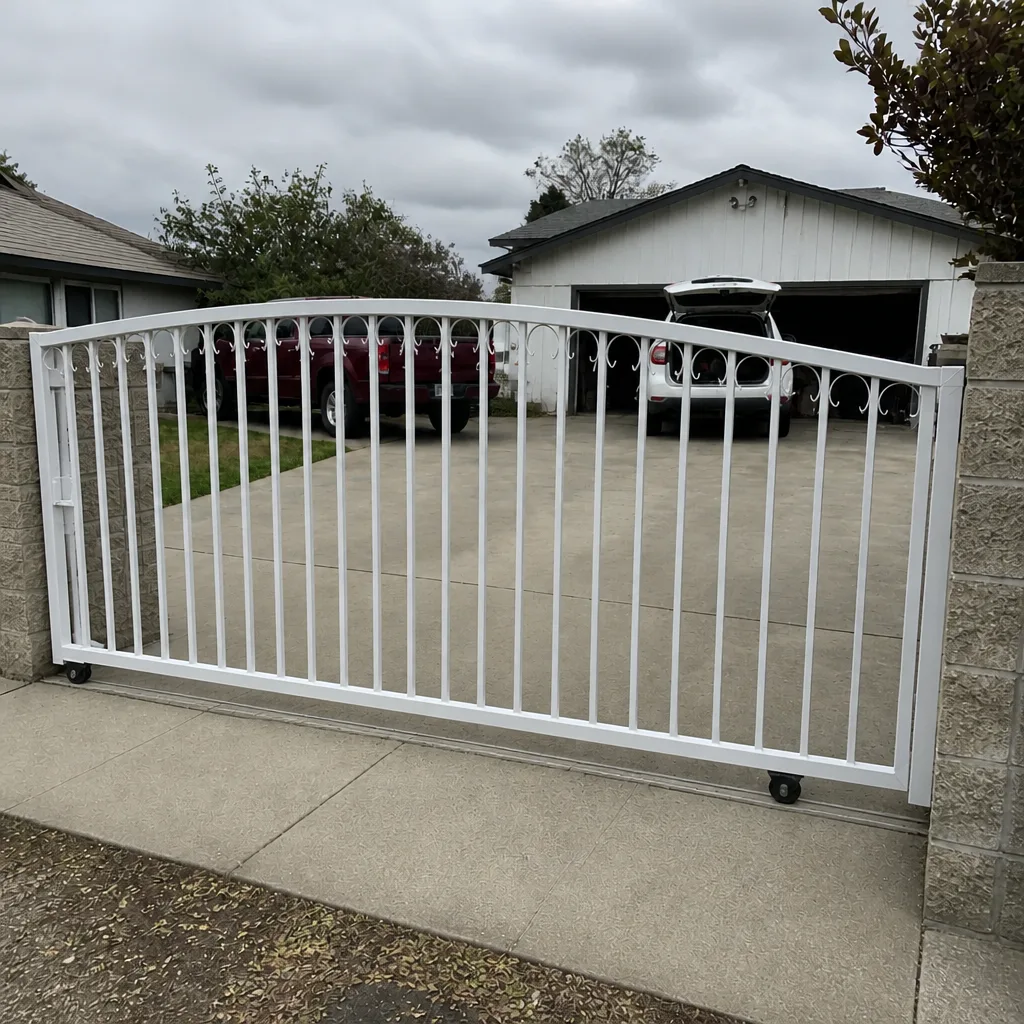 After
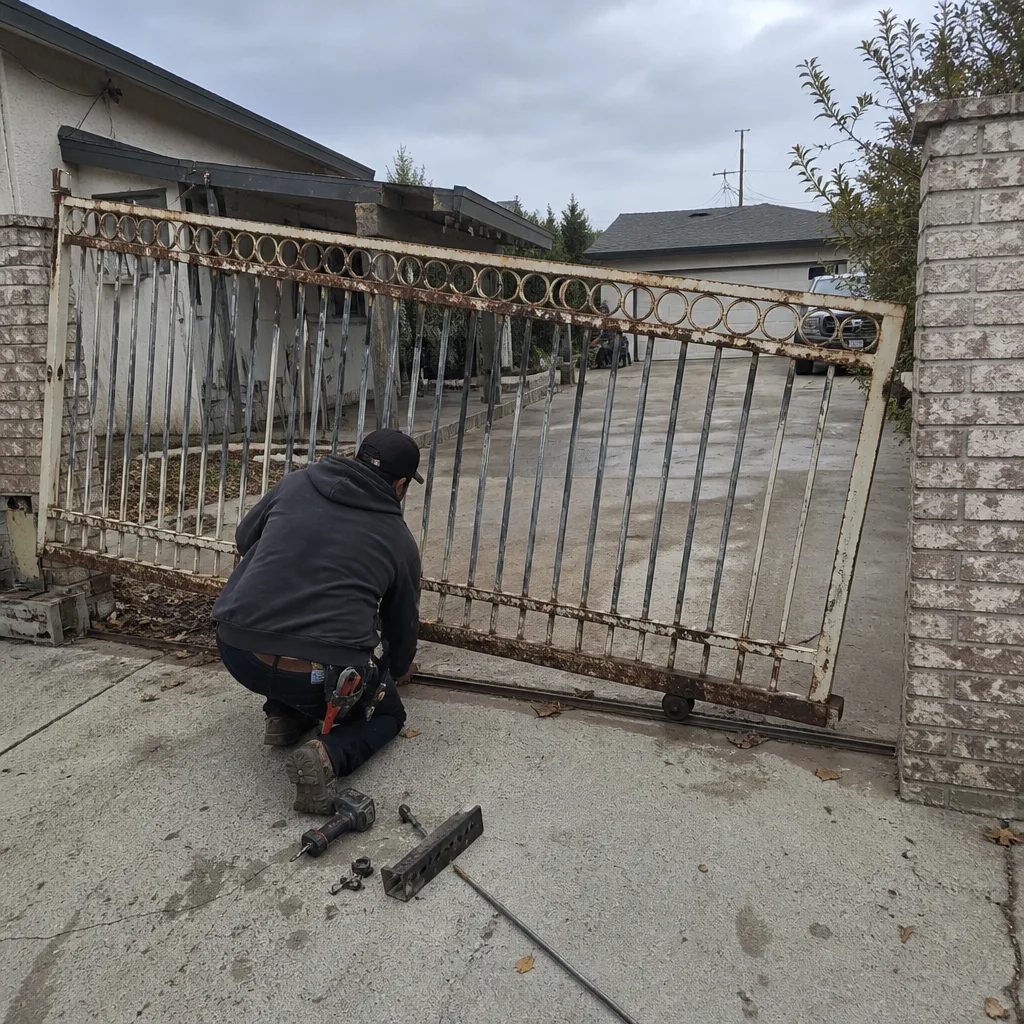 Before
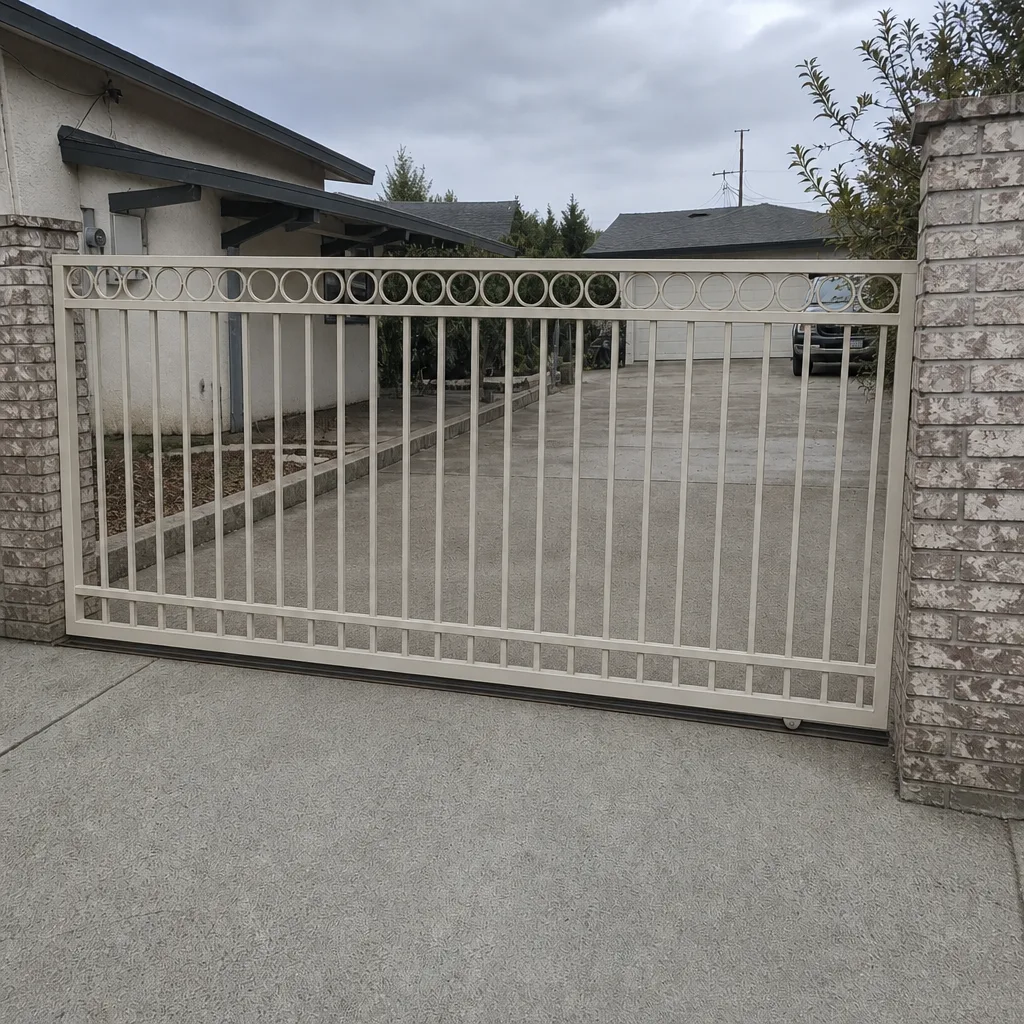 After
When to Call a Professional
Call a technician when the fault is inside the operator housing, when wiring or power supply is involved, when the gate panel is off its track or a post is leaning, when a limit switch needs moving, or when the gate is completely unresponsive and you’ve already checked the breaker. Those are the jobs where DIY work risks shock, secondary damage, or a voided warranty. Same goes for a sensor fault you can’t clear with a clean and a realignment. Gate Repair Visalia offers free estimates in Visalia – call (844) 702-1433. We answer 24/7. Fast dispatch from 7am to 7pm, Sunday through Friday.
Frequently Asked Questions
Because the obstruction sensor thinks something is in the path. A dirty photo-eye lens, a misaligned sensor pair, or a cracked lens is the usual cause, and it’s the most common “broken gate” call we get. Clean the lenses first, check that the two photo-eyes point straight at each other, and if it still reverses, call (844) 702-1433 for a free estimate.
You can safely clean the sensors, check the breaker, replace a remote battery, and put the operator in manual release to test the mechanical side. Anything inside the operator housing, live wiring, or limit switch adjustment needs a trained technician. If your safe checks don’t fix it, call (844) 702-1433 – estimates are free.
A weak battery or a failing capacitor is the usual reason, and Visalia heat accelerates both. Solar and battery-backup operators are especially prone to this in summer. A slow gate is an early warning, not a final failure – have it checked before it stops. Call (844) 702-1433 for a free estimate.
Put the operator in manual release and push the gate by hand. If it moves freely, the fault is in the operator or wiring. If it drags or binds, it’s a mechanical issue and the operator has been fighting it. Either way, call (844) 702-1433 for a free estimate before ordering parts.
Yes – we work on your gate brand, including LiftMaster, FAAC, BFT, Linear, Viking, Ghost Controls, DoorKing, Elite, and Mighty Mule, among others. We service whatever system you already own rather than pushing a replacement. Call (844) 702-1433 for a free estimate.
In most cases, yes. We answer 24/7, and a call outside dispatch hours is booked into the next opening, Sunday through Friday, 7am to 7pm. A dead or reversing gate usually gets a same-day visit. Call (844) 702-1433.
Most straight repairs don’t, but a full replacement or a new operator install can trigger a permit depending on your city, so it’s always worth asking Visalia’s building department before the work is scheduled. For a free estimate on your repair, call (844) 702-1433.
The Bottom Line
Most gate failures in Visalia come down to a short list: obstruction sensors, batteries and capacitors, limit switches, control board vs. power supply faults, and mechanical wear on hinges, wheels, and posts. Read the symptom before you spend money. Clean the sensors, check the breaker, use the manual release to separate operator faults from mechanical ones, and note the error codes and timing. What you can’t check safely – wiring, the board, limit adjustment, a panel off its track – goes to a technician. The estimate is free and the price is set in writing before any work starts. Call (844) 702-1433 for a free estimate. We answer 24/7. Fast dispatch from 7am to 7pm, Sunday through Friday.
Written by the team at Gate Repair Visalia.