
Last updated November 14, 2026
 Wrought iron
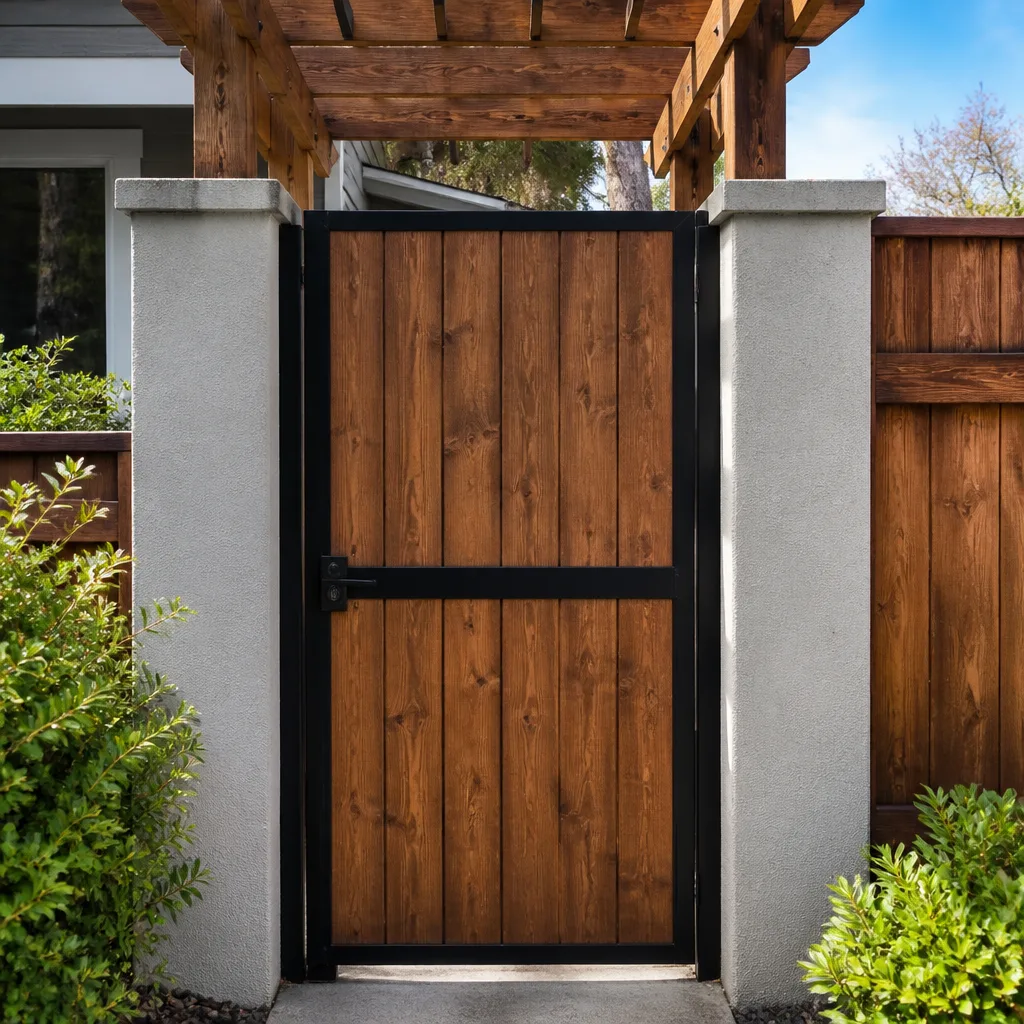 Wood & steel frame
 Farm & ranch
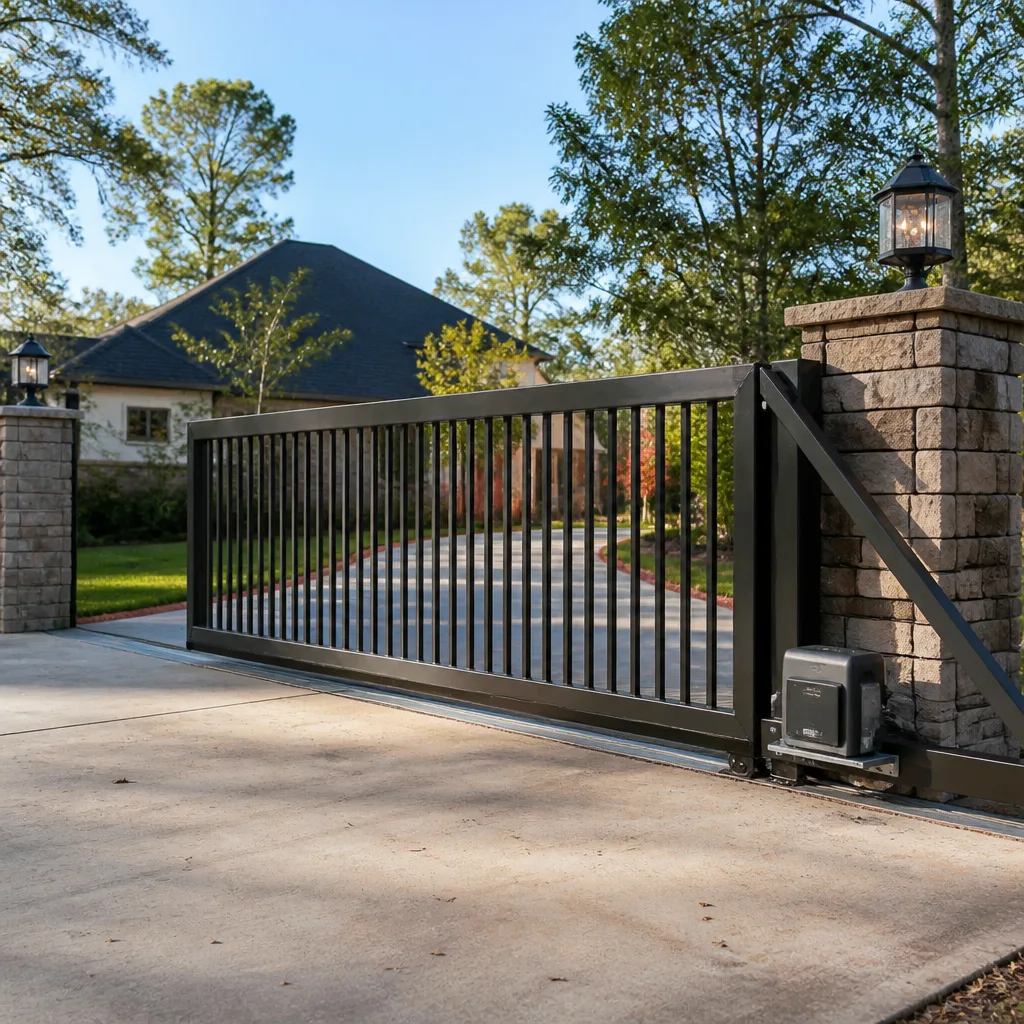 Sliding driveway gates
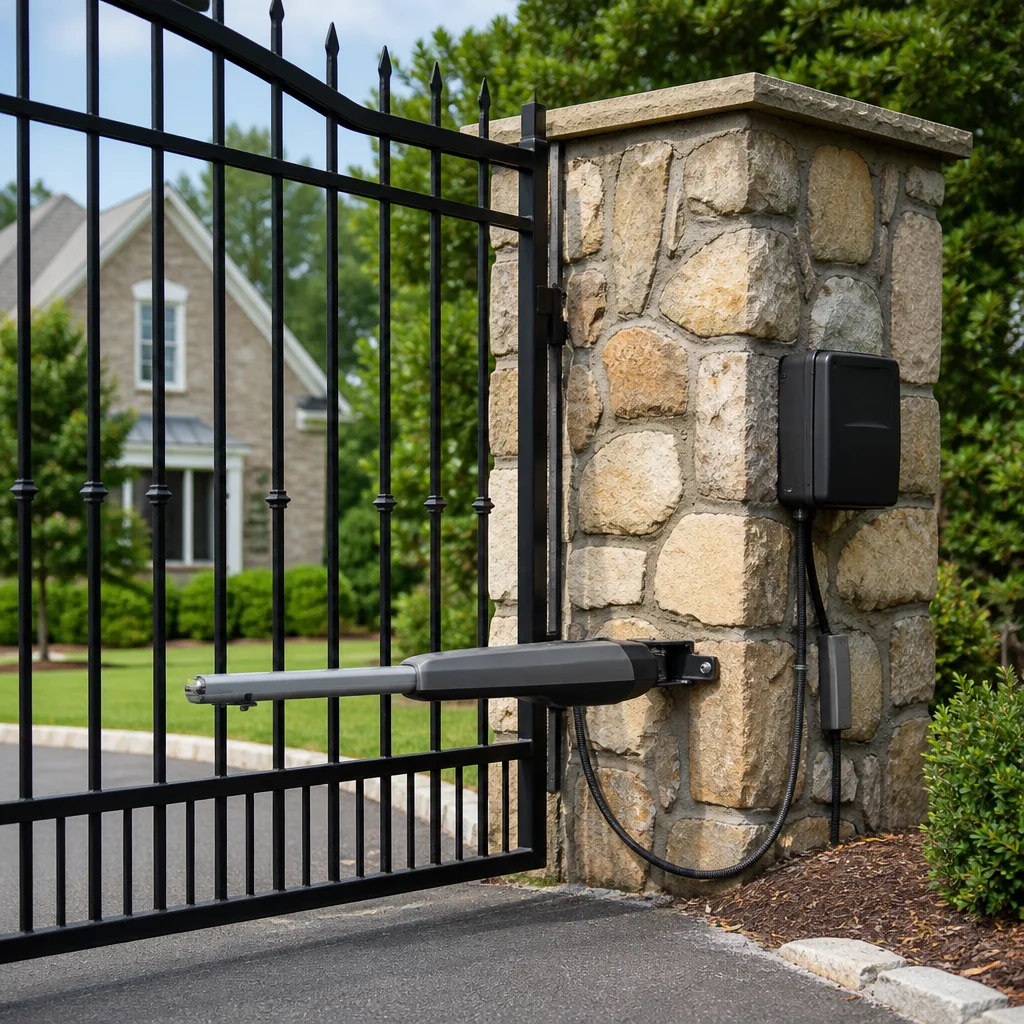 LiftMaster operators
Free on-site gate assessment - hinges, posts, and your LiftMaster or Nice gate operator checked before anything is quoted
The assessment is free and the quote is the invoice.
Get your free estimateGate Repair Maintenance Schedule: What to Do and When
The number one reason gate operators fail before their rated cycle count here isn’t wear. It’s heat. Visalia summers push above 100°F often enough that lubricant on a chain or worm gear cooks off months earlier than the service manual assumes, and an operator that was rated for years of daily cycling starts straining against its own dry metal. The fix costs a tube of the right grease and twenty minutes twice a year. Skipping it costs a motor. Below, we break down a real maintenance schedule by drive type, material, and climate, with the checks that actually matter in the Central Valley and the ones you can skip.
Quick Answer
A working gate maintenance schedule has three tiers: monthly visual checks of the safety devices and track, quarterly lubrication and hardware tightening, and an annual full inspection of the operator, footing, and hinges. The right interval depends on your drive type. Swing operators need hinge and arm checks; slide operators need chain and rail attention; overhead lifts need balance and cable inspection. In Visalia’s heat, lubrication intervals should tighten, and you should use a high-temp grease rated above 100°F, not a thin silicone spray.
Styles & brands we work with
- Wrought iron
- Wood & steel frame
- Farm & ranch
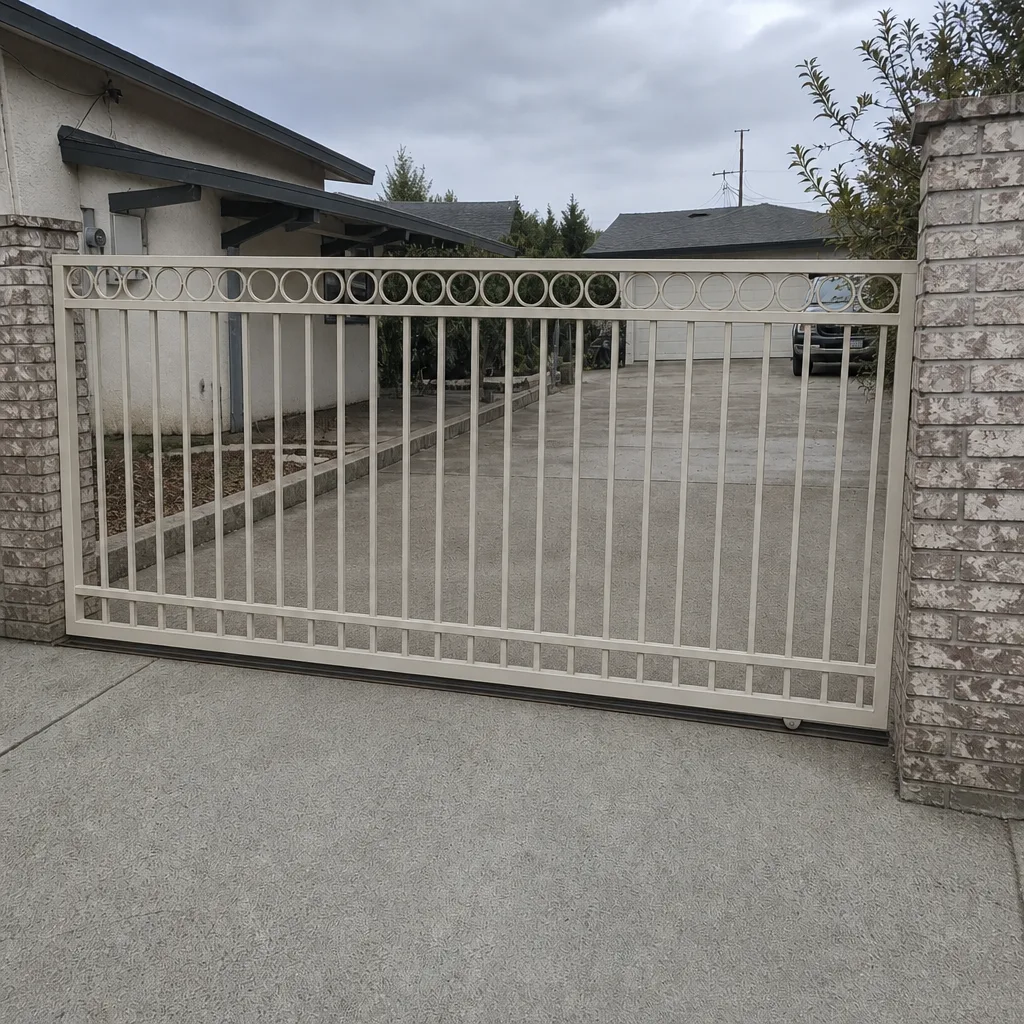
- Sliding driveway gates
- LiftMaster operators
Table of Contents
- Drive-Type Intervals: Swing vs. Slide vs. Overhead
- Climate-Adjusted Lubrication: What Holds Up Above 100°F
- Structural Inspection: Posts, Hinges, and Footings
- Battery and Solar Backup Testing Protocol
- Safety Devices: Loops, Sensors, and Reversing Tests
- Building a Maintenance Log That Protects Resale Value
- A Visalia Seasonal Calendar
- What You Can Check Yourself and What Needs a Technician
Drive-Type Intervals: Swing vs. Slide vs. Overhead
Every gate maintenance schedule should start with the drive type, not a generic checklist. A swing operator loads its arm and hinges with every cycle. A slide operator runs a chain or rack along a rail and depends on that rail staying level. An overhead vertical lift gate moves its panel in a completely different plane and adds counterbalance hardware to the mix. We’ve seen operators rated for years of service go early because the schedule the owner followed was written for a different gate type entirely.
Swing operators (arms, articulated arms, and underground units from brands like FAAC and BFT) need these checks:
- Monthly: listen for grinding or popping during open and close, and check that the gate swings freely by hand when the operator is disengaged.
- Quarterly: grease the arm pivots and hinge points, tighten arm bolts, and inspect the mounting bracket for movement.
- Annually: inspect the operator housing for water intrusion, test the manual release, and check the control board for corrosion or loose terminal screws.
Slide operators (chain-driven or rack-and-pinion) run on a rail that takes a beating from ground movement and debris:
- Monthly: sweep the rail and check that the gate rolls smoothly with no wobble at the ends.
- Quarterly: lubricate the chain or rack, check chain tension, and inspect the guide rollers for flat spots.
- Annually: check rail level, inspect the operator sprocket for tooth wear, and test the limit switches at both ends of travel.
Overhead vertical lift gates need their counterbalance and travel hardware checked closely because the panel weight is managed by springs and cables:
- Monthly: watch for uneven travel or jerky motion and listen for cable slap.
- Quarterly: inspect cables for fraying, check the track for debris, and verify the gate is balanced when disconnected.
- Annually: have the counterbalance springs, cables, and drums inspected by a technician. These are high-tension parts, and adjusting them wrong can cause serious injury. Leave the adjustment to a trained professional.
If you’re not sure which type you have, or your gate isn’t behaving the way it should between scheduled checks, gate repair starts with identifying the drive and its failure points, not guessing at parts. That diagnostic step is where a specialist saves you money, because a misdiagnosed swing arm gets replaced when the real problem was a hinge. In Visalia, where dust and heat both work against the hardware, getting the type right on the first visit matters.
Climate-Adjusted Lubrication: What Holds Up Above 100°F
This is the part most schedules get wrong. A general-purpose silicone spray is fine in a coastal climate with mild summers. In Visalia, where 100°F-plus days stack up through the summer, that same silicone spray evaporates off the chain or arm pivot in a fraction of the time the manual assumes, and the metal runs dry. Worse, some light petroleum-based products thin out under heat and attract dust, which turns into a gritty paste that accelerates wear rather than preventing it.
The right products for a Central Valley gate:
- High-temp lithium grease or a moly-fortified grease rated for continuous duty above 100°F for chain, rack, and gear contact points.
- Dielectric grease for control board terminals, remote receiver connections, and any exposed electrical contact points.
- Dry-film PTFE or graphite lubricant for hinges and pivots that collect dust, because it doesn’t hold grit the way wet grease does.
- Chain and cable lubricant designed for outdoor use and rated for high ambient temperatures, for operator chains and overhead cables.
What to avoid: thin silicone sprays on load-bearing surfaces in direct sun, WD-40 as a long-term lubricant (it’s a penetrant, not a grease), and any product that stays tacky and collects dust. If the product label doesn’t say it holds up in high heat, it probably won’t survive a Visalia July.
Intervals should shift with the season. In our experience, the practical schedule is:
- Lubricate heavy-load points in late spring, before the peak heat, so the grease film is fresh when temperatures climb.
- Re-check chain and rack tension in midsummer, since thermal expansion and dry lubricant both loosen the same components.
- Lubricate again in early fall, before the first cool nights, to protect against the condensation that forms when temperatures swing.
- Inspect and touch up grease on any bare metal in late winter, after the wettest part of the year.
If your gate starts squealing in June, that’s the lubricant telling you it’s gone. Don’t wait for the annual inspection. Gate Repair Visalia can check the lubrication points and the operator’s internals on the same visit.
Structural Inspection: Posts, Hinges, and Footings
The structural side of a gate is where most operators die early. A gate post that leans a few degrees, a hinge that’s worn past its tolerance, or a footing that’s cracked from ground movement all put extra load on the operator every single cycle. The operator gets blamed, but the gate is the problem. This checklist is the one that saves you from replacing a motor that was fine.
Run this inspection quarterly, and more often if the gate takes heavy daily use or your property sits on clay soil that shifts with the seasons:
- Post plumb check. Use a 4-foot level against the post face. A post should lean no more than roughly a quarter-inch over that distance. Any more and the gate is fighting its own frame, which loads the operator unevenly. Check both the hinge post and the latch post.
- Hinge wear indicators. Worn hinges show up as sag (the gate droops at the latch end), side-to-side play when you push the gate, or a grinding sound on the pivot. A gate should swing freely with no binding. If you need to lift the gate to close it, the hinges are done.
- Concrete footing inspection. Look for cracks radiating from the post base, exposed rebar, or a visible gap between the post and the concrete collar. A footing that’s lifting, sinking, or cracking is the root cause of most post-lean problems. Do not dig around or try to reset a footing yourself. If it’s failing, the fix is a foundation repair, and that’s a specialist’s job.
- Frame and weld check. Inspect the gate frame for cracked welds, bent cross members, and loose fasteners at the joints. On a slide gate, check that the frame is still square by measuring both diagonals.
- Panel and track alignment. For overhead and slide gates, confirm the track or rail runs level and true. A rail that’s out of level by even a small amount causes the gate to bind and the operator to overwork.
Track these measurements in your maintenance log. A post lean that’s getting worse over two or three inspections is a clear signal something is moving below grade, and catching that early is far cheaper than waiting for the gate to fall off its track. In Visalia, our technicians have up to 14 years of experience reading these signals and telling the difference between a hinge that needs replacing and a footing that needs repair.
Battery and Solar Backup Testing Protocol
“Check the battery” is not a maintenance instruction. Every battery-backed operator has a specific voltage range, and the only way to know whether yours is still good is to test it under load and know the threshold. Here’s a protocol you can follow with a multimeter and the operator’s manual in hand.
- Locate the battery and note the type. Most gate operators use a sealed lead-acid battery, often 12V. Check the label for the rated capacity and note the connected voltage range in your log.
- Test open-circuit voltage at rest. Disconnect the charger or solar input briefly and measure voltage across the terminals. A healthy 12V battery reads in the high 12V range at full charge. A battery reading in the low 12V range or below is a candidate for replacement.
- Test under load. With the operator running a full open-close cycle, the voltage should stay within about one volt of its resting reading. A big drop during the cycle signals a failing cell, even if the resting number looked fine.
- Test the charge cycle. Restore the charger and confirm the battery voltage climbs back toward full within a few hours. A battery that won’t take a charge, or that heats up during charging, is done.
- Inspect the solar panel and charge controller. Wipe dust and debris off the panel, check the wiring at the controller, and confirm the controller is delivering a charging voltage to the battery. In the Central Valley, dust on the panel is a real factor, and a dusty panel undercharges the battery through the whole dry season.
Test batteries quarterly and replace them on the schedule the operator’s manual recommends, not on a hunch. A battery that fails during a power outage means your gate stays closed or open until someone gets it working again, which is exactly when you don’t want to be troubleshooting. Brands like FAAC and BFT have specific battery recommendations, and the manual is the source of truth for the threshold on your model.
Safety Devices: Loops, Sensors, and Reversing Tests
Safety devices are the one part of the schedule you can’t skip, no matter how lightly used the gate is. A gate that doesn’t reverse on obstruction is a hazard, and most safety-device failures are silent until something goes wrong.
- Photo-eye sensors. Monthly, break the beam between the two sensors by hand and confirm the gate stops or reverses. Clean the lenses with a damp cloth and check that the alignment hasn’t drifted.
- Loop detectors. Confirm that a vehicle in the exit loop holds the gate open. If the loop has failed, the gate may close on a vehicle. Loop detectors are sealed in the pavement, so diagnosis is a technician’s job, not a visual check.
- Edge sensors and safety strips. Monthly, press the edge along its length and confirm it triggers a stop. These are the second line of defense if the photo-eye misses something.
- Manual release. Quarterly, test the manual release so you know it works if the operator fails. Re-engage it properly afterward, or the operator will run dead against a disconnected gate.
Safety-device wiring and operator power runs are the dangerous parts of this system. Do not open the control box, rewire a sensor, or test loop wiring live. That calls for a trained technician and the right meter, and the risk isn’t worth it. If a sensor is loose, misaligned, or failing the monthly test, schedule electric gate repair before something else goes wrong.
Building a Maintenance Log That Protects Resale Value
A maintenance log is more than a habit. For a high-end property, a documented gate maintenance history is proof that the automation has been cared for, and it’s the kind of record a buyer’s inspector and a warranty claim both want to see. Build it right and it becomes an asset.
What to log, every time:
- Date and inspection type (monthly check, quarterly service, annual inspection, or repair visit).
- Who did the work (self-check or technician visit, with the operator brand and model noted).
- What was checked or replaced, with the part name and brand where applicable.
- Measurements. Post plumb, hinge play, battery voltage readings, chain tension notes, and any change from the previous reading.
- Photos of the footing, hinges, control board, and battery at each annual inspection. Photos date the condition and are hard to argue with.
- Repair recommendations that were made and whether they were completed.
Keep the log with the operator’s manual, the install record, and any receipts. A gate system with a documented history is easier to sell, easier to insure, and faster to diagnose when something goes wrong. For property managers in Visalia who oversee multiple gates, the log is the difference between a reactive repair budget and a planned one.
A Visalia Seasonal Calendar
Visalia’s climate sets the calendar. Mild winters and hot, dry summers mean the gate’s hardest months are May through September, and the schedule should reflect that.
- Spring (March to May): Deep-clean the track or rail, lubricate all heavy-load points with high-temp grease, check hinges and post plumb after winter ground movement, and test the battery and solar charge.
- Summer (June to September): Re-check lubricant monthly, since heat cooks it off faster than the label suggests. Test photo-eyes and safety devices monthly. Watch for dust buildup on solar panels and in the track.
- Fall (October to November): Lubricate again before the first cool nights, inspect cables and springs on overhead gates, and clean out any leaf litter that’s collected in the track or rail.
- Winter (December to February): Check for standing water and mud around the footing, confirm the control box is sealed, and re-test the battery after the colder nights.
Visalia’s seasons are gentle, which means the gate is in use every month of the year with no real downtime. That’s why the schedule matters: an operator that runs 365 days a year in a hot, dusty climate needs lubrication and tension checks on the short interval, not the long one.
What You Can Check Yourself and What Needs a Technician
Some of a maintenance schedule is genuinely yours to run. The rest belongs to a specialist, and knowing the line is what keeps you safe and keeps the warranty intact.
You can do these yourself:
- Visual inspection of post lean, hinge wear, and footing condition.
- Chain and rail cleaning and lubrication with the right products.
- Monthly photo-eye and safety-edge tests.
- Battery voltage checks with a multimeter, at the battery terminals only.
- Keeping the maintenance log and photos.
A technician should handle these:
- Any work inside the operator control box or on the power run.
- Loop detector diagnosis and repair, since the wiring is sealed in the pavement.
- Counterbalance spring, cable, and drum work on overhead gates, which carries real injury risk.
- Operator gear, motor, and control board repair or replacement.
- Footing repair and post resetting.
- Full annual inspection, especially if the gate shows any change from the previous log entry.
If you’re not sure whether something is a routine adjustment or a repair, a diagnostic visit answers that. Our technicians work on brand-name systems from FAAC, BFT, Linear, Viking, and others, and they know the specific wear patterns each one develops.
Common Mistakes to Avoid
- Using the same lubrication year-round. A thin spray that works in winter scorches off by June in Visalia. Match the product to the season and the load.
- Ignoring a small post lean. A quarter-inch looks trivial until it becomes a binding gate and a burned motor. Log it and watch it, and get it addressed if it grows.
- Replacing the operator when the gate is the problem. Worn hinges, a binding track, and a failing footing all masquerade as operator failure. Always have the gate inspected before authorizing a motor replacement.
- Skipping the battery test because the gate “runs fine.” A battery only fails during an outage, which is exactly when you find out. Test it on schedule.
- Greasing a chain that should be dry. Some slide-gate chains and racks call for a specific dry-film lubricant. Overtight greasing collects dust and causes premature wear.
- Adjusting overhead gate springs yourself. High-tension springs and cables under load can cause serious injury. This check belongs to a trained professional, every time.
- Not keeping a log. Without records, every repair starts from scratch, warranties are harder to claim, and resale value takes a hit.
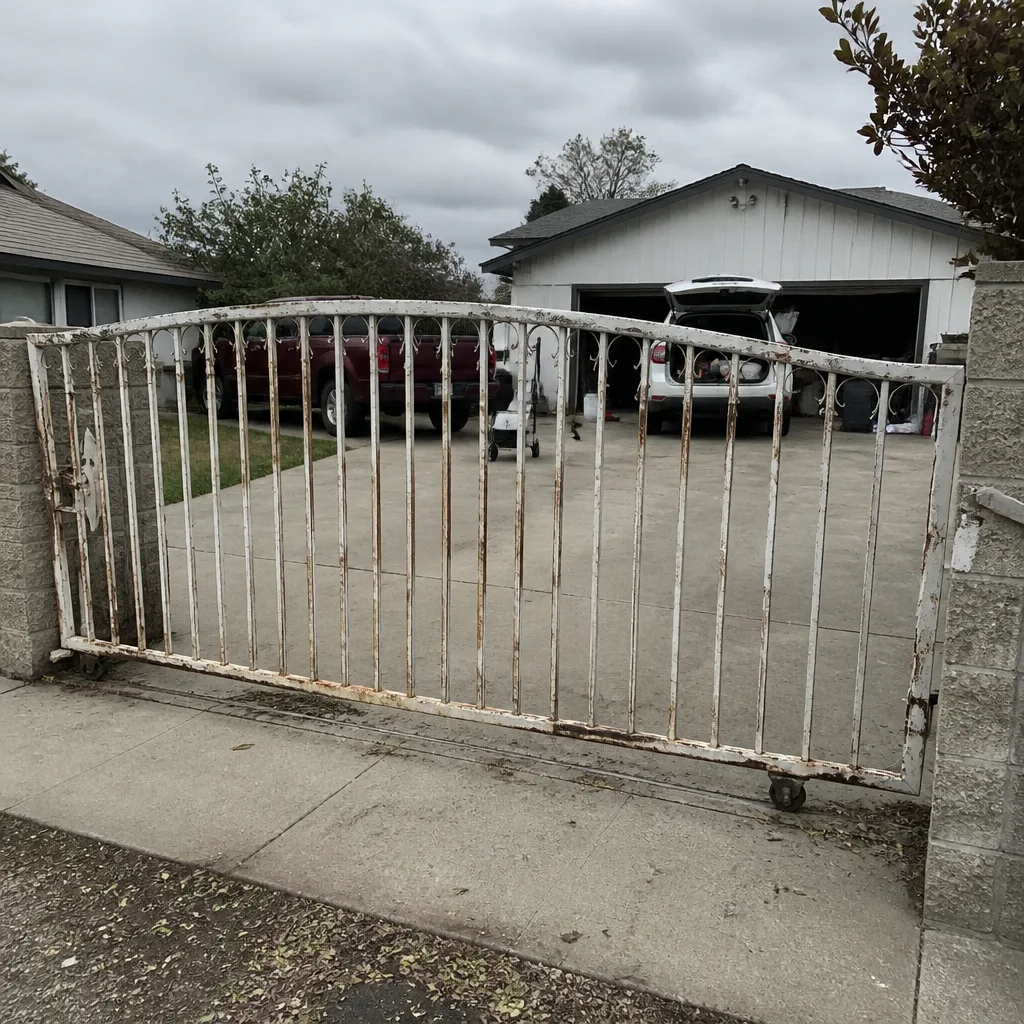
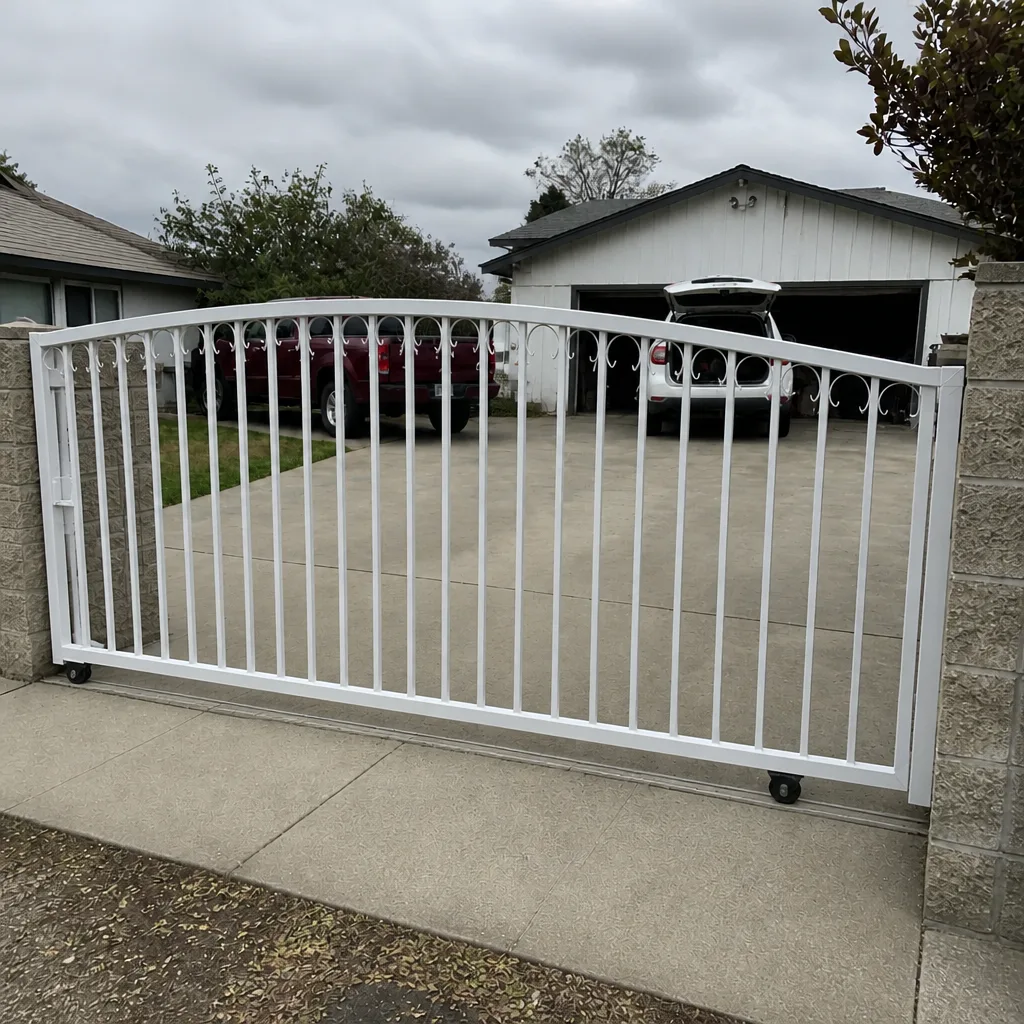
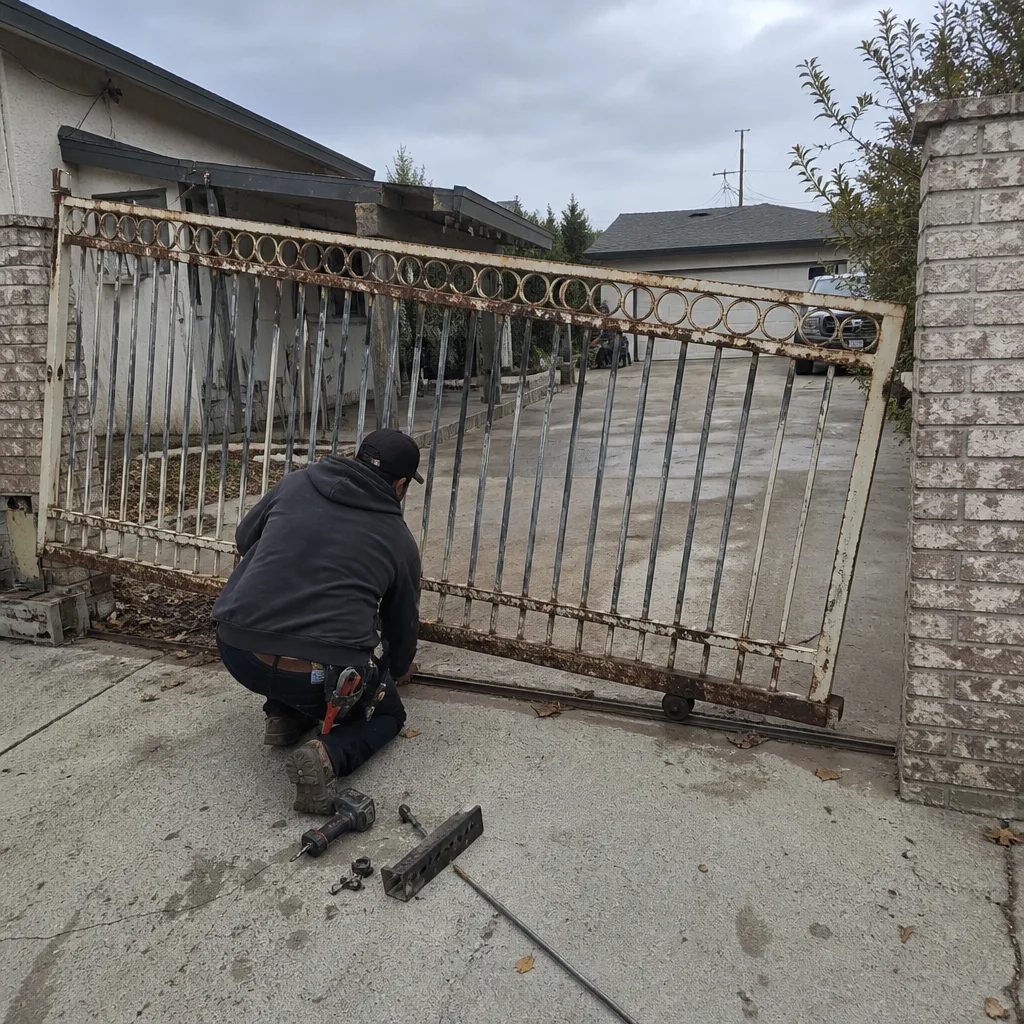
See the difference
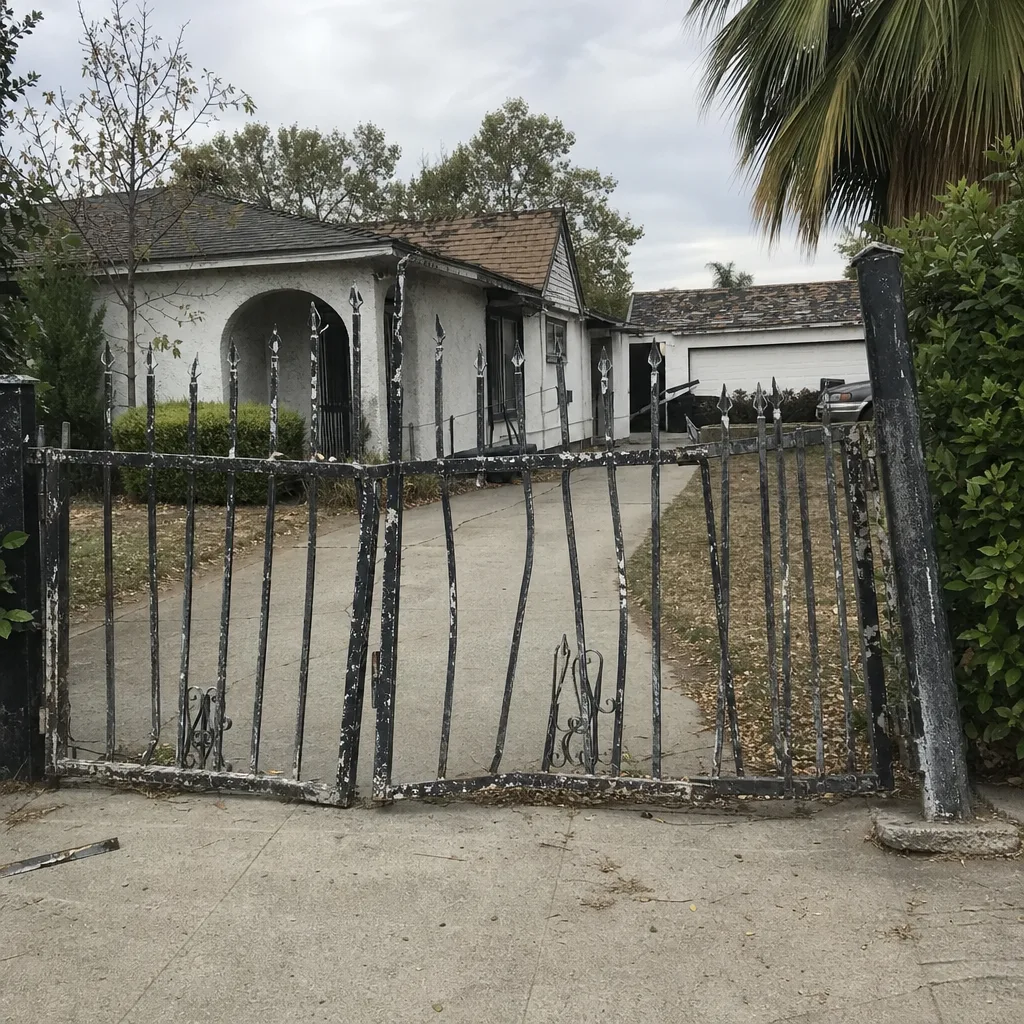 Before
 After
 Before
 After
 Before
 After
When to Call a Professional
Call a professional when the gate stops, reverses erratically, or shows any change you can’t explain from your own inspection. Call sooner if you smell burning at the operator, hear metal-on-metal grinding, see a leaning post, or if any safety device fails its monthly test. Don’t put off a failing battery, a misaligned photo-eye, or a gate that binds at the ends of travel. Each of those turns into a more expensive repair when the operator has to work against it.
Gate Repair Visalia offers free estimates in Visalia. Call (844) 702-1433. We answer 24/7. Fast dispatch, 7am-7pm, Sunday through Friday. Whether your gate needs routine service or a specialist’s diagnostic eye, a single call covers both repair and installation.
Frequently Asked Questions
Quarterly for most residential gates, more often if the gate runs on solar or takes heavy daily use. Visalia’s hot, dusty summers mean lubrication and battery checks should happen at the shorter interval. A full annual inspection rounds out the year. Call (844) 702-1433 for an exact quote. Estimates are free.
Heat-accelerated lubrication breakdown is the leading cause we see, followed by a structural issue at the gate that loads the operator. The motor itself is rarely the first thing to go. Call (844) 702-1433 for a free estimate before you authorize a replacement.
Yes, you can test open-circuit voltage at the battery terminals with a multimeter and compare it to the operator manual’s threshold. What you shouldn’t do is open the control box or test the charging circuit live. Leave that to a technician. Call (844) 702-1433 to schedule a battery and operator check with a free estimate.
No. FAAC, BFT, Linear, Viking, and other brands each have their own lubrication points, battery recommendations, and cycle ratings. The manual is the starting point, and the drive type and climate adjust it from there. We work on your gate brand, so call (844) 702-1433 and we’ll match the schedule to your system.
A gate that stops halfway usually has a limit switch issue, a binding hinge or rail, or a failing control board. The fix depends on which it is, and that’s a diagnostic question, not a guess. Call (844) 702-1433 for an exact quote. Estimates are free.
Yes, especially for high-end properties. A log documents the gate’s history, supports warranty claims, and helps a buyer’s inspector see that the automation has been cared for. Keep measurements, photos, and repair records together. Call (844) 702-1433 for a free estimate on any repair the log turns up.
The Bottom Line
A gate maintenance schedule is not one checklist. It’s a plan built around the drive type, the material, and the climate where the gate runs. Here in Visalia, heat is the variable, and the schedule that works elsewhere needs a shorter lubrication interval, a high-temp product, and a battery test that’s actually a test. Get the monthly checks, quarterly service, and annual inspection on a calendar, keep a log that protects your resale value, and leave the springs, wiring, and control boards to a trained professional. Catching a problem at the monthly check is always cheaper than catching it on a repair visit.
If your gate needs a check, a repair, or a fresh installation, call Visalia‘s gate specialists at Gate Repair Visalia. Call (844) 702-1433 for a free estimate. We answer 24/7. Fast dispatch from 7am to 7pm, Sunday through Friday. Our technicians have up to 14 years of experience and work on your gate brand, whether it’s a residential driveway or a commercial access point.
Written by the team at Gate Repair Visalia.