
Last updated November 14, 2026
 Wrought iron
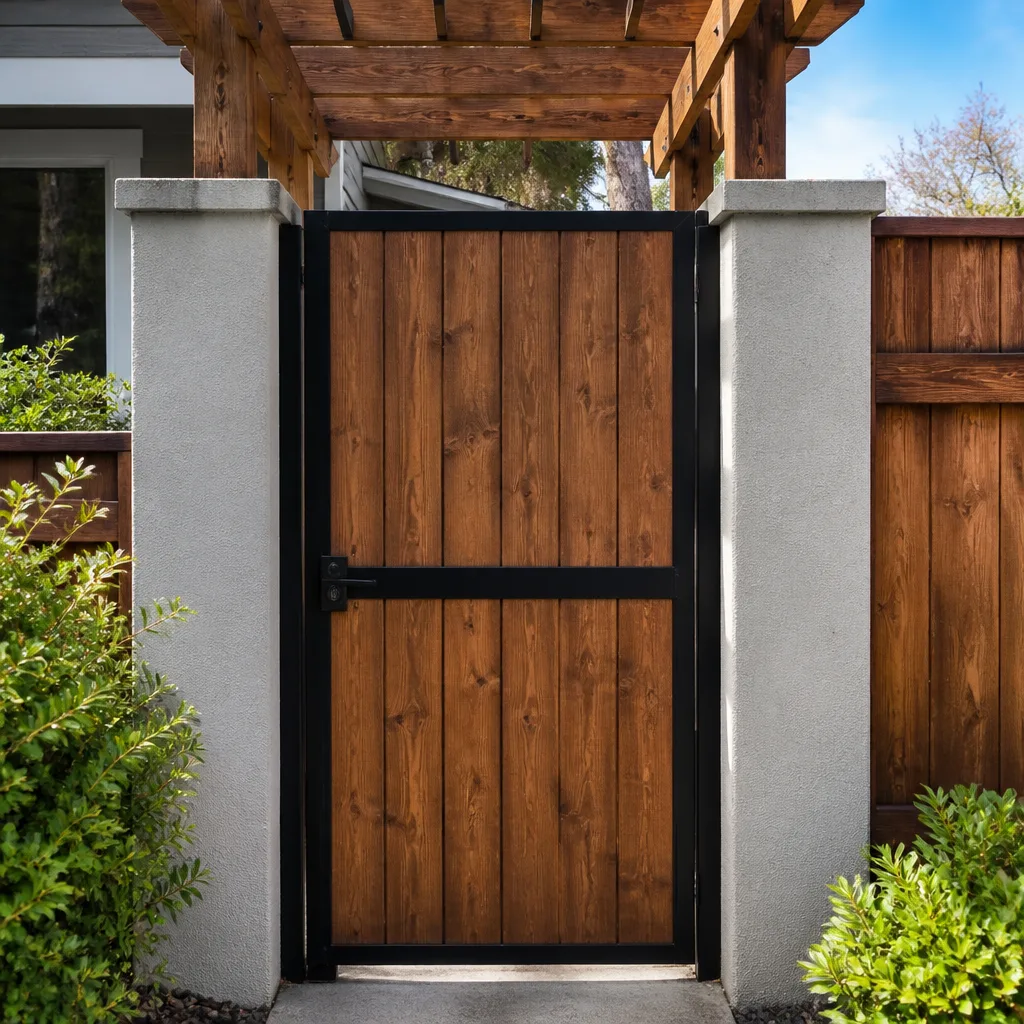 Wood & steel frame
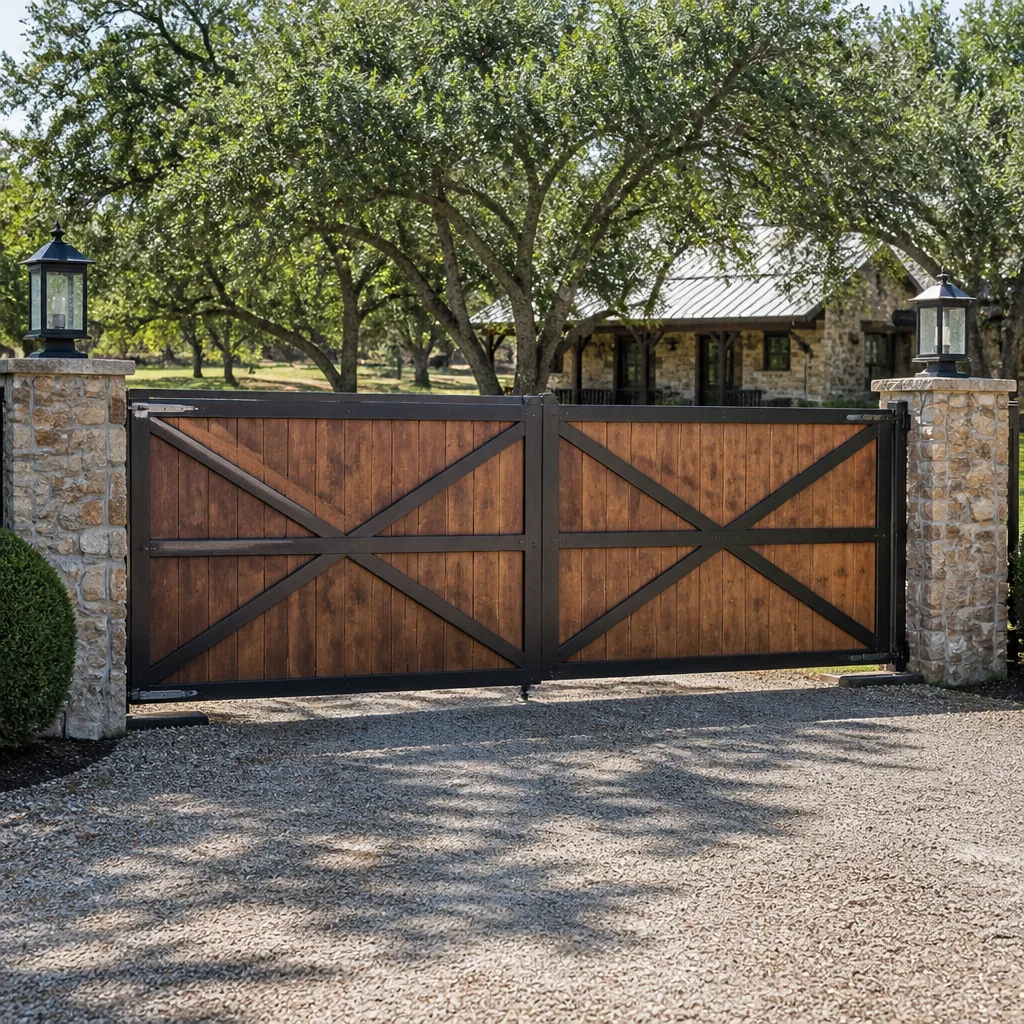 Farm & ranch
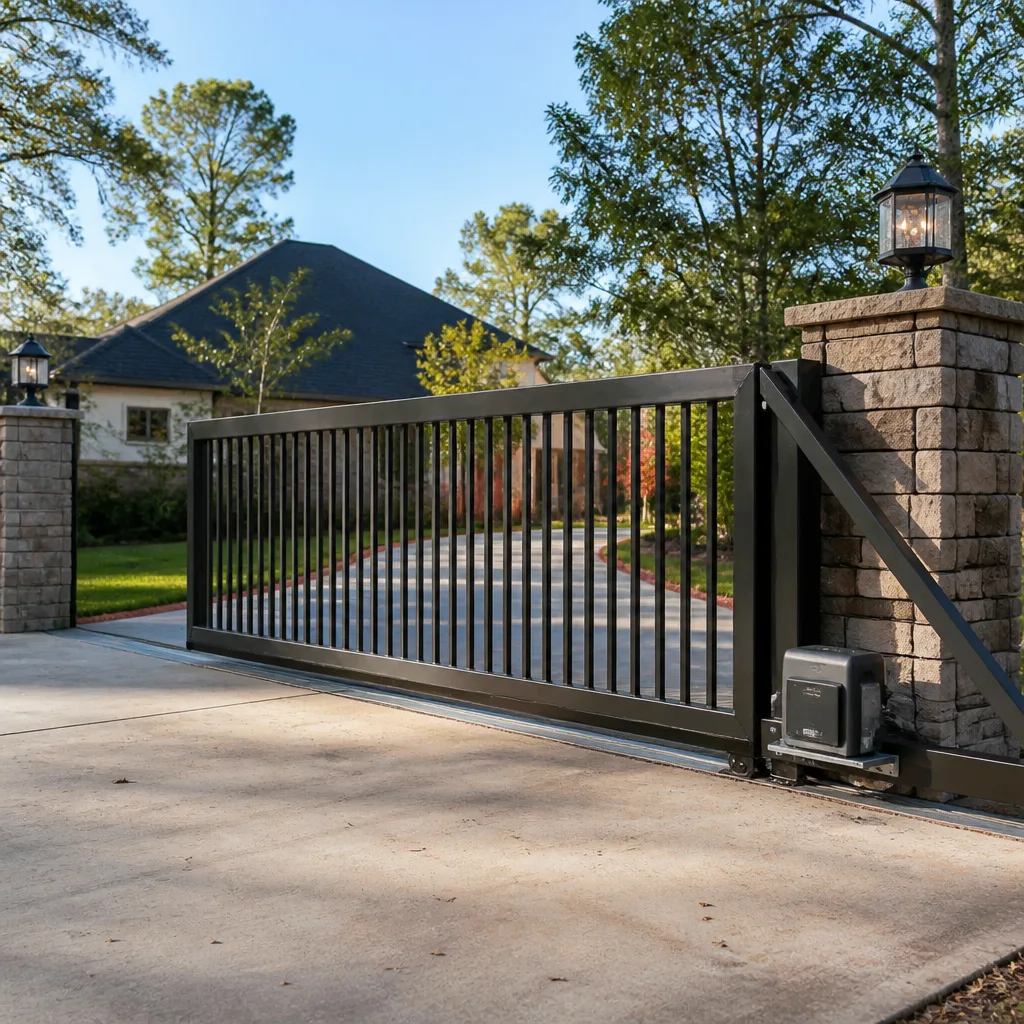 Sliding driveway gates
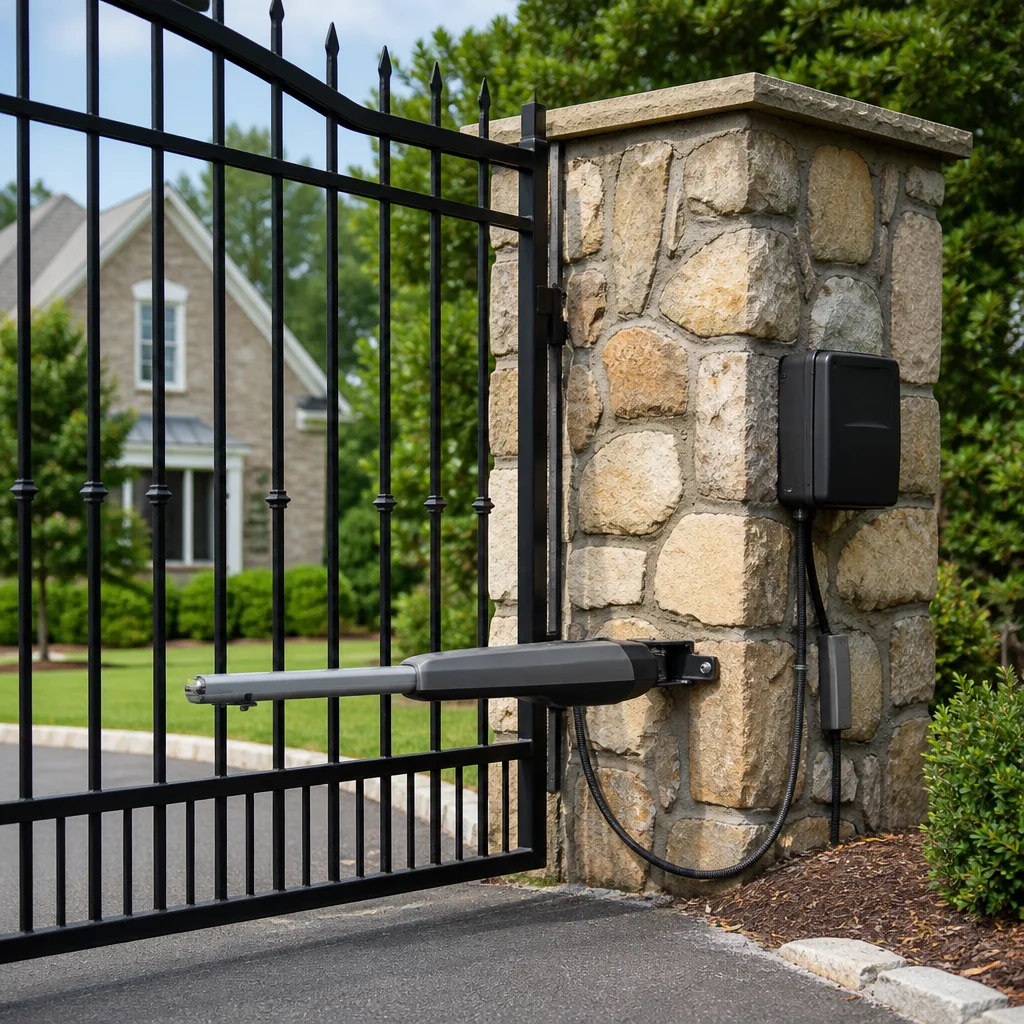 LiftMaster operators
Free on-site gate assessment - hinges, posts, and your LiftMaster or Nice gate operator checked before anything is quoted
The assessment is free and the quote is the invoice.
Get your free estimateGate Repair Emergency Preparedness Guide for Visalia Homes
Most gate emergencies in Visalia aren’t really about the gate. They’re about the ninety seconds after it fails, when a homeowner has to decide whether to force a stuck gate, leave it hanging open, or start calling numbers from a search results page in the dark. The gate itself is a mechanical problem with a known answer. The panic is what costs money. A gate stuck open is a security breach in progress. A gate stuck closed is an access problem that gets worse every hour. Neither one has to become a crisis if you’ve thought about it before it happens. This guide walks through the manual releases on the operators most common in Visalia homes, the triage decision between security and access, the local failure patterns we see, and the kit and phone script that shorten every emergency repair.
Quick Answer
Gate emergencies in Visalia split into two failure modes with opposite priorities: a gate stuck open is a security problem and needs to be secured or closed first, while a gate stuck closed is an access problem and should never be forced by hand. Before anything breaks, locate your operator’s manual release, learn how it disengages on your specific model, and keep a small emergency kit plus your operator’s documentation on hand. Our technicians have up to 14 years of experience across BFT, Linear, Viking, Ghost Controls, and other major operator brands, and we can walk you through the release over the phone.
Styles & brands we work with
- Wrought iron
- Wood & steel frame
- Farm & ranch
- Sliding driveway gates
- LiftMaster operators
Table of Contents
- The Two Failure Modes: Stuck Open vs. Stuck Closed
- How to Find and Operate Your Manual Release
- Visalia Emergency Scenarios: Fog, Vehicle Strikes, Holiday Weekends
- What to Tell Us When You Call
- Building Your Emergency Gate Kit
- Power Outages and Operator Resets
- Preventive Checks That Head Off Most Emergencies
- When to Call a Professional
The Two Failure Modes: Stuck Open vs. Stuck Closed
The first thing to understand about gate emergencies is that the same physical failure produces completely different problems depending on which position the gate was in when it stopped. We’ve seen homeowners treat both the same way, which usually makes one of them worse.
A Gate Stuck Open Is a Security Crisis
When a gate fails in the open position, your property is exposed for as long as the gate stays that way. The gate may have stopped mid-cycle because of a sensor fault, a dead battery in a remote, a tripped breaker, or a motor stall, but the cause matters less than the exposure. Your priorities, in order:
- Secure the opening with a vehicle, a chain, or a physical barricade if the gate can’t be closed.
- Check whether the gate can be moved by hand after the manual release is engaged, and close it manually if it will travel freely.
- If the gate won’t move by hand, stop pushing. A jammed gate with a locked motor or a bent track will resist, and forcing it can damage the operator or the gate itself.
- Call for a technician with the gate’s brand, model, and symptom in hand so the right parts come on the first visit.
Leaving a gate open overnight is the mistake we see most. Even a chain across the opening and a note on the control box is better than nothing while you wait for service.
A Gate Stuck Closed Is an Access Crisis
A gate that won’t open is a different animal. Nobody can get in, and if you’re inside, nobody can get out without a physical release. This is where people force things. Forcing a stuck gate by hand, whether by pushing the panel, prying the operator arm, or repeatedly cycling the remote, is the single most common way a small repair becomes a bigger one. The operator motor, the gearbox, the limit switches, and the gate’s hinges all take the strain. The right move is to engage the manual release (covered below), move the gate by hand only if it travels freely, and call for help.
If you’re locked inside and can’t get the release to work, call us at (844) 702-1433. We answer 24/7. Fast dispatch from 7am to 7pm, Sunday through Friday, and we can talk you through your operator’s release over the phone.
How to Find and Operate Your Manual Release
Every automated gate operator has a manual release or disconnect that lets you move the gate by hand when the power is out or the operator has failed. The release is the most important piece of emergency knowledge a gate owner can have, and it varies significantly between brands. Here’s where to look and how the release typically works on the operator families we see most in Visalia.
BFT Operators
BFT operators generally use a key-release mechanism, often located on the operator housing itself, sometimes under a small cover. Inserting the key and turning it disengages the drive. On some models the release is a lever rather than a key, tucked under the housing. The exact position varies by model, so find it now while nothing is wrong, not in the dark during an outage.
Linear Operators
Linear swing and slide operators typically use a manual release lever or a keyed release on the operator arm. On swing operators, the arm often has a release pin or a lever that you pull to disengage the linkage from the gate. Once released, the gate swings freely by hand. If the gate doesn’t swing freely after release, stop and call a technician.
Viking Operators
Viking operators vary by model, but many use a keyed manual release with a lever or a release handle on the operator body. The release disengages the drive gear so the gate can be moved manually. On slide gates, the gate should then roll along the track with light hand pressure. If it doesn’t, something else is wrong and forcing it will make it worse.
Ghost Controls Operators
Ghost Controls operators are common on residential swing gates and typically use a manual release lever or a release mechanism on the operator arm. The release lets you disengage the operator from the gate so you can open it by hand. The release location is covered in your owner’s manual, and if you can’t find your manual, the brand’s documentation is usually available online.
Other Brands
LiftMaster, FAAC, DoorKing, Elite, and Mighty Mule operators all have their own release designs. Some are keyed, some are lever-based, some use a release pin. We work on all of these and can walk you through yours if you’re not sure. The key is to locate the release before you need it, and to practice the motion once so it’s familiar.
One safety note: never put your hands or body between the gate and a fixed post, wall, or vehicle while the release is engaged or the gate is in motion. A released gate can swing or slide under its own weight. Keep clear of the gate’s travel path.
Visalia Emergency Scenarios: Fog, Vehicle Strikes, Holiday Weekends
Some gate failures are universal. Others cluster around local conditions, and knowing the local patterns helps you prepare for the failures most likely to hit a Visalia home.
Power Outages During Tule Fog Conditions
Tule fog is a fact of life in the Valley in winter, and it’s not just a driving hazard. Heavy fog and the weather systems that produce it can bring outages, and an outage takes an automated gate offline instantly. A gate on a battery backup may ride through a short outage, but a longer one will drain the battery and leave the gate stuck. This is exactly the scenario where knowing your manual release pays off. If your gate is stuck closed after an outage, engage the release and move it by hand if it travels freely, then call when the power is back to have the operator checked. A battery that has been deep-cycled may need testing or replacement before the next outage.
Post-Vehicle-Strike Gate Jams
A vehicle contacting a gate, even at low speed, can twist the panel, bend the hinges, or knock the gate off its track. The gate may then jam in whatever position it was in. Do not force a gate that has been struck. The damage may include bent hinges, a bent track, a damaged operator arm, or a misaligned latch, and forcing the gate can turn a hinge repair into a panel replacement. If the gate is stuck open after a strike, secure the opening and call for service. If it’s stuck closed and you need access, engage the manual release and stop if it resists.
Remote System Failures on Holiday Weekends
A remote or receiver failure always seems to happen on a holiday weekend, when a gate is needed for arriving guests and reaching a technician is harder. A gate that won’t respond to any remote, but works from the keypad or intercom, usually points to the remote, the battery in the remote, or the receiver rather than the gate itself. A gate that responds to nothing points to the operator, the power supply, or the control board. Either way, the manual release gets you through until service. We answer 24/7 at (844) 702-1433, and a call outside dispatch hours is booked into the next opening, Sunday through Friday, 7am to 7pm.
What to Tell Us When You Call
What you tell us on the phone directly determines how fast we can diagnose the gate and whether the right parts come on the first visit. A caller who has the gate’s brand, model, and symptom ready gets a faster, more accurate repair than one who has to hunt for the information while on the call. Here’s the checklist.
- Brand and model. The operator brand (BFT, Linear, Viking, Ghost Controls, LiftMaster, FAAC, DoorKing, Elite, or Mighty Mule) and the model number if you have it. The model number is usually on a label on the operator housing or inside the control box cover.
- Gate type and position. Swing or slide, and whether it’s stuck open, stuck closed, or moving erratically.
- The symptom in plain words. Won’t respond to the remote, opens but won’t close, reverses on its own, makes a grinding noise, stops halfway, beeps and does nothing. Plain language is usually more useful than a guess at the cause.
- What changed just before it failed. A power outage, a heavy fog morning, a vehicle contact, a recent storm, a new remote, or nothing at all.
- What you’ve already tried. Whether you cycled the breaker, replaced remote batteries, or engaged the manual release.
- Access details. Whether the gate is on a residential driveway, a shared access lane, or a commercial entrance, and whether there’s a secondary pedestrian gate.
That list is the difference between a first-visit fix and a second trip. Call (844) 702-1433 with it in hand. We answer 24/7, with fast dispatch from 7am to 7pm, Sunday through Friday.
Building Your Emergency Gate Kit
The best time to prepare for a gate emergency is before one happens. A small kit kept somewhere you can reach it in seconds, not a locked shed at the back of the property, covers most of what a gate owner needs. Three physical items and two pieces of documentation.
The Three Physical Items
- The operator’s release key or tool. Many operators use a keyed release, and without the key you can’t disengage the gate. Keep it on the same ring as your house keys or on a hook by the door. A spare is worth having.
- A bright flashlight and spare batteries. Most gate failures happen in low light, and a phone flashlight isn’t enough when you’re reading a model label or finding a release lever under a housing.
- A chain and padlock sized to your gate opening. If the gate can’t be closed, a chain across the opening restores some security until the repair. A heavy chain and a padlock are cheap insurance.
The Two Pieces of Documentation
- The operator’s owner’s manual. The manual tells you where the release is, how the limit switches work, and what the error codes or blinking lights mean. If you don’t have the paper copy, download the PDF for your model and keep it on your phone or printed in a drawer.
- A written record of your gate and operator details. Brand, model, install date if you know it, the gate type, and any notes about past repairs. On a call for emergency service, that one page saves precious minutes.
Add a note of the number for Gate Repair Visalia to the kit. When something fails, the last thing you want to be doing is scrolling through search results in the dark.
Power Outages and Operator Resets
Power outages are the most common trigger for gate emergencies in Visalia, and how you respond in the first minutes matters. Most automated gates will not open after an outage without intervention, and some operators need a reset before they’ll run normally again.
What to Do When the Power Comes Back
- Check whether the gate has re-engaged on its own. Some operators self-reset, some don’t.
- If the gate moved during the outage or was released by hand, make sure it’s back in its normal closed position before cycling the operator.
- Cycle the gate once from the keypad or a wall control, not the remote, so you can watch the full travel.
- If the gate reverses, stops, or grinds, stop cycling it and call. Repeated attempts after a fault can damage the operator.
- Test the safety sensors if the operator has them. A blocked or misaligned sensor after an outage will keep the gate from closing.
When the Gate Won’t Recover
Some outages leave the operator in a fault state that needs a technician. A control board can be damaged by a surge, a battery backup can fail, and a gate that ran against a stop during the outage can be out of position. If the gate won’t respond after a reset attempt, call us at (844) 702-1433. We answer 24/7, and for electric gate repair we can often diagnose the issue from your description and have the right part on the first visit.
Preventive Checks That Head Off Most Emergencies
Most gate emergencies we see don’t come out of nowhere. They build from small issues that were easy to ignore until they weren’t. A short walk-around check every few months is the cheapest emergency prevention there is.
- Test the manual release. Once every few months, engage the release and move the gate by hand to confirm it works and the gate travels freely. Re-engage it and cycle the gate to confirm it runs normally.
- Watch for slow travel or new noises. A gate that’s slower than it used to be, or that grinds, squeals, or clicks, is telling you something is wearing. Hinges, rollers, and tracks are common culprits.
- Clear the sensor path. Leaves, debris, and overgrown plants in the safety sensor path cause false reversals and phantom failures. Clear them before they become a habit.
- Check the battery backup. If your operator has one, look at its status indicator and know how old it is. A backup battery that’s near the end of its life will fail exactly when you need it.
- Look at the gate’s alignment. A gate that’s sagging or drifting out of square strains the operator every cycle. Catching it early turns a major repair into a minor adjustment.
- Test the remote’s range. If the remote only works close to the gate, the battery or the receiver may be aging. That’s a small fix now, an access problem later.
Our technicians have up to 14 years of experience diagnosing gate issues, and we’ve learned that the small checks catch the big failures. If you’d rather have a professional look your system over, a gate repair visit can identify problems before they strand you.
See the difference
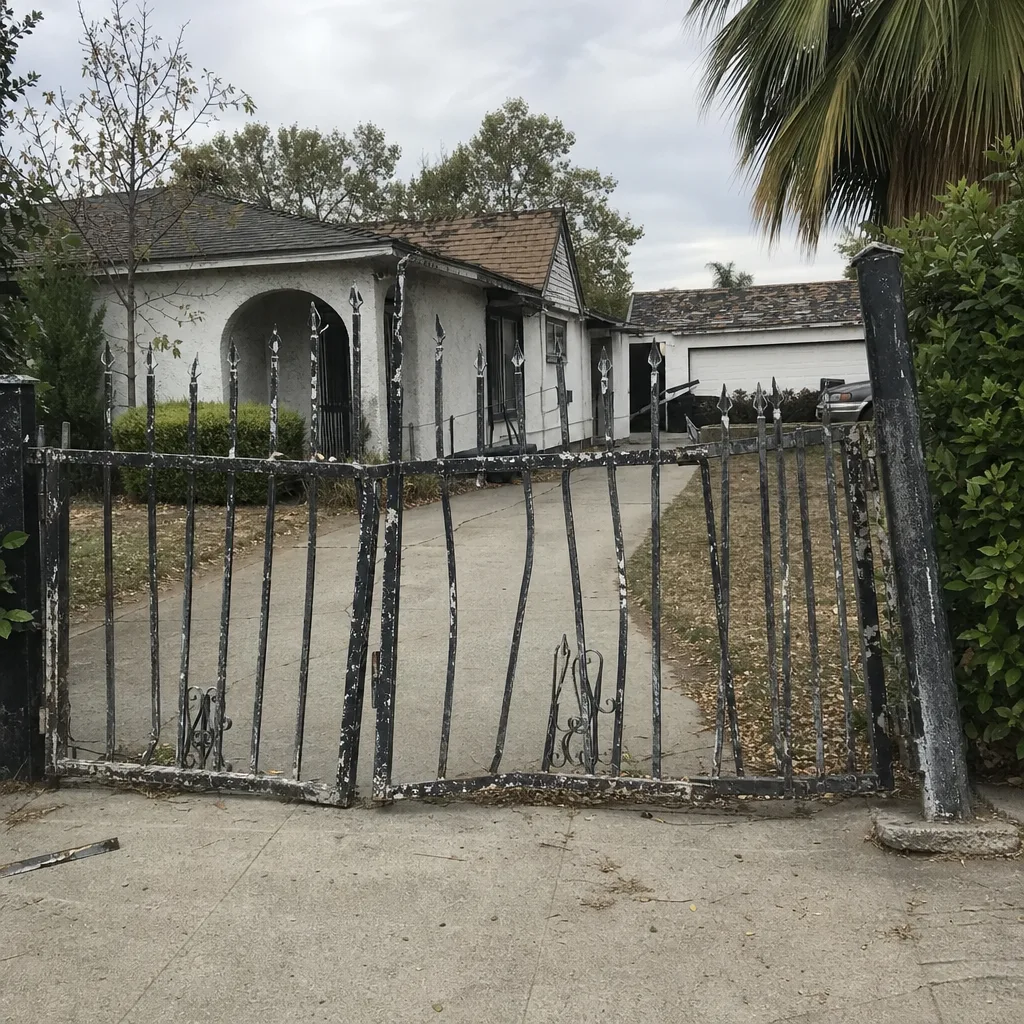 Before
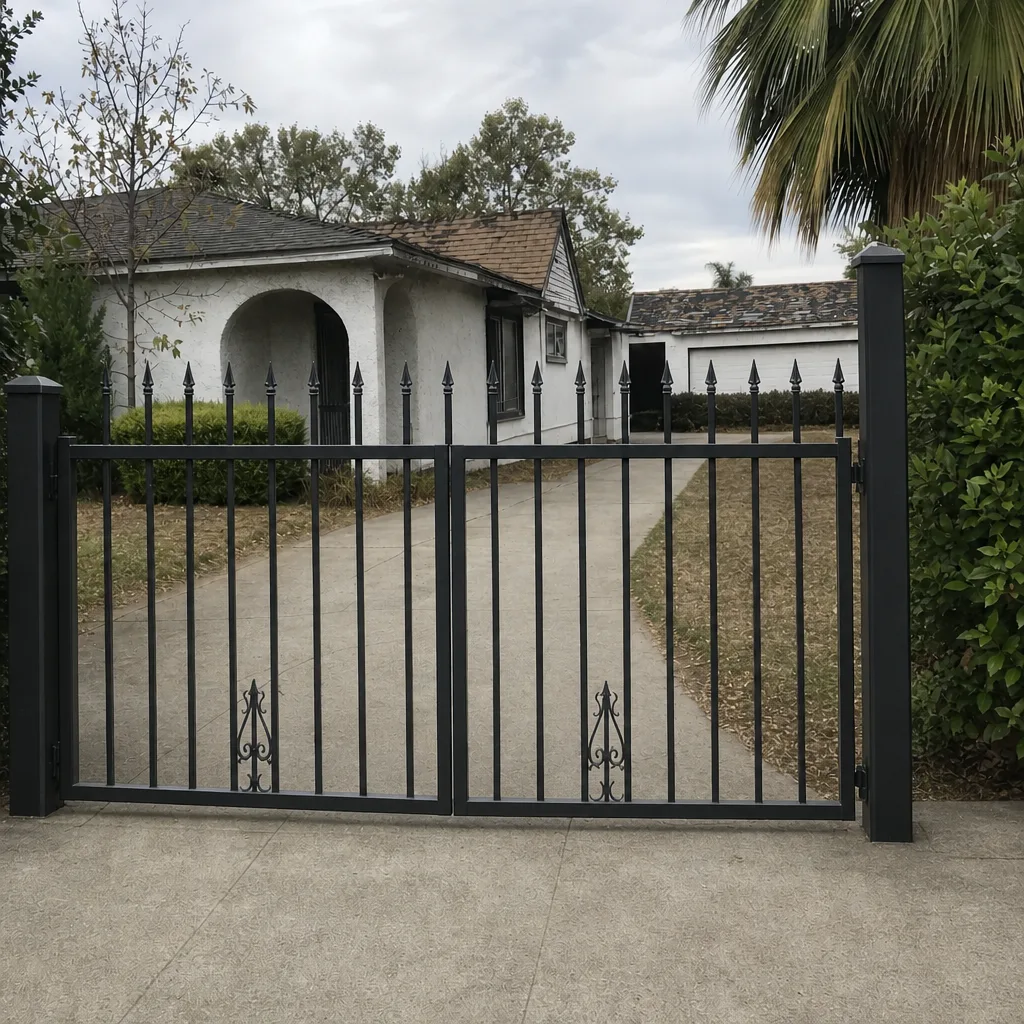 After
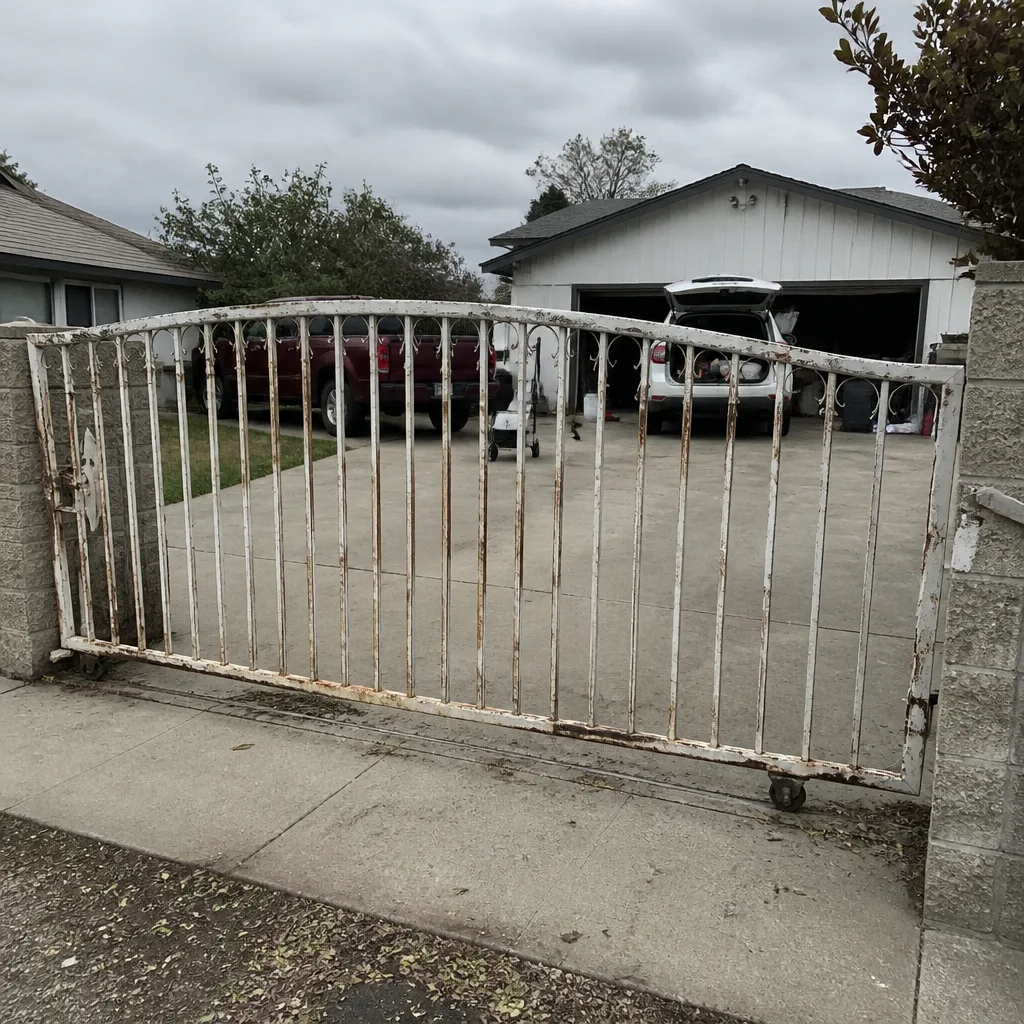 Before
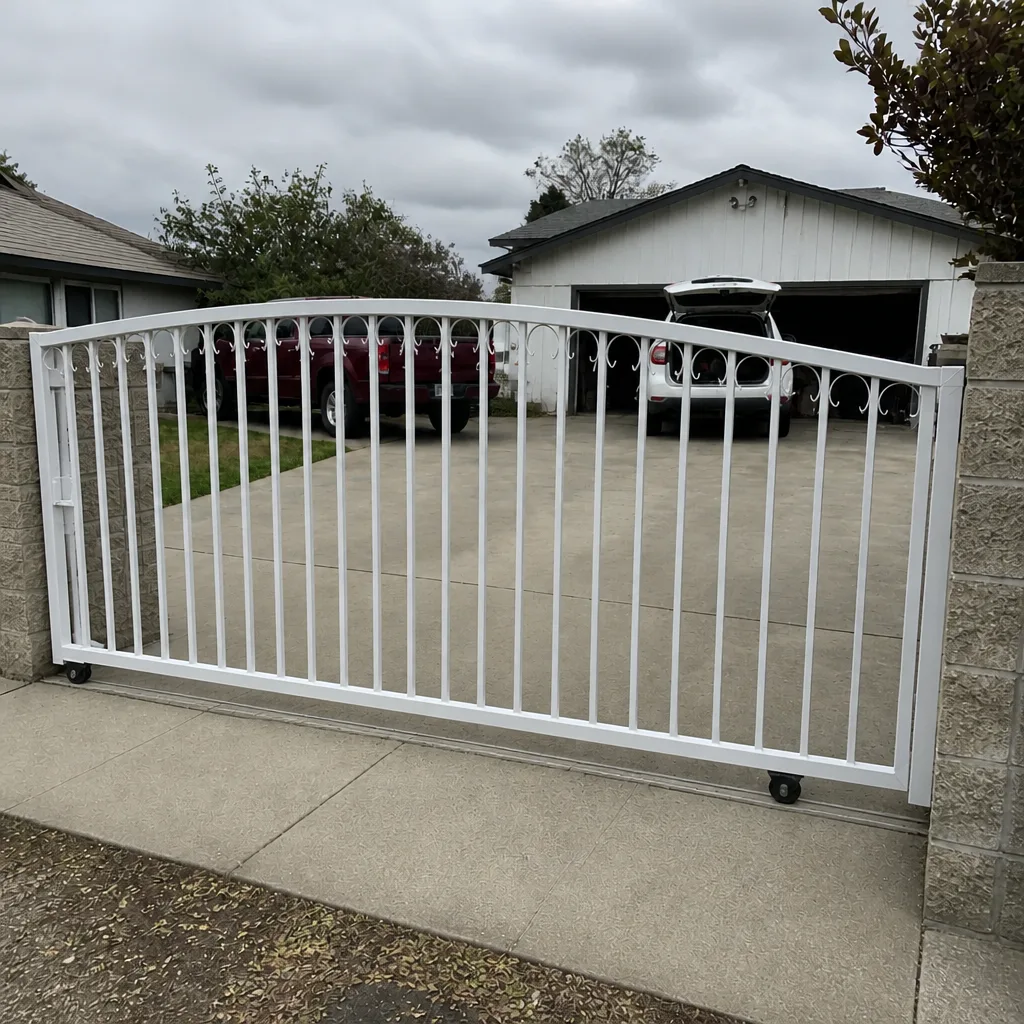 After
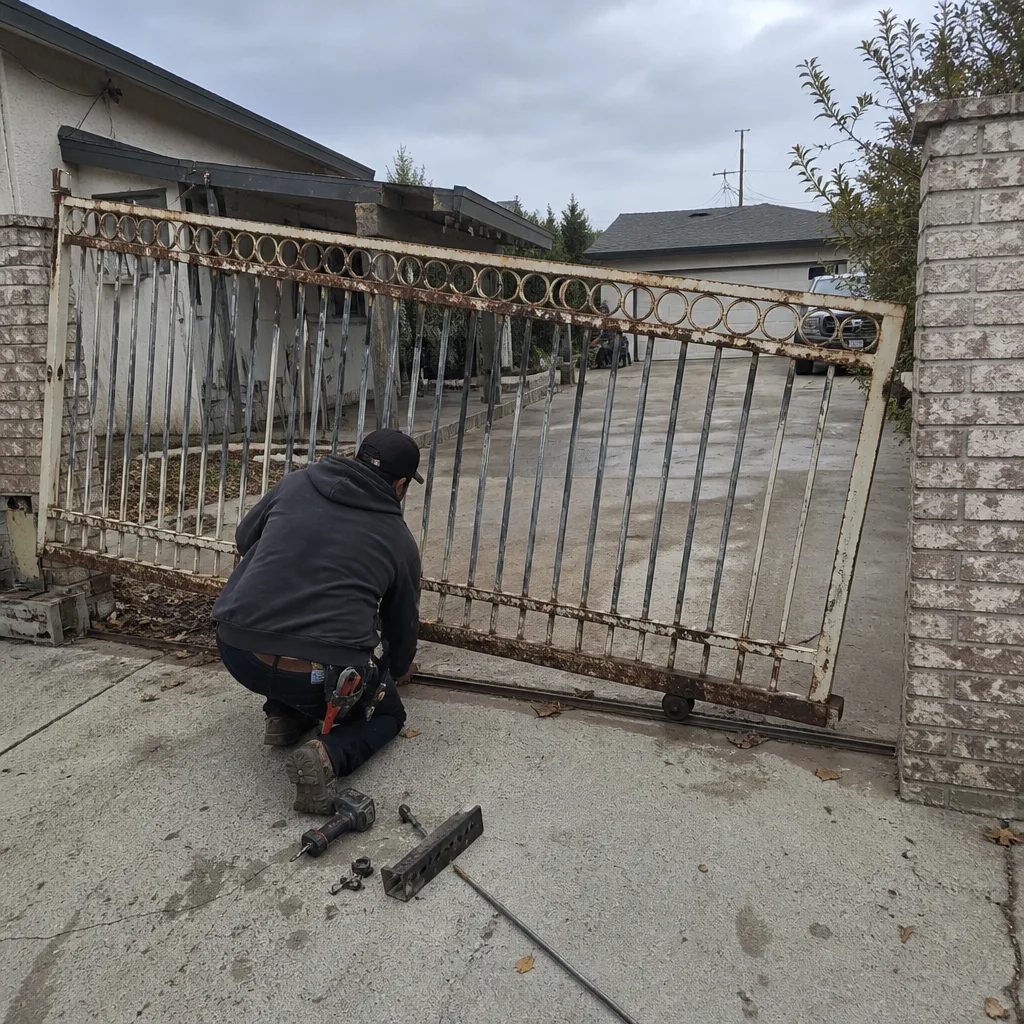 Before
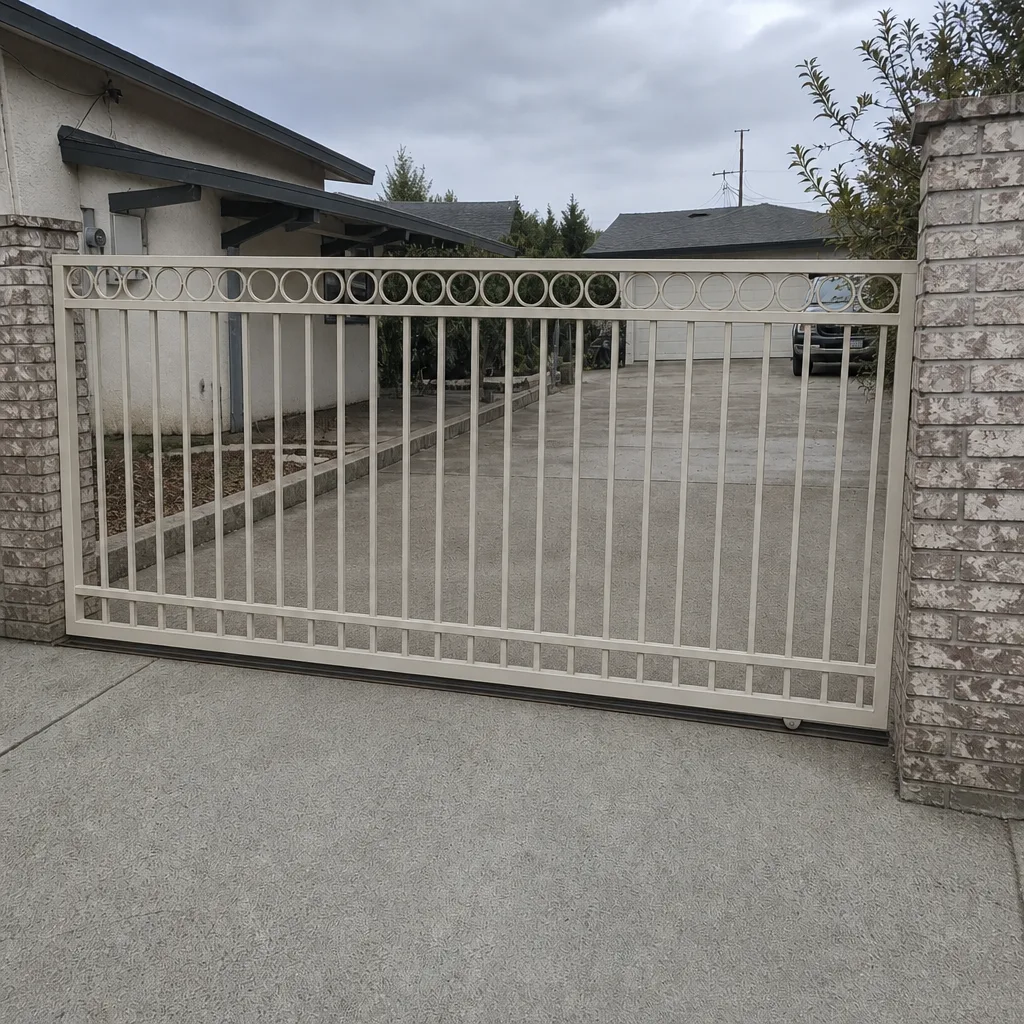 After
Common Mistakes to Avoid
- Forcing a stuck gate by hand. A gate that resists the manual release is jammed, and pushing harder bends panels, breaks hinges, or burns out the operator. Stop and call.
- Leaving a gate stuck open overnight. A gate that failed open exposes your property for as long as it stays that way. Secure the opening with a chain or a vehicle before you go to bed.
- Repeatedly cycling the remote when the gate won’t move. If the gate doesn’t respond the first few times, it won’t respond on the tenth, and repeated attempts can strain a seized operator.
- Calling without the model number. A caller who can give the operator’s brand and model gets a faster, more accurate repair on the first visit than one who can’t.
- Ignoring a slow gate or a new noise. A gate that’s slowing down is usually telling you a hinge, roller, or battery is failing. That early warning is the best chance you’ll get to fix it cheaply.
- Assuming a power outage reset is enough. Some operators come back after a reset. Many don’t, and cycling a faulted gate can make the problem worse.
- Not knowing where the release is. The single biggest delay in a gate emergency is the time spent hunting for a release key or a lever you’ve never used. Find it before you need it.
If you’re unsure about any of these, a quick Visalia inspection from a specialist is cheaper than an emergency repair. We’re happy to walk you through your gate’s setup over the phone before anything goes wrong.
When to Call a Professional
Some gate problems are safe to handle with the manual release and some aren’t. Call a professional when the gate won’t move even after the release is engaged, when it moves erratically or reverses without obstruction, when the operator makes grinding or clicking noises, when a vehicle has struck the gate, when the control board shows fault indicators you can’t clear, or when the gate is stuck open and you can’t secure the property. Electrical components inside the operator, the control board, the power supply, and any wiring should always be handled by a trained technician. Never open the operator housing to check wiring or boards yourself.
Gate Repair Visalia offers free estimates in Visalia. Call (844) 702-1433. We answer 24/7. Fast dispatch from 7am to 7pm, Sunday through Friday.
Frequently Asked Questions
Find the manual release on your operator, which is usually a keyed or lever release on the operator housing or arm, turn or pull it to disengage the drive, then move the gate by hand only if it travels freely. If the gate resists, stop and call a technician. The release location varies by brand, so locate it before an outage happens.
Secure the opening first, using a vehicle, a chain, or a physical barricade, so the property isn’t exposed while the gate is stuck. Then check whether the manual release will let you close the gate by hand. If it won’t move freely, call for service and tell the technician the gate’s brand and symptom. Call (844) 702-1433 for an exact quote; estimates are free.
Yes, it can be. Some operators need a reset after an outage, and the remote may not work until the operator is back in its normal state. Try the keypad or a wall control first, and if the gate responds there but not to the remote, the remote battery or receiver may be the issue.
No. Forcing a stuck gate is the most common way a small repair turns into a large one. If the gate doesn’t move freely after the manual release is engaged, something is jammed, and pushing harder damages hinges, tracks, panels, or the operator. Stop and call a technician.
We work on BFT, Linear, Viking, Ghost Controls, LiftMaster, FAAC, DoorKing, Elite, and Mighty Mule operators, along with most other major residential and commercial systems. Our technicians are familiar with the quirks of each brand, so we can diagnose the right problem instead of guessing.
Test your manual release every few months, keep the operator’s manual and your gate’s brand and model details on hand, watch for slow travel or new noises, and clear the sensor path regularly. Most emergencies build from small, easy-to-miss issues, and a short walk-around check catches them before they strand you.
The Bottom Line
Gate emergencies fall into two categories with opposite priorities: a gate stuck open is a security crisis, and a gate stuck closed is an access crisis. The first thing to do is secure the opening or find the manual release, not force the gate. Knowing how your operator’s release works before an outage, keeping a chain, flashlight, release key, and manual on hand, and calling with your brand and model ready turns a panic into a manageable repair. If you’re not sure your gate is ready for the next outage, call Gate Repair Visalia for a check before something fails.
Call Gate Repair Visalia at (844) 702-1433 for a free estimate. We answer 24/7, with fast dispatch from 7am to 7pm, Sunday through Friday. One call covers repair and installation across BFT, Linear, Viking, Ghost Controls, and every other brand we work on.
Written by the team at Gate Repair Visalia.