
Last updated November 14, 2026
 Wrought iron
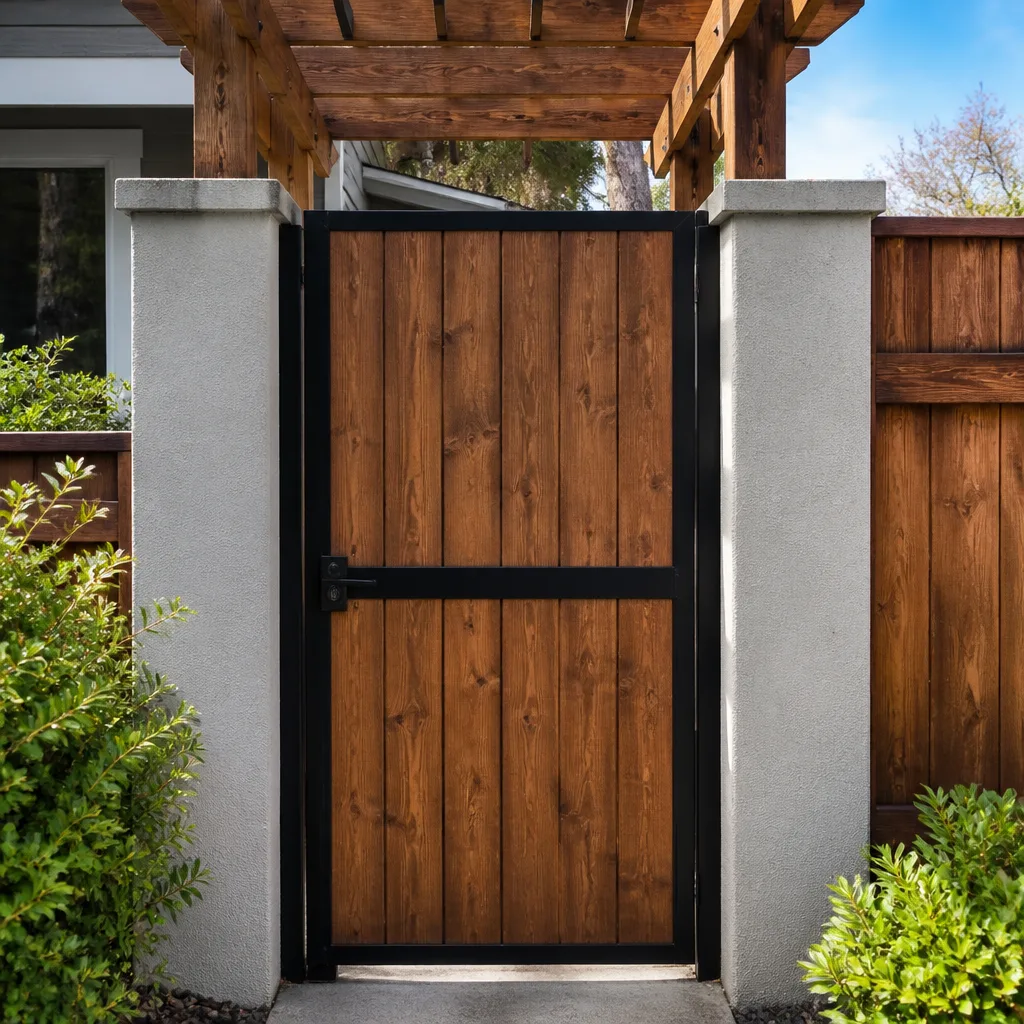 Wood & steel frame
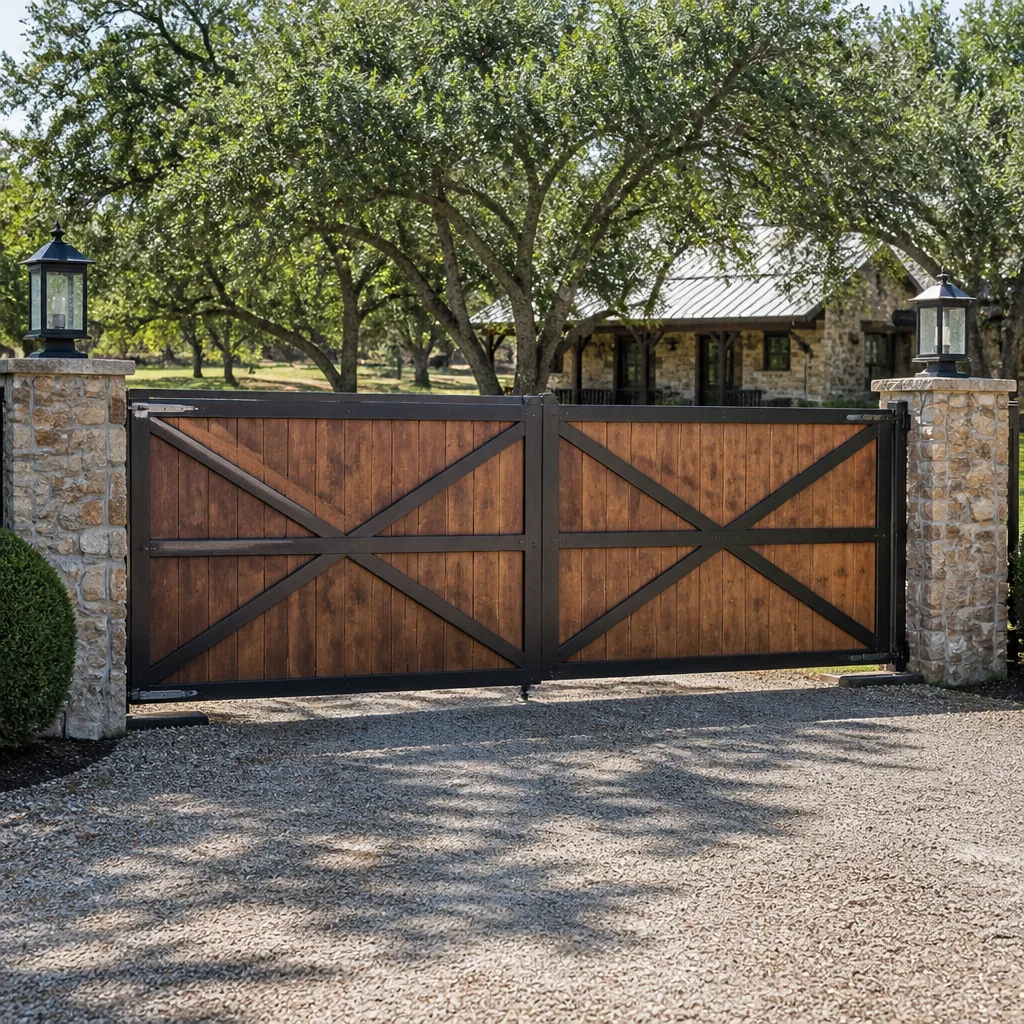 Farm & ranch
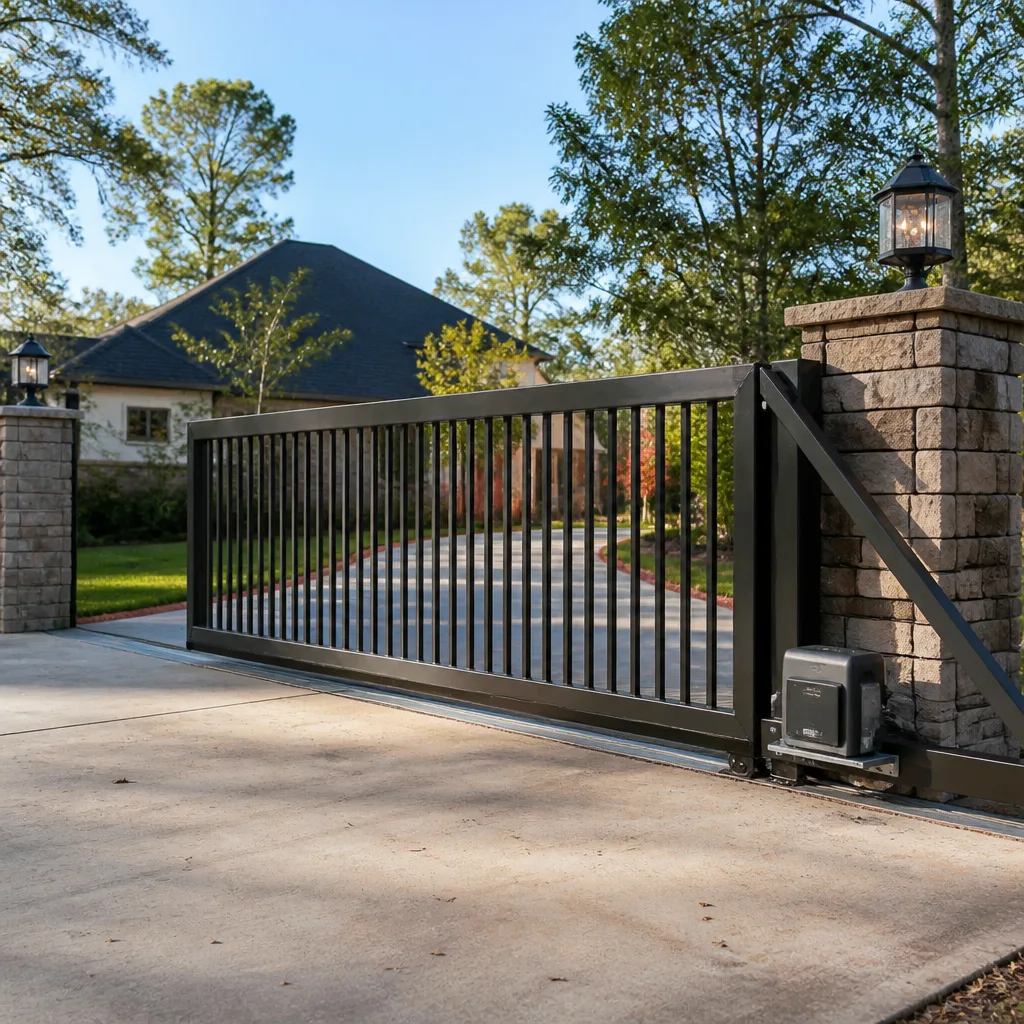 Sliding driveway gates
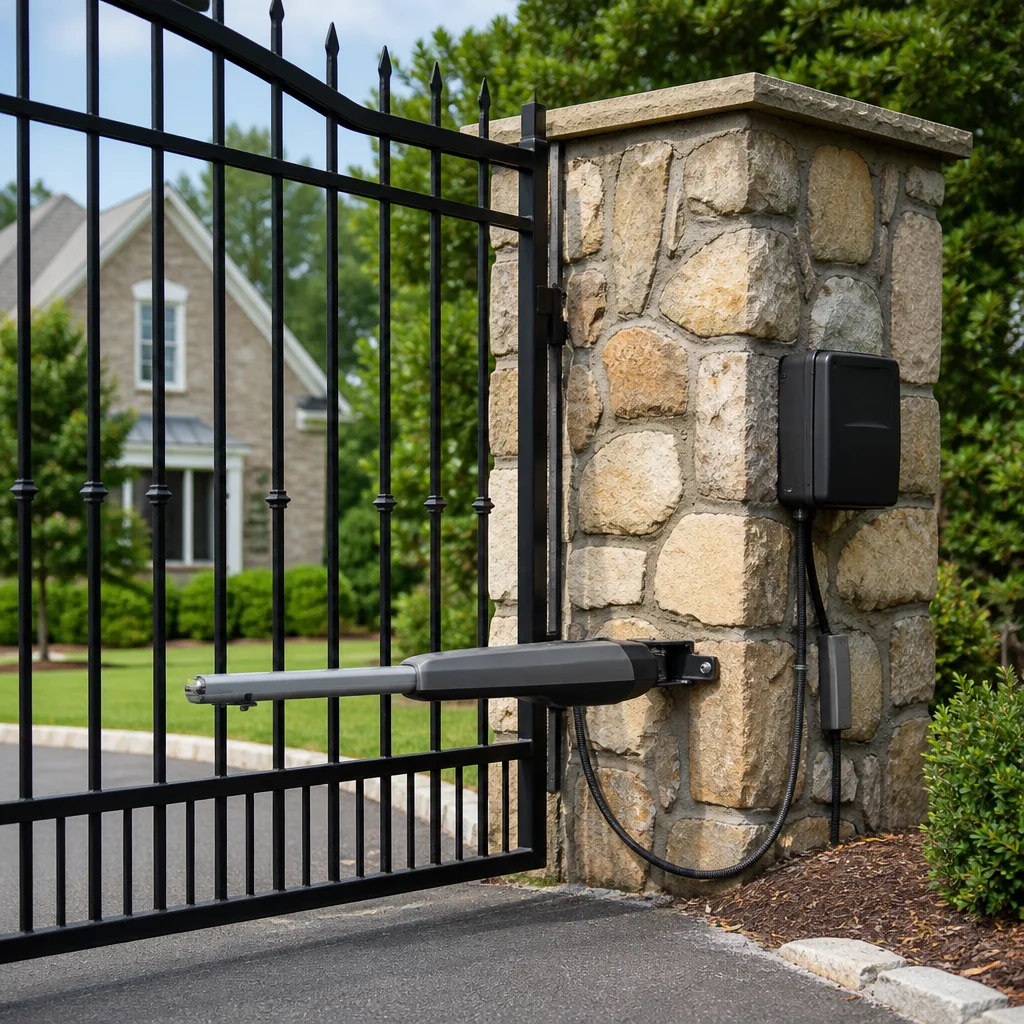 LiftMaster operators
Free on-site gate assessment - hinges, posts, and your LiftMaster or Nice gate operator checked before anything is quoted
The assessment is free and the quote is the invoice.
Get your free estimateSeasonal Gate Repair Care for Visalia: Year-Round Homeowner’s Guide
Most gate care advice assumes four seasons. Visalia doesn’t have four seasons. It has heat stress season, tule fog season, and two short transitions in between, and each one beats on a gate system differently. Tule fog in December and January doesn’t just cut visibility on Road 80. It pushes condensation into electrical enclosures and saturates wood gate components for weeks, setting up the failures homeowners discover the following spring and never connect to the weather. This guide maps care tasks to Visalia’s actual climate calendar, so you know what to check, when to check it, and what to leave to a technician.
Quick Answer
Gate care in Visalia follows the climate, not the calendar: service the operator and clean mechanical parts before sustained summer heat arrives, dry and inspect electrical enclosures and wood through tule fog season from November through February, clear the fall dust wave after nearby fields are worked, and inspect hinges, posts and wiring each spring. Seasonal work on an electric gate – control boards, capacitors, sensors, wiring – belongs with an electric gate technician, not a homeowner with a screwdriver.
Styles & brands we work with
- Wrought iron
- Wood & steel frame
- Farm & ranch
- Sliding driveway gates
- LiftMaster operators
Table of Contents
- Why Visalia’s Gate Care Calendar Doesn’t Match the National Template
- Pre-Summer Prep: Protecting Your Operator Before 100°F+ Heat
- Tule Fog Season: The Moisture Window Most Guides Ignore
- Post-Harvest Dust Surge: The Second Cleaning Nobody Schedules
- Spring Transition Inspection: What Winter Leaves Behind
- Adjusting Travel Limits and Sensitivity as Panels Expand
- Brand-Specific Seasonal Notes: Viking, Ghost Controls, DoorKing and Elite
- Visalia Seasonal Gate Care Checklist
Why Visalia’s Gate Care Calendar Doesn’t Match the National Template
National gate maintenance advice is written for places with hard freezes and long humid summers. Visalia has neither. Winters here are mild, which means the usual winterizing checklist – draining, antifreeze, freeze protection – does nothing useful. What actually stresses a gate in Visalia is prolonged dry heat in summer and prolonged low-cloud moisture in winter, two opposite conditions that each attack different parts of the assembly.
That mismatch causes real problems. A homeowner who follows a generic fall-winterizing guide will spend effort on things that don’t matter here and skip the tasks that do. Meanwhile the operator’s control board sits in an enclosure through weeks of fog condensation, the wooden panels swell and dry repeatedly, and the hinge hardware slowly works loose on posts that were set in soil that expands and contracts with moisture content rather than freezing.
We see three rough phases in our work around Visalia:
- Heat stress season (roughly May through September): sustained temperatures above 100°F, which is where operator electronics, capacitors and motor units take their hardest hits.
- Tule fog season (roughly November through February): weeks of low cloud and near-100% humidity, which is where control boards, wood components and iron hardware suffer.
- Two short transitions (spring and fall): the inspection windows where you catch what the previous season did before the next one accelerates it.
Everything in this guide hangs off that three-phase model. If you’ve been treating your gate to a four-season routine imported from a national checklist, this is the year to switch. For a broader look at what gate repair covers beyond seasonal care, that page lays out the full range of failure types we handle.
Pre-Summer Prep: Protecting Your Operator Before 100°F+ Heat
The single most useful thing you can do for an automated gate in Visalia happens in the weeks before the first sustained heat arrives: get the operator checked and the enclosure cleared while conditions are still mild. Thermal shutdown and capacitor failure are the two most common summer operator problems we diagnose, and both are easier to prevent than to fix in August.
Gate operators are rated to work in high heat, but the enclosure around them traps warmth. A housing with clogged vents, dust buildup on the board, or sun exposure on the wrong side will run measurably hotter than the air around it. When an operator overheats, many boards will shut the unit down to protect themselves and stay down until they cool. That’s the gate that “just stops working” on a hot afternoon and starts again hours later.
Pre-summer checklist for an automated gate
- Clear the enclosure vents and interior. Blow out dust and check that air can move through the housing. Dust is the most common cause of a hot enclosure in the valley.
- Check the control board for heat damage. Look for discoloration, bulging capacitors or a burnt smell. A technician should do this check, since the board holds live voltage even after the power is switched off at the breaker.
- Test the battery backup, if your operator has one. Batteries age faster in heat, and a weak battery shows itself as a gate that stalls during a power cut.
- Verify the safety sensors and loop detectors. Sensors that sit in direct sun all day can drift or false-trip when hot. Confirm they stop and reverse the gate correctly now, before the heat makes it worse.
- Lubricate the mechanical side. Hinges, rollers, tracks and the gate arm take a proper gate-rated lubricant. Dry metal plus heat plus dust is how you get a stiff swing and a strained motor.
- Check the sun exposure on the housing. If the enclosure sits in full afternoon sun with no shade, that’s worth knowing before the worst weeks arrive.
This is also the right time to have an electric gate repair specialist look at the operator if you’ve noticed any hesitation, unusual noise or intermittent behavior over the past year. Small electrical faults that seem harmless in spring become thermal shutdowns in July. If you’re unsure whether your system is showing early warning signs, a diagnostic visit before the heat is far cheaper than an emergency call during it.
Tule Fog Season: The Moisture Window Most Guides Ignore
From roughly November through February, tule fog settles over the valley and holds humidity near saturation for days at a stretch. Dry-climate maintenance guides have nothing to say about this, because their authors don’t live with it. Yet it’s the single biggest driver of the spring failures we see.
Moisture in fog doesn’t arrive as rain. It condenses. That distinction matters because condensation forms inside enclosed spaces – the operator housing, the control box, the conduit runs – where rain can’t reach. A board that stays dry all summer can sit in a fine film of moisture for weeks. Over time, terminals corrode, solder joints weaken, and the board starts behaving unpredictably. Then spring dries everything out and the intermittent fault remains.
Where tule fog does its damage
- Control boards and electrical enclosures. Condensation on the board is the leading cause of intermittent gate faults we diagnose in Visalia each spring. Gaskets and enclosure seals are the first line of defense; a worn seal lets moisture in all winter.
- Wooden gate panels. Wood absorbs moisture and swells, then dries and shrinks as the fog lifts. That cycling loosens fasteners, opens seams and stresses joints. You’ll often notice it as a gate that suddenly sags or rubs in March.
- Iron and steel hardware. Hinges, latches and structural steel corrode faster in prolonged damp than in dry heat. Surface rust on moving parts becomes seized pivots if it’s left through the wet months.
- Conduit and underground wiring. Moisture intrudes at joints and fittings. A compromised run may not fail outright; it shows up later as erratic sensor behavior or a loop detector that won’t hold.
What to do through fog season
- Inspect enclosure seals and gaskets at the start of the wet season and replace any that are cracked or compressed.
- Keep the control box closed and latched. Sounds obvious, but an enclosure left open for a quick adjustment in October will collect fog all winter.
- Check the wood for swelling and loose fasteners every few weeks through the wet months. Tighten what’s loosening rather than waiting for the spring sag.
- Wipe and lightly protect exposed iron hardware with a gate-rated product before the fog settles in.
- Note any erratic behavior – a sensor that trips for no reason, a remote that needs a second press – and have it diagnosed in spring, because that pattern often traces back to moisture in the electrics.
None of this is difficult, but it only works if you know the fog window exists. Most of the moisture damage we repair in Visalia was preventable with a gasket check and a closed enclosure.
Post-Harvest Dust Surge: The Second Cleaning Nobody Schedules
Visalia sits among active agricultural fields, and the fall brings a dust wave that most homeowners never plan for. When fields are worked after harvest, fine soil dust lifts and settles across the valley. It coats everything, including your gate’s mechanical parts, its tracks and its operator housing. This is the second heavy dust event of the year, and it needs its own cleaning, separate from the pre-summer one.
Dust is not just cosmetic on a gate. It works into hinge pivots, roller tracks and slide gate rails, where it mixes with lubricant to form a grinding paste. It clogs enclosure vents, which creates the summer heat problem described above. And it settles on safety sensors and loop detector surfaces, where a thin layer can cause false trips or a gate that refuses to close.
Post-harvest cleaning steps
- Blow or brush dust off the operator housing and vents. Don’t spray water into the enclosure; dry removal is safer around electrics.
- Clear the tracks and rails. Sweep or blow out the slide gate rail and any roller track, then reapply a light gate-rated lubricant.
- Wipe the safety sensors and reflectors. A clean sensor face prevents a whole class of nuisance faults.
- Check the hinges and moving joints for dust buildup and re-lubricate anything that has gone dry.
- Look at the loop detector area in the driveway. Dust and debris over the loop cut can affect detection.
Do this cleaning once the fall field work has settled down. If you clean during active dust, you’ll be doing it again a week later. For properties on the edge of town where fields are close, the dust load is heavier and worth a second inspection. This is exactly the kind of local pattern a general fencing contractor won’t mention, because they don’t work gates every day. We do.
Spring Transition Inspection: What Winter Leaves Behind
Spring is the most valuable inspection window of the year in Visalia. The fog has lifted, the heat hasn’t arrived, and every problem winter caused is visible before summer accelerates it. A gate that survived the wet months can still fail in June if the damage underneath isn’t addressed in March.
What you’re looking for in spring is the accumulation of the previous season: swollen wood that has now dried and left loose hardware, corroded electrical terminals that have started to fault, hinges that are stiff from damp and dust, and posts that have shifted. That last one matters. Post movement in Visalia usually comes from soil moisture cycling, not frost, but the effect is the same: a gate that no longer lines up, catches on the ground, or strains the operator to move.
Spring inspection list
- Walk the gate through its full travel and listen. New grinding, rubbing or clicking points to a mechanical issue.
- Check post stability. Push test the posts; any wobble or lean needs attention before it strains the hinges and operator.
- Inspect hinges and hardware for corrosion, looseness and wear. Tighten and lubricate as needed.
- Look at the underground wiring and conduit runs for signs of moisture intrusion or damage. A specialist should check this, since it involves live circuits.
- Test every safety device – sensors, loop detectors, any edge protection – to confirm they stop and reverse the gate correctly.
- Check the wood for cracks and opened seams that appeared as panels dried.
- Review the operator for any faults logged over winter and have intermittent issues diagnosed now, before heat makes them worse.
If your spring inspection turns up anything electrical, don’t defer it to summer. That’s the window when an electric gate specialist can fix the fault in mild conditions. Our technicians have up to 14 years of experience diagnosing exactly this pattern of winter damage and reading what it means for the months ahead.
Adjusting Travel Limits and Sensitivity as Panels Expand
Metal and wood both change dimension with temperature. In Visalia the swing is large enough that a gate set up perfectly in January can bind in July and slam in December. That’s why travel limits and sensitivity settings are seasonal adjustments here, not set-and-forget parameters.
Travel limits tell the operator where the gate should stop opening and closing. If they’re set tight in cool weather, expanding panels in summer can push the gate past where the operator expects it to be, causing it to strain against a hard stop or refuse to latch. Sensitivity settings control how much resistance the operator tolerates before it reverses. Set too sensitive, a stiff hinge on a cold morning trips the gate mid-cycle. Set too loose, and the safety response weakens.
How to think about seasonal adjustment
- Adjust limits when you notice the gate straining at the end of travel or failing to seat fully closed. This often shows up as a change of season, not a breakdown.
- Watch sensitivity through temperature swings. If your gate reverses unexpectedly on cool mornings, sensitivity may be too tight. If it doesn’t reverse when it meets an obstruction, that’s a safety problem to fix immediately.
- Never rely on a loosened sensitivity setting to cover a stiff hinge or dragging gate. Fix the mechanical cause instead of dialing down the safety.
- Have a technician re-set limits after any hinge, roller or post repair, since the mechanical change alters where the gate actually travels.
Adjusting an operator’s limits and sensitivity involves live electrical components inside the enclosure. We don’t recommend homeowners open the control box to do it. It’s a task for a trained electric gate technician, and it’s part of the seasonal tune-up we perform around Visalia.
Brand-Specific Seasonal Notes: Viking, Ghost Controls, DoorKing and Elite
Seasonal care follows the same climate logic regardless of brand, but the details differ. We work on your gate brand rather than pushing one, and that matters across the brands common on Visalia properties. Here’s what shifts between them.
Viking operators on residential driveways are generally built for durability, but their control electronics still feel the fog season. Viking boards benefit from a seal check at the start of the wet window, and their battery backup should be tested before summer heat takes a toll.
Ghost Controls systems are common on residential swing gates, and their sensitivity settings respond noticeably to seasonal temperature change. A Ghost Controls gate that reverses on cool spring mornings often just needs its travel and sensitivity re-set to the season rather than a repair.
DoorKing units tend to sit on commercial and multi-unit access points, where duty cycle is higher. That means post-harvest dust cleaning and summer heat management matter more, because a commercial operator that fails takes access control with it. Loop detectors and access hardware need checking through both extreme seasons.
Elite operators on residential gates benefit from the same pre-summer board check and enclosure clearing as any automated system, with attention to the board’s condition given the fog window.
We also see LiftMaster, FAAC, BFT, Linear and Mighty Mule systems on gates across the valley, and the seasonal logic holds for all of them. If your brand isn’t listed, we still work on your equipment. That’s the point of being brand-agnostic: diagnostics come from knowing gates, not from a dealer agreement.
Visalia Seasonal Gate Care Checklist
Here’s the whole year in one place. Use it as a working checklist, not a reading exercise.
Before summer heat (April – May)
- Clear operator enclosure vents and interior dust
- Have the control board checked for heat damage and aging capacitors
- Test battery backup under load
- Verify safety sensors and loop detectors
- Lubricate hinges, rollers, tracks and gate arms
- Assess sun exposure on the housing
Tule fog season (November – February)
- Inspect and replace enclosure gaskets and seals
- Keep the control box closed and latched
- Check wood panels for swelling and tighten loose fasteners
- Protect exposed iron hardware
- Log any erratic electrical behavior for spring diagnosis
After harvest (fall)
- Clear dust from the operator housing and vents
- Clean and re-lubricate tracks and rails
- Wipe safety sensors and reflectors
- Clear dust from hinges and moving joints
- Check the loop detector area for debris
Spring transition (March – April)
- Walk the full travel and listen for new noises
- Push-test posts for stability
- Inspect hinges and hardware for corrosion and wear
- Check underground wiring and conduit for moisture intrusion
- Test every safety device
- Have intermittent faults diagnosed before heat arrives
- Have travel limits and sensitivity reset for the season
If you’d rather not run this yourself on an automated system, a seasonal visit covers all of it. A one-time maintenance visit is priced per job after we look at the gate, and the written estimate sets the final price before any work starts.
Common Mistakes to Avoid
- Following a national four-season checklist. Winterizing steps built for hard freezes do nothing useful in Visalia, while the tule fog moisture work that actually matters gets skipped.
- Opening the control box yourself. The enclosure holds live voltage even after the breaker is off. Board checks and limit adjustments belong with an electric gate technician.
- Skipping the post-harvest dust cleaning. Valley field work sends a second dust wave through every gate. Skipping it leaves grinding paste in the pivots and clogged vents for summer.
- Loosening sensitivity to hide a stiff gate. Dialing down the safety response to stop the gate reversing is dangerous. Fix the hinge or dragging panel instead.
- Waiting for a failure to notice moisture damage. Fog season causes corrosion and swelling quietly. By the time the gate fails, the problem has been building for months.
- Ignoring a leaning post. Soil moisture cycling shifts posts here, and a strained operator on a lean post is a repair waiting to happen.
- Cleaning during active dust. If fields are still being worked, you’ll be re-cleaning within days. Wait until the fall dust has settled.
See the difference
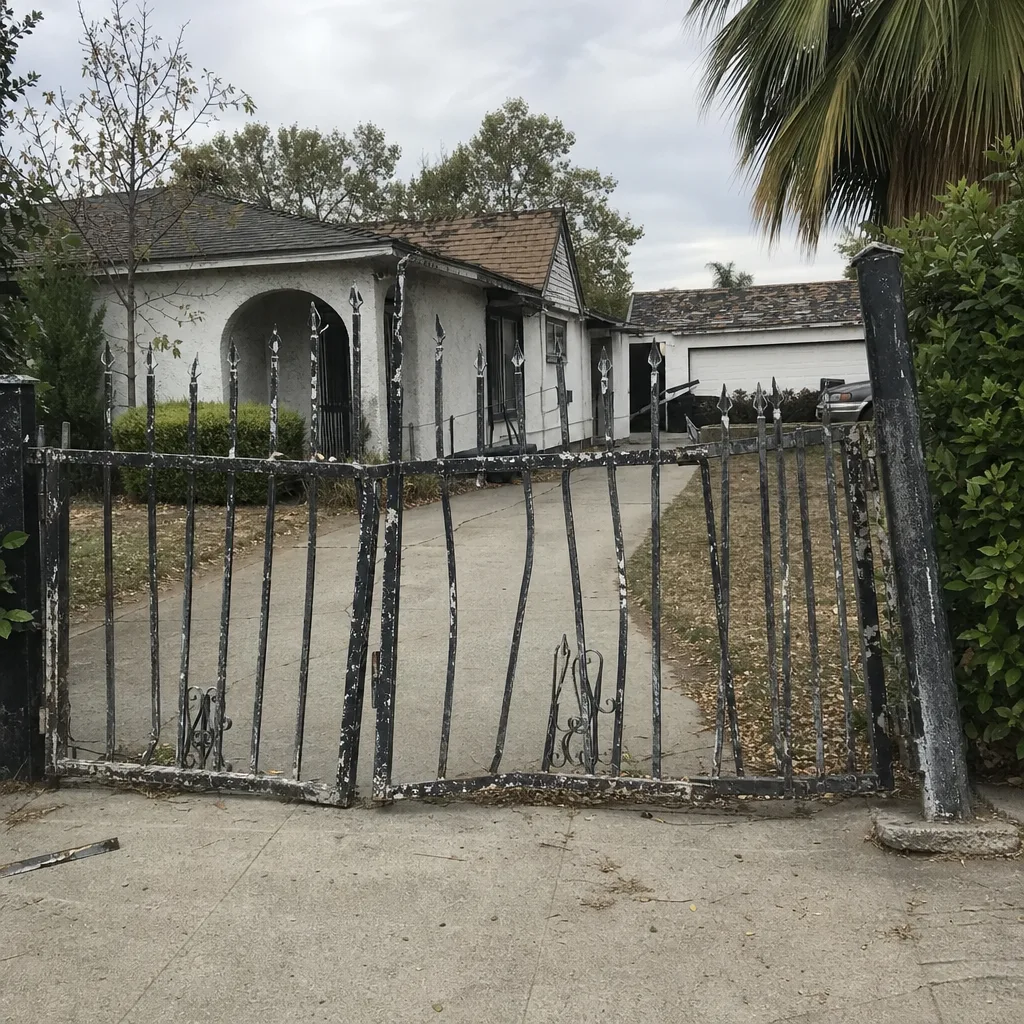 Before
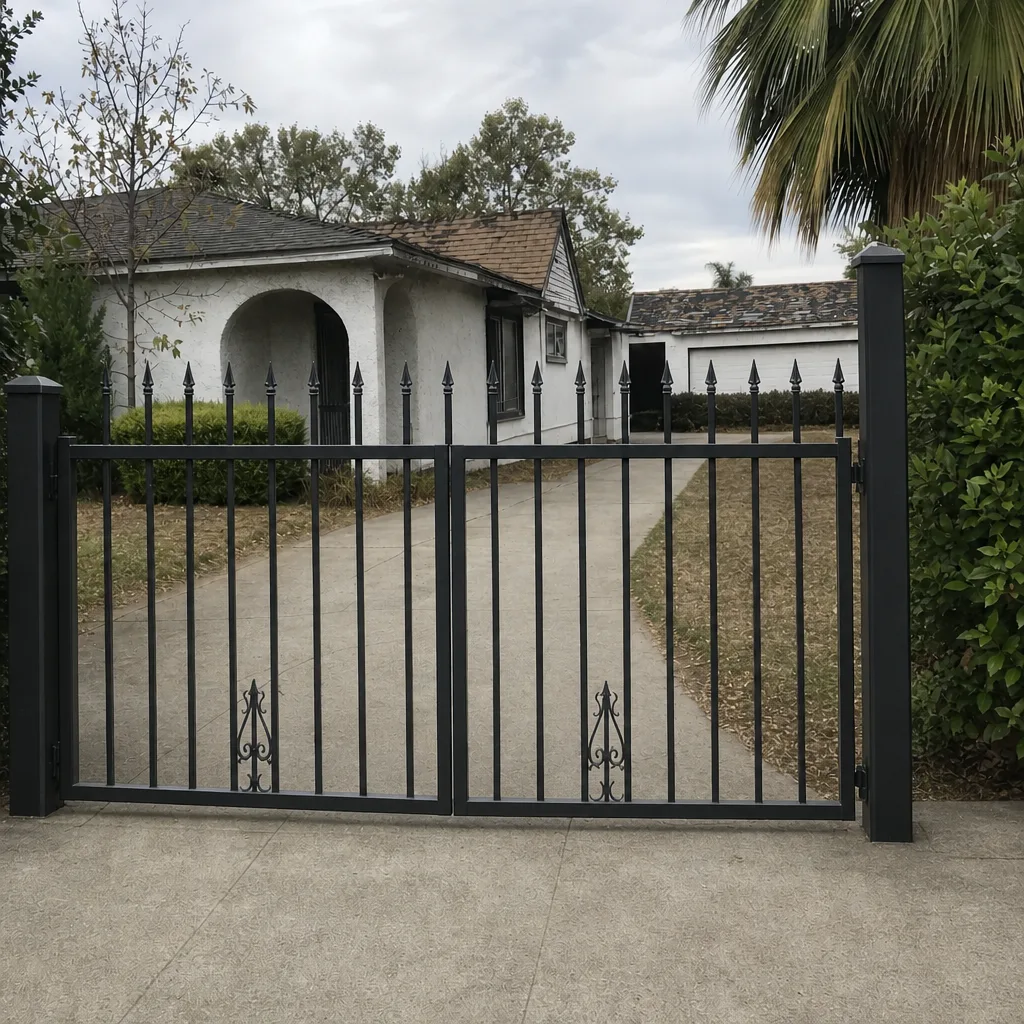 After
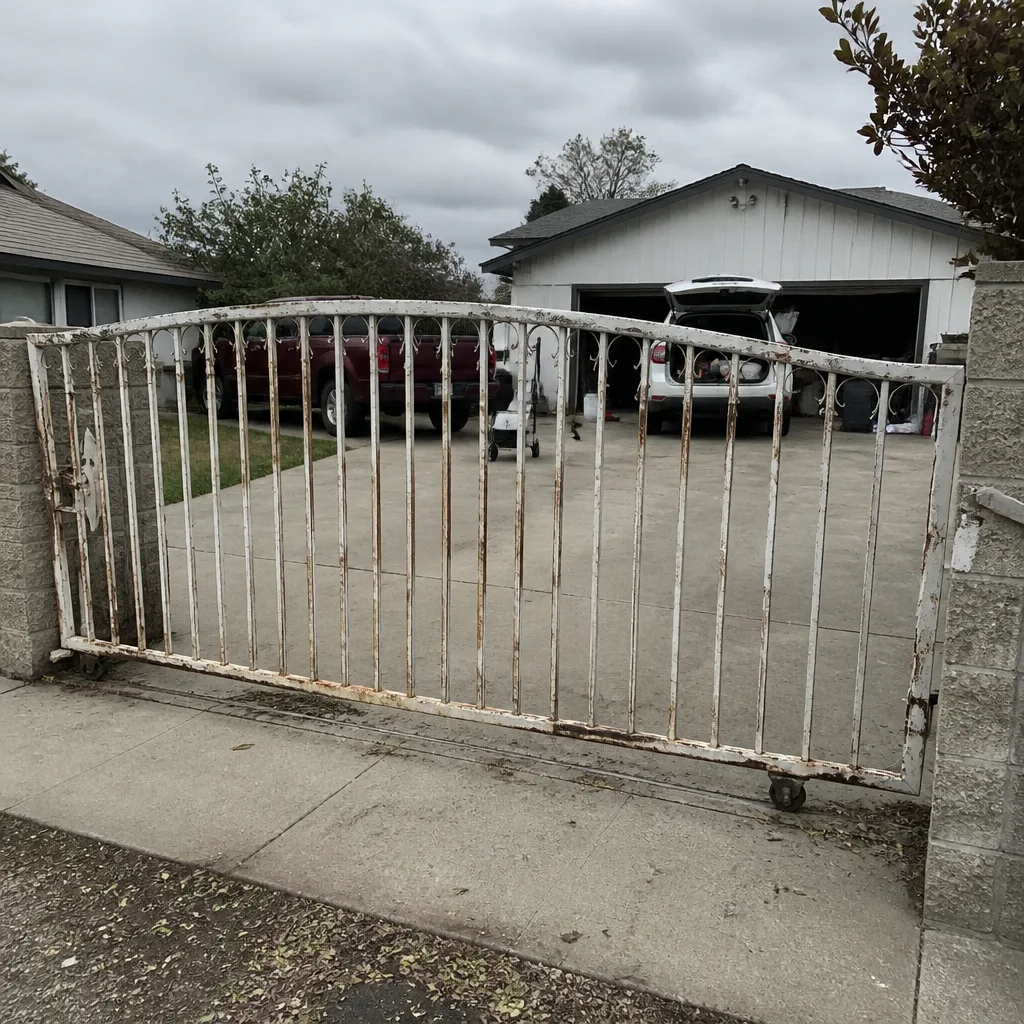 Before
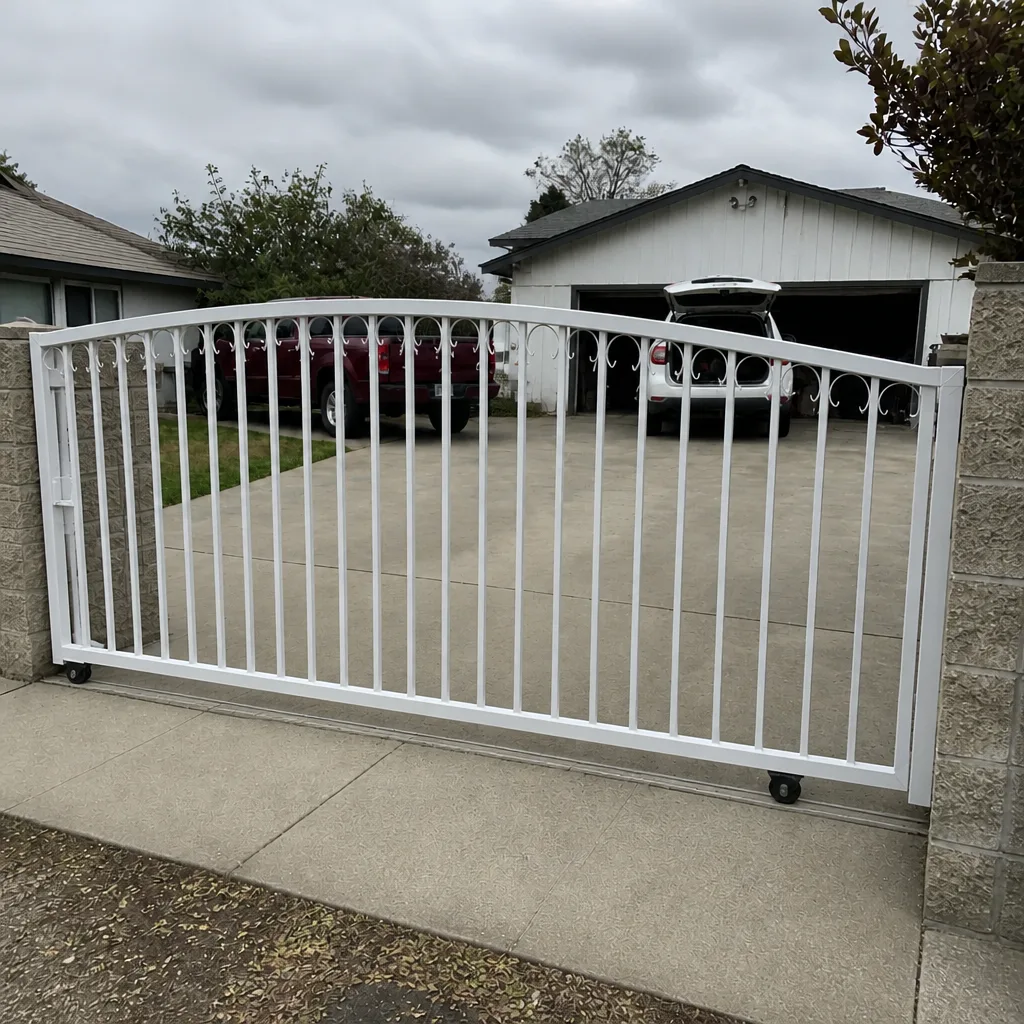 After
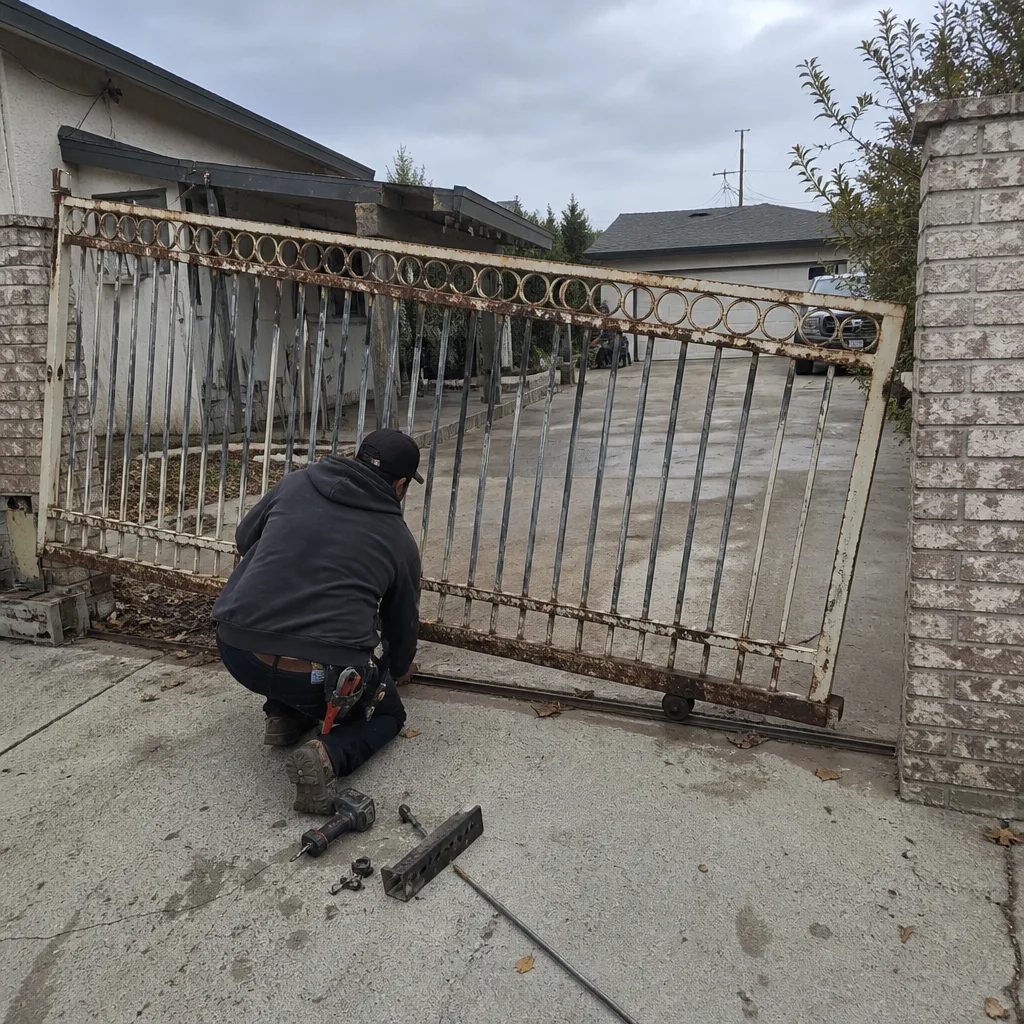 Before
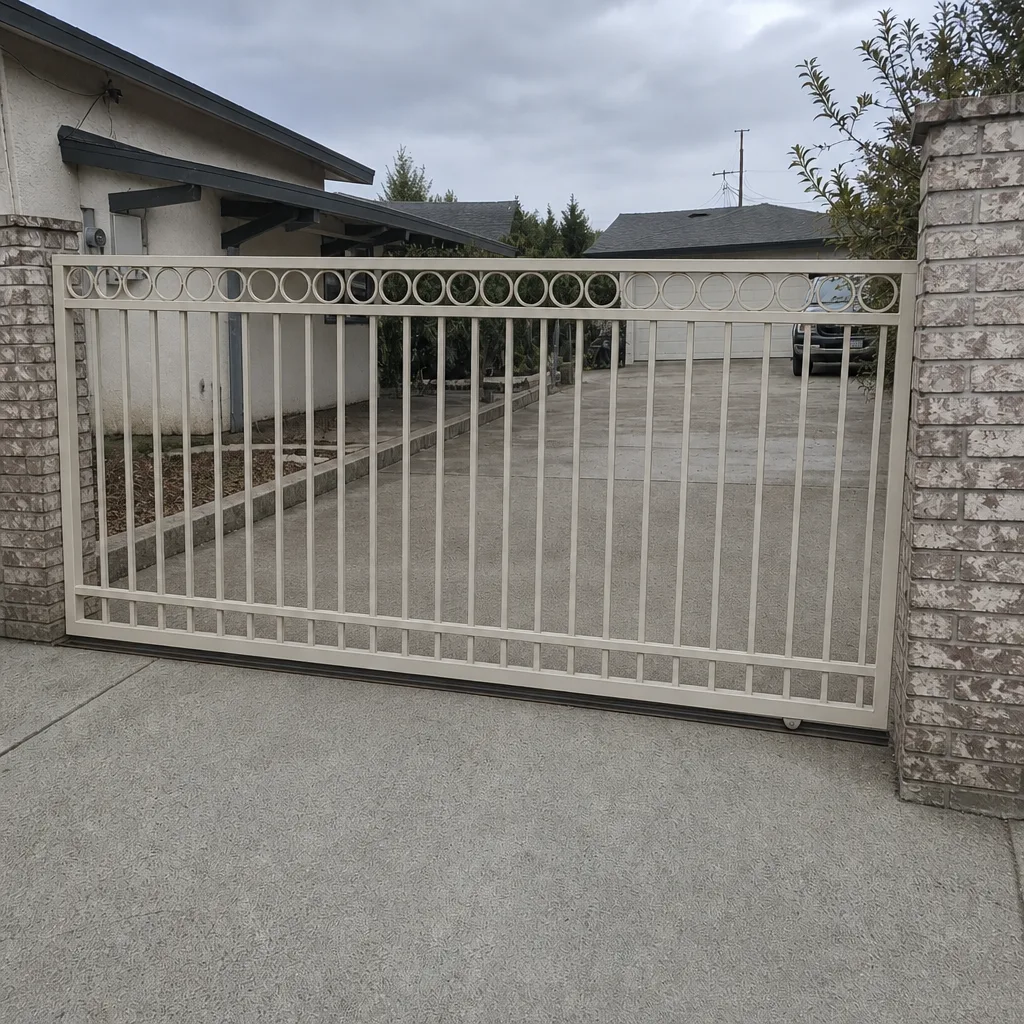 After
When to Call a Professional
Call for any electric or automated fault: intermittent behavior, thermal shutdown, a sensor that false-trips, or a board that’s showing its age. Call when travel limits won’t hold through a temperature swing, or when the gate binds or strains at the end of travel. Call for post movement, hinge repair and any wiring or conduit work, since those involve live circuits or structural stability. And call at the start of a season if you simply want the system checked before it matters. Gate Repair Visalia offers free estimates in Visalia so you know what you’re dealing with before work begins. We answer 24/7, with fast dispatch from 7am to 7pm, Sunday through Friday. Our technicians have up to 14 years of experience with both residential and commercial gate systems.
Frequently Asked Questions
Clearing and checking the operator enclosure before summer heat arrives, because thermal shutdown and capacitor failure are the most common summer operator problems here. The second most important is protecting the enclosure from tule fog condensation through the winter months, since it’s the leading cause of intermittent electrical faults we see in spring. For an exact quote on a seasonal visit, call (844) 702-1433. Estimates are free.
Tule fog deposits condensation inside electrical enclosures and saturates wood and iron for weeks at a time. That corrodes control board terminals, swells and then shrinks wood panels, and rusts iron hardware. The result often appears as a spring failure that traces back to moisture that arrived in January.
Often, yes. Metal and wood panels change dimension with temperature, so a gate set up in cool weather can bind in summer heat or stop latching fully in winter. A technician re-sets limits safely, and should always re-set them after any hinge or post repair. Call (844) 702-1433 for a seasonal adjustment.
Most likely thermal shutdown: the operator’s board senses high internal temperature and protects itself by stopping the unit. The usual causes are a clogged enclosure vent, dust on the board, or sun exposure on the housing. A pre-summer operator check addresses all three before the worst heat arrives.
Not always. Seasonal temperature change can make a perfectly healthy operator reverse because its sensitivity setting no longer matches the conditions. But if the gate fails to reverse when it actually meets an obstruction, that’s a safety fault and needs prompt attention. Call (844) 702-1433 to have it diagnosed.
Yes. We work on whatever gate system you already own rather than pushing one brand or proprietary parts. We’re experienced with LiftMaster, FAAC, BFT, Linear, Viking, Ghost Controls, DoorKing, Elite and Mighty Mule systems, and the seasonal care logic applies the same to each. Call (844) 702-1433 with your brand and model.
It prevents a meaningful share of them. Most summer operator failures and spring electrical faults we repair in Visalia had warning signs in the preceding season. A pre-summer board check, a fog-season seal inspection and a spring hardware inspection catch the majority of them early.
The Bottom Line
Gate care in Visalia follows heat stress season, tule fog season and two short transitions, not a national four-season template. Clean and check your operator before summer heat, protect the enclosure and wood through fog season, run the post-harvest dust cleaning after fields are worked, and inspect hinges, posts and wiring each spring. Adjust travel limits and sensitivity as panels expand and contract. Much of this you can do yourself; the electrical work belongs with an electric gate technician. Get the seasonal rhythm right and you spend far less on repairs than the homeowner who only calls when the gate stops.
If you want a specialist to look at your gate this season, call (844) 702-1433 for a free estimate. We answer 24/7, with fast dispatch from 7am to 7pm, Sunday through Friday. One call covers repair and installation, so you’re not sourcing a second contractor. Start with Gate Repair Visalia and take the guesswork out of your gate.
Written by the team at Gate Repair Visalia.