
Last updated November 14, 2026
 Wrought iron
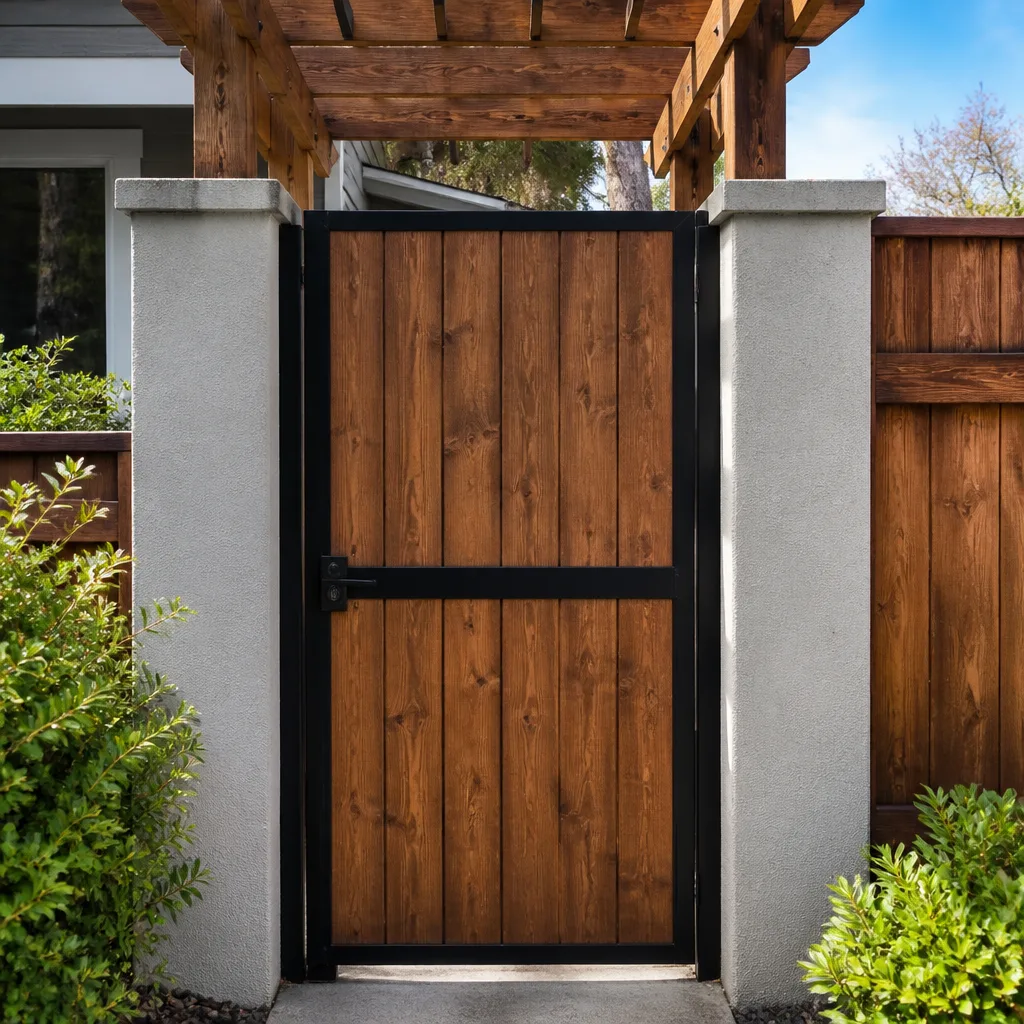 Wood & steel frame
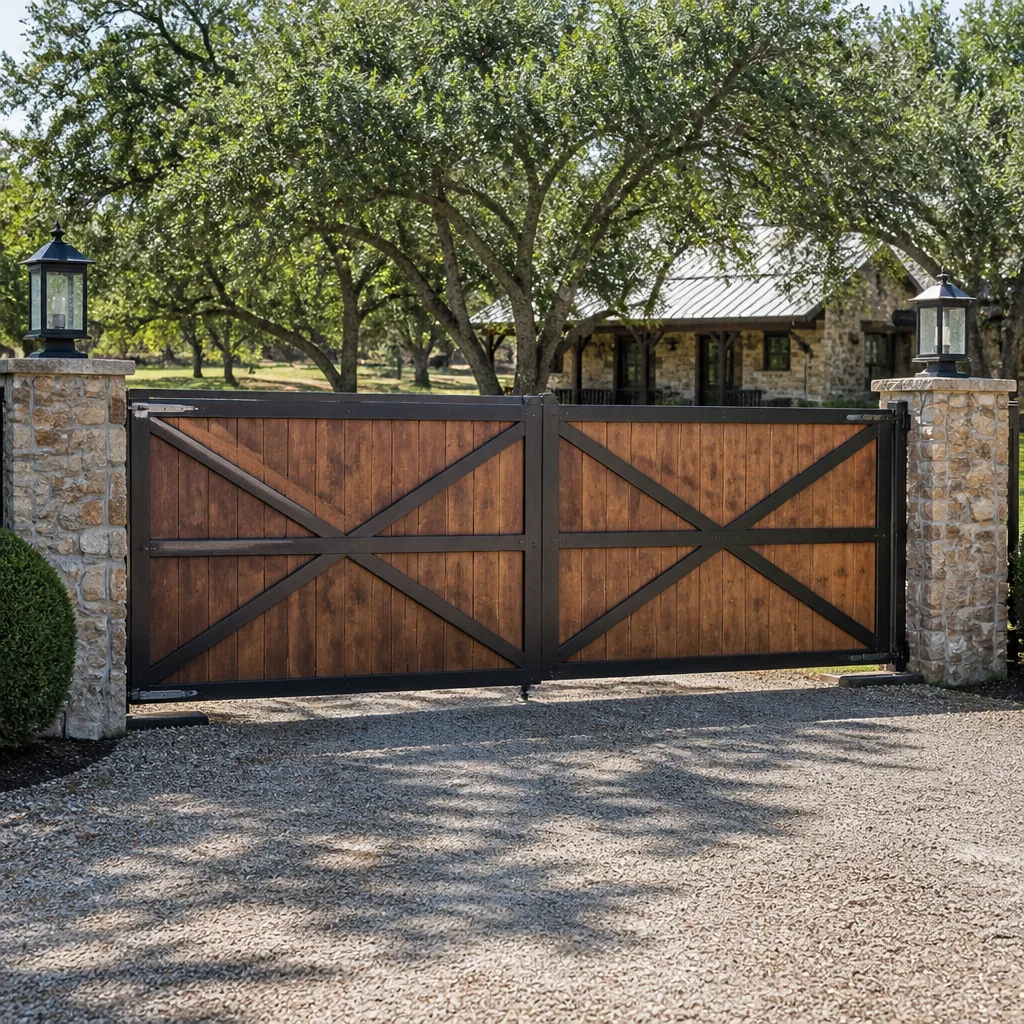 Farm & ranch
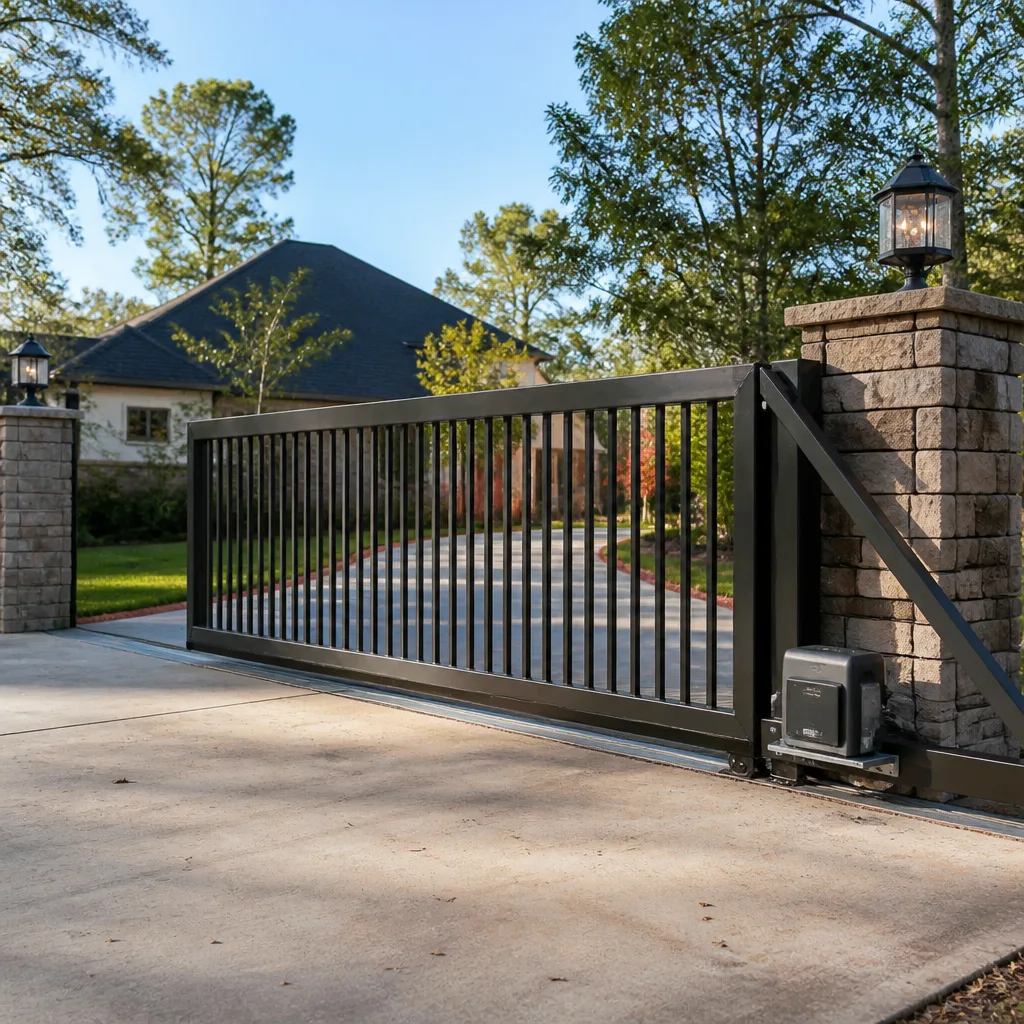 Sliding driveway gates
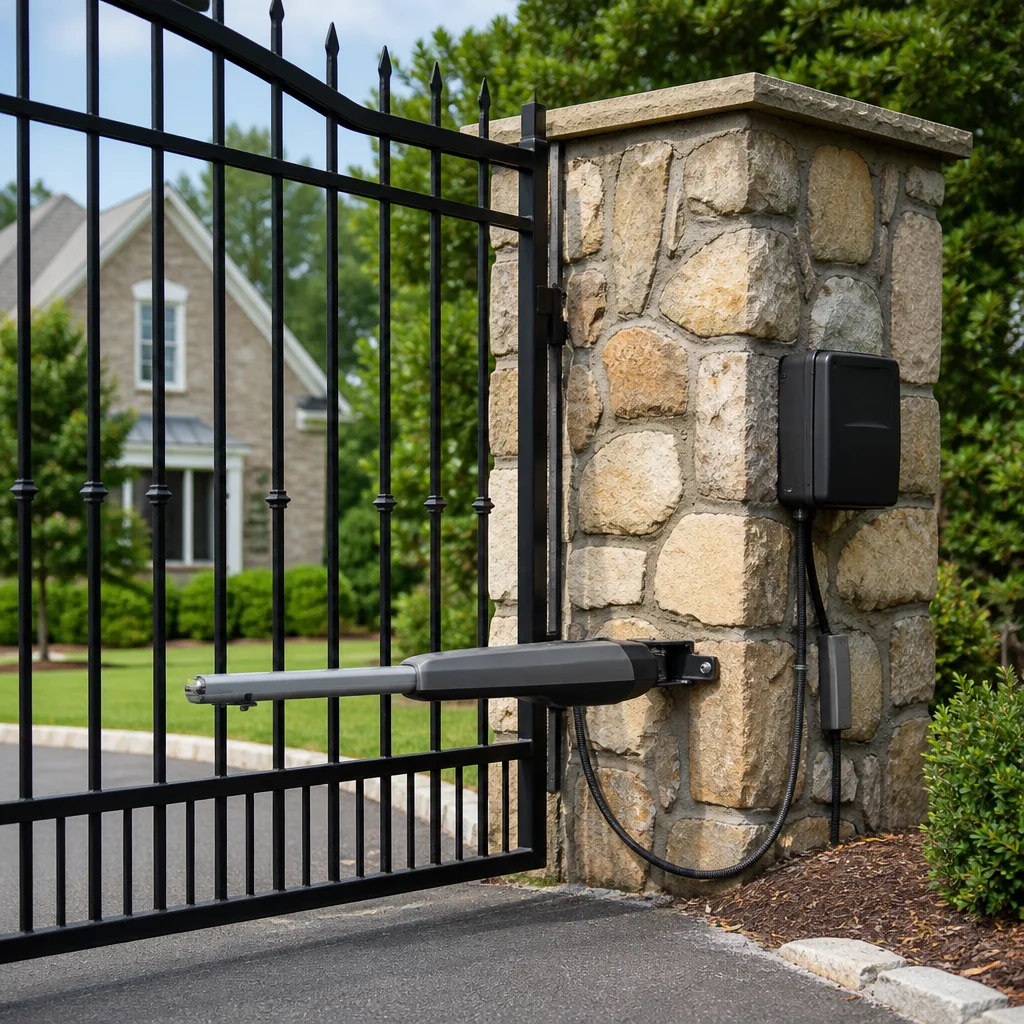 LiftMaster operators
Free on-site gate assessment - hinges, posts, and your LiftMaster or Nice gate operator checked before anything is quoted
The assessment is free and the quote is the invoice.
Get your free estimateDIY vs Professional Gate Repair: The Visalia Homeowner’s Decision Guide
Most gate repair advice treats the DIY decision as a question of confidence. If you feel handy, give it a shot; if not, call someone. That framing misses the real line, which has nothing to do with how comfortable you are with a screwdriver and everything to do with what the gate is. A manual wrought-iron driveway gate and a LiftMaster operator with safety sensors are two different animals, governed by different rules, and one of them can hurt someone if it’s adjusted wrong. In Visalia, where automated gates are common on residential driveways and commercial lots alike, we’ve watched plenty of homeowners start a small repair and end up with a larger one. This guide draws the line clearly: what’s genuinely safe to do yourself, what isn’t, and where the law and the warranty sit on the question.
Quick Answer
Replacing a remote battery, clearing debris from a track, or tightening a visibly loose hinge is reasonable DIY work for most Visalia homeowners. Anything involving the gate operator’s force settings, safety sensors, control board, or 120-volt wiring is not: those adjustments carry injury liability, can void your manufacturer warranty, and in California require a licensed contractor. When in doubt, a free estimate costs you nothing and tells you which category your repair falls into.
Styles & brands we work with
- Wrought iron
- Wood & steel frame
- Farm & ranch
- Sliding driveway gates
- LiftMaster operators
Table of Contents
- Where the DIY Line Actually Falls
- Gate Repairs That Are Genuinely Safe to Do Yourself
- Gate Repairs That Require a Professional
- The California Legal Dimension: Licensing and Liability
- How DIY Operator Adjustments Void Manufacturer Warranties
- The Cost-Benefit Reality Check
- Tools and Knowledge Prerequisites
- A Step-by-Step Decision Framework
Where the DIY Line Actually Falls
The line isn’t between “easy” and “hard.” It’s between work that leaves the gate in a known-safe state and work that changes how the gate behaves around a person, a vehicle, or a child. That distinction matters more than difficulty because the failure modes are different. A hinge that you tighten imperfectly will sag again and you’ll notice. A force setting you raise imperfectly will let the gate close on a person with more pressure than it should, and you may never notice until it matters.
We think about gate repairs in three tiers, and it’s a useful way for any Visalia homeowner to sort a problem before reaching for a wrench:
- Accessory and cosmetic work – remotes, keypads, batteries, latches, paint, cleaning, debris removal. Low risk, high DIY suitability.
- Mechanical work on the gate leaf itself – hinges, rollers, track alignment, post stability. Mixed; some of it is fine, some of it involves heavy panels that can crush a hand or a foot if they shift.
- Operator, electrical, and safety-system work – motors, control boards, loop detectors, safety edges, force and reversal settings, 120-volt power. Professional territory, every time.
Tier three is where the thesis of this guide lives. It’s also where most of the real cost and most of the real risk sit. The gate trade is specialized enough that even experienced general handymen often won’t touch an operator board. That reluctance is a signal worth listening to.
Gate Repairs That Are Genuinely Safe to Do Yourself
There’s a real list here, and it’s longer than some gate companies would like you to believe. If the work doesn’t touch the operator, doesn’t require disconnecting power, and doesn’t involve a heavy panel moving under spring or motor tension, most Visalia homeowners can handle it with basic tools and a little patience.
What falls into the safe category:
- Remote and keypad batteries. Swap them, re-pair the remote to the operator following the manual, done. If the remote still won’t pair, that’s a sign of a receiver or board issue and time to call.
- Track and roller cleaning. Debris, dirt, and leaf litter in a slide gate track cause stalling and strain on the motor. Clearing it is simple maintenance and it genuinely extends operator life.
- Visible loose hardware. Tightening a latch strike, a hinge bolt, or a bracket that’s clearly working loose. Stop if the fastener won’t take torque – stripped threads mean the surrounding metal is failing, and that’s a structural question.
- Cosmetic upkeep. Paint, rust treatment on a steel gate, wood sealing on a wood gate. Visalia’s hot, dry summers are hard on finishes, and keeping up with them prevents bigger problems later.
- Visual inspections. Walking the gate line, looking for sag, listening for new noises, checking that the gate closes flush. Inspecting is always safe; it’s diagnosing and repairing that carry risk.
One caveat that catches people: a gate that “just needs a hinge tightened” can be a gate whose post is pulling out of the ground. If the post moves when you push on the gate, stop. That’s a footing problem, and repacking or resetting a gate post is a job that needs measuring, digging, and concrete – not a Saturday project with a level and a bag of quikrete.
Gate Repairs That Require a Professional
This is the list that matters. Every item below involves either a safety system, a live electrical component, or a structural load that can seriously injure someone if it fails. None of them are worth the DIY savings.
- Safety sensor and photo-eye adjustments. If the gate won’t reverse when something crosses the beam, or reverses at random, the sensor is either misaligned, dirty, or failing. Properly diagnosing and re-aiming it requires understanding the operator’s logic, not just pointing the lens.
- Force and reversal settings. This is the single most important setting on any automated gate. It determines how hard the gate pushes before reversing. Improperly set, it can allow the gate to crush a hand, a pet, or a child. Only a technician with the right tools and the brand-specific knowledge should touch it.
- Control board and receiver work. Boards on LiftMaster, FAAC, BFT, and Linear operators fail in specific, known ways. Diagnosing which component failed requires knowing the brand. Replacing a board incorrectly can cascade into a motor failure.
- Loop detectors and vehicle sensors. These are buried in the driveway and wired back to the operator. Diagnostic work involves the wiring, the loop itself, and the operator’s sensitivity settings.
- Motor and gearbox issues. Noises, stalling, or a gate that won’t move at all point to the motor, gearbox, or limit switches. All require disassembly and correct re-timing.
- Any 120-volt electrical work. Power runs, conduit, disconnect switches – the electric side of an automated gate is real electrical work. We don’t recommend homeowners go near it, and we also don’t recommend generalists who aren’t gate specialists.
- Heavy panel and slide-gate work. A slide gate that has come off its track, or a swing gate leaf that’s dropped, involves hundreds of pounds of steel and gravity. The risk of pinning a hand or foot is genuine.
For electric and automated systems, this is exactly the territory covered by electric gate repair. In our experience, most of what looks like “the gate is broken” ends up being a sensor, a loop, or a board – not the motor. Diagnosing which one accurately the first time is most of the work.
The California Legal Dimension: Licensing and Liability
Here’s where the DIY conversation gets serious in a way it doesn’t in most states. California’s contractor licensing law draws a line between what a homeowner may legally do on their own property and what constitutes contracting work that requires a state license. The general idea is straightforward: a homeowner can perform work on their own residence, but once work is being done for compensation, or crosses into regulated trades like electrical, the license requirement kicks in.
For gate work specifically, that boundary matters at two points:
- The electrical side. Running new power to an operator, replacing a disconnect, or altering the electrical circuit is licensed electrical work in California. This isn’t a gray area. If your repair requires opening the electrical panel or pulling new wire, it’s beyond DIY scope and beyond general handyman scope.
- The “construction project” question. Replacing a gate post, re-pouring a footing, or rebuilding a section of gate structure can cross the threshold where the work is regulated construction. If you’re hiring someone to do it, that someone should be able to show a valid state contractor license. Ask, and verify.
The liability angle is separate from the licensing angle and arguably more important. Automated gates are classified as a safety hazard by design – the operator exists to move heavy steel, and the safety systems exist to keep that steel from hurting someone. Improperly set obstruction reversals on automated gates have led to injury claims where the homeowner bore liability because the adjustment wasn’t done to the applicable safety standard. In plain terms: if you adjust your own safety system and someone gets hurt, “I didn’t know” is not a defense.
We’re not lawyers and this isn’t legal advice. But we’ve seen enough Visalia gate situations to know the licensing and liability questions are the ones homeowners ask last and should ask first. If you’re unsure whether your repair crosses the line, a phone call to your city’s building department or a free estimate from a gate specialist will answer it quickly.
How DIY Operator Adjustments Void Manufacturer Warranties
Gate operator warranties vary brand to brand, but they share a common thread: most of them exclude damage caused by unauthorized adjustments, unauthorized repairs, or work done by anyone other than an authorized technician. Raise your force setting because the gate is stalling, and if the motor burns out three months later, the manufacturer may reasonably decline the claim. The adjustment is right there in the service log, in the form of a setting the factory didn’t ship.
Some brands are stricter than others in their warranty language. LiftMaster and Linear, both common on residential driveways, tend to be explicit about authorized service requirements in their operator documentation. FAAC and BFT, which show up more on commercial and heavier-duty residential systems, are often equally strict and additionally require brand-specific configuration for their control boards. Reading the warranty page before you touch the operator is worth ten minutes of your time.
There’s a subtler version of the same problem: even a DIY repair that technically works can void the warranty on a related component. Reset the board incorrectly and later lose the receiver, and the receiver claim may get denied because the board was modified. Manufacturer warranty review is often by component, and a single unauthorized change can spill over into areas you didn’t intend to affect.
The clean answer: touch what’s outside the operator housing, leave the inside to someone who knows the brand. If you’re going to be working on or around a LiftMaster, FAAC, BFT, or Linear operator, having a technician familiar with the brand involved protects your warranty as much as it protects your gate.
The Cost-Benefit Reality Check
The DIY pitch sounds simple: save the cost of the service call. In practice, the math is more interesting, because the DIY savings only hold if the DIY repair actually resolves the problem. When it doesn’t, you’ve paid for the parts, spent the time, and then called in a technician who has to diagnose both the original fault and the secondary fault you’ve introduced. Two problems cost more than one.
Think of it as two columns.
The savings column: a remote battery, a track cleaning, a hinge tightening, a paint touch-up. These are real, they’re repeatable, and doing them yourself genuinely saves the cost of a visit. Small amounts, but worth having.
The cost column: a misdiagnosed operator fault that requires replacing a component that wasn’t broken, a safety sensor re-aimed wrong that keeps tripping and requires a return visit, a control board touched with a screwdriver that wasn’t ESD-safe. Each of these is more expensive than the original problem would have been to diagnose.
The diagnostic cost when a DIY attempt creates a secondary fault is the part most homeowners don’t budget for. A technician showing up to one problem has a straightforward job. A technician showing up to two problems – “the gate was doing X, I tried Y, now it does Z” – has to untangle a chain of changes with no clean starting point. That takes longer, and it occasionally means parts get replaced because the original state can’t be restored. In our experience, the DIY attempts that fail are almost always in the operator and safety-system category, and they’re almost never the cheap category.
The genuinely honest answer: DIY saves real money on tier-one work, and it costs real money on tier-three work. If you’re unsure which tier your repair is in, the free estimate resolves that question for nothing. There’s no fee and no obligation, and the price for any repair is quoted and agreed before work starts, so there’s no invoice surprise either.
Tools and Knowledge Prerequisites
Vague standards like “handyman comfort” are useless. Here’s what a Visalia homeowner actually needs to competently handle the repairs that fall within DIY scope.
Tools:
- A set of basic hand tools – screwdrivers, an adjustable wrench, a socket set in the sizes your gate uses.
- A small level for checking post and rail alignment.
- A stiff brush and a shop vacuum for track cleaning.
- Work gloves, safety glasses, and closed-toe shoes. Heavy gates are heavy, and the most common DIY injury is a hand caught between panel and post.
- A phone with the operator manual pulled up, or a printed copy. Remotes re-pair via a specific sequence, and the sequence is brand-specific.
Knowledge:
- You should be able to identify which brand and model your operator is. The nameplate is on the housing, and the manual for that specific model is what you should be reading.
- You should know the difference between “no power,” “power but no response,” and “responds but behaves wrong.” Each points to a different component.
- You should be able to safely disconnect power to the operator at the breaker if you’re working near it. If you don’t know which breaker, stop.
- You should be able to recognize a structural problem – gate post shifting, panel sagging, footing cracks – and stop work when you see one.
If a repair requires fire, welding, cutting a structural member, pouring concrete, or opening the operator housing, you’re outside DIY scope no matter how capable you are. That’s not a reflection on your skill; it’s a reflection on what the work is.
A Step-by-Step Decision Framework
Before you decide, walk through these questions in order. If you answer “no” to any of them, call.
- Does the repair involve opening the operator housing or touching the control board? If yes, professional. The board holds stored configuration and is ESD-sensitive.
- Does the repair involve any part of the safety system – photo-eyes, safety edges, loop detectors, force or reversal settings? If yes, professional. This is the load-bearing liability question.
- Does the repair require opening an electrical panel, running new wire, or working on the 120-volt circuit? If yes, professional. Licensed electrical work.
- Does the repair involve a heavy gate panel that would need to be lifted, removed, or held in place? If yes, professional. Crush and crush-pinning risk is real.
- Does the repair involve a gate post that moves when you push on it, or a footing that’s cracked? If yes, professional. Structural work.
- Does the repair require a part you’d have to source from the manufacturer or a specialty supplier? If yes, likely professional. Getting the wrong substitute part can damage the operator.
- Does the repair involve welding, cutting, grinding, or concrete? If yes, professional.
- If you’re not sure about any of the above, does a free estimate cost you anything? It doesn’t. Call.
The framework is designed so that anything ambiguous lands on the “call” side, and that’s intentional. The whole point of the DIY-vs-professional question on gates is that the safe answer and the cheap answer often diverge, and the safe answer wins. We’d rather talk to you on the phone and tell you it’s a five-minute fix you can do yourself than have you spend an afternoon on something that needs a technician. If you want a broader look at the repair side of the trade, our gate repair overview covers the ground.
Common Mistakes to Avoid
- Adjusting the force setting to “just make it close.” If your gate stalls on closing, the answer isn’t more force. Something is causing the stall – a track issue, a sensor problem, a failing hinge – and raising the force is masking the cause while removing the protection.
- Assuming a won’t-open gate means a dead motor. In our experience, most “dead motor” calls end up being a safety sensor, a loop detector, or a control board fault. Replacing the motor when the board is the problem is an expensive misdiagnosis.
- Re-aiming a safety sensor without checking the operator’s test procedure. Pointing the lens in roughly the right direction isn’t the same as having the gate pass its obstruction test. Both matter; only one keeps someone safe.
- Working on a Visalia gate in summer afternoon heat without shade. Heat exhaustion is a real concern on a steel gate in full sun. Early mornings are better for any outdoor work, and it’s also easier on the operator’s thermal limits while you’re testing.
- Ignoring a new noise. New grinding or clicking from an operator is usually an early warning of a limit switch, gearbox, or roller issue. Addressing it while it’s small is cheaper than after a failure that damages the motor.
- Hiring a general handyman for electric gate work. Gates are a specialized trade; the operator’s logic is brand-specific and the safety systems are regulated. A generalist without gate experience will often guess, and guessing on a control board is expensive.
- Reading the wrong manual. Gate operators look similar across models but behave differently. A remote pairing sequence for one LiftMaster model can be wrong for another. Match the nameplate.
See the difference
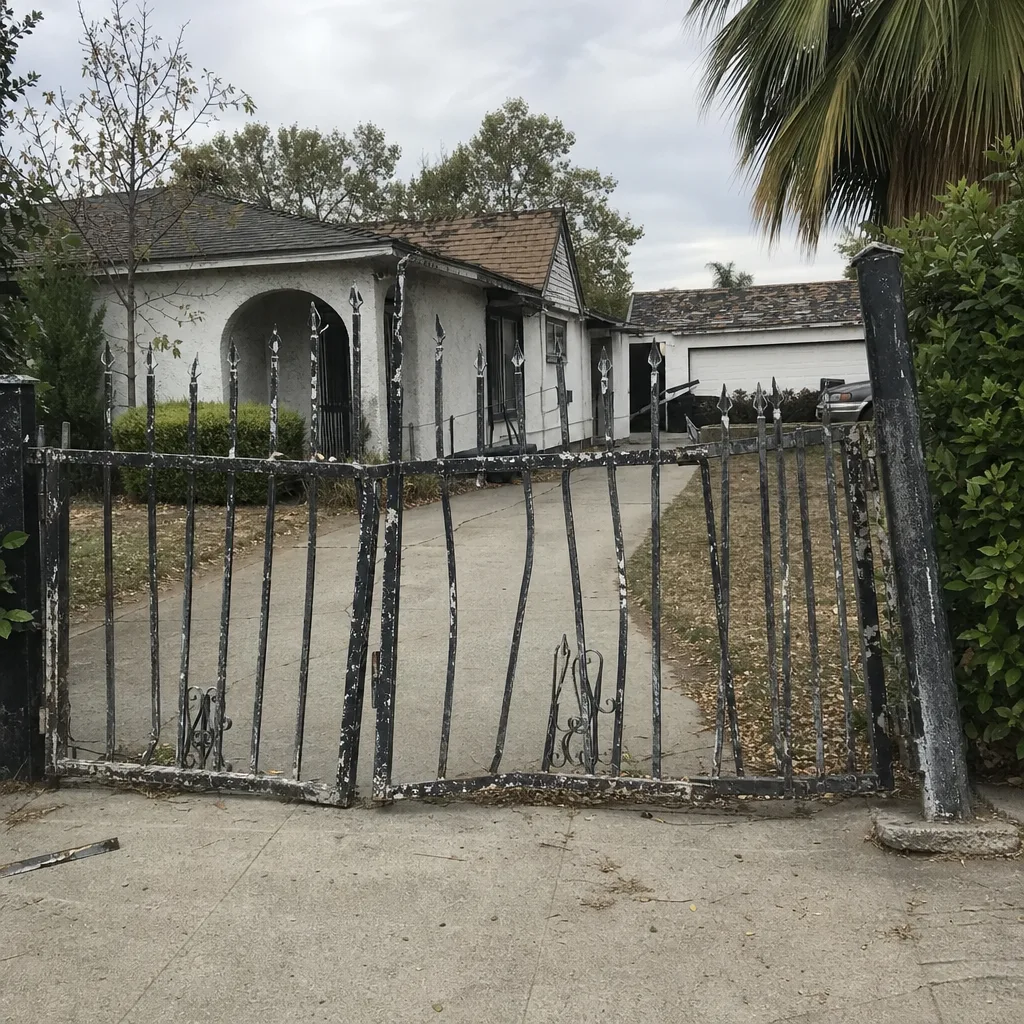 Before
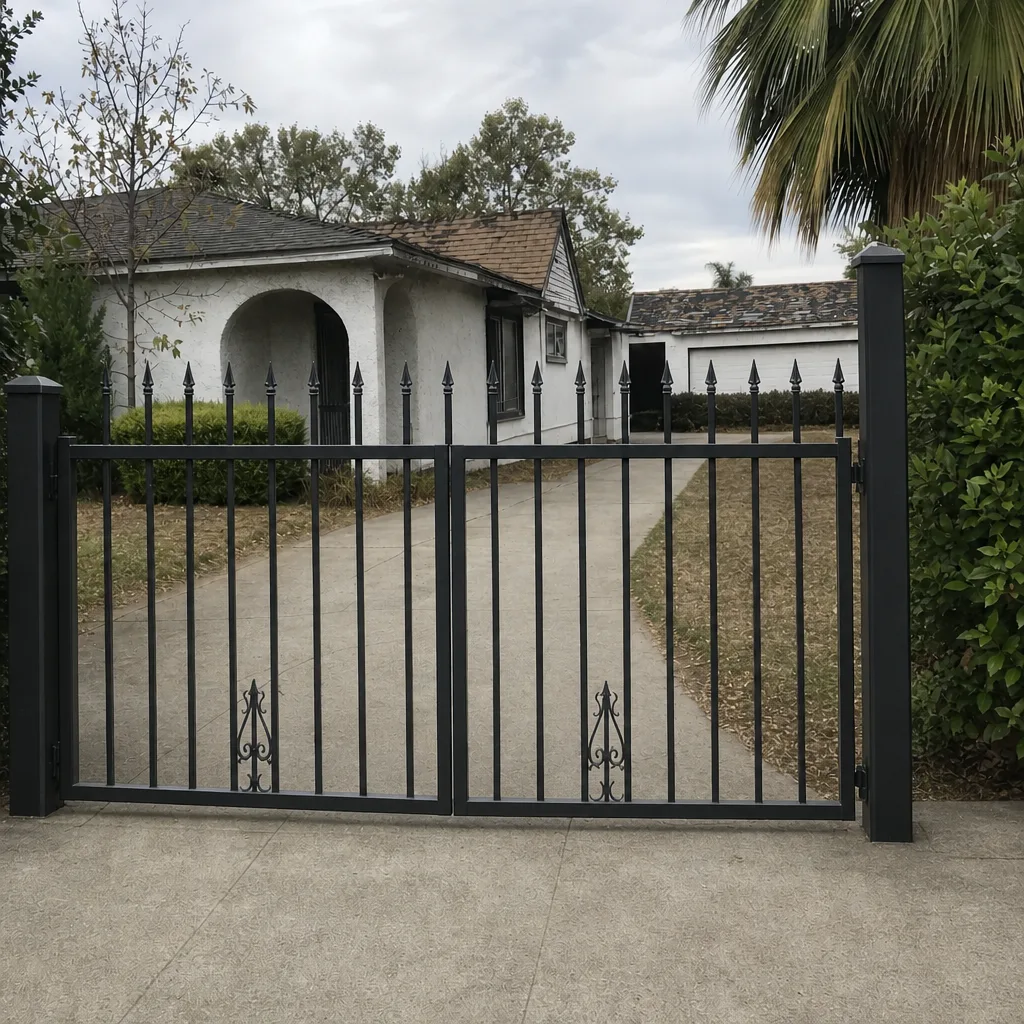 After
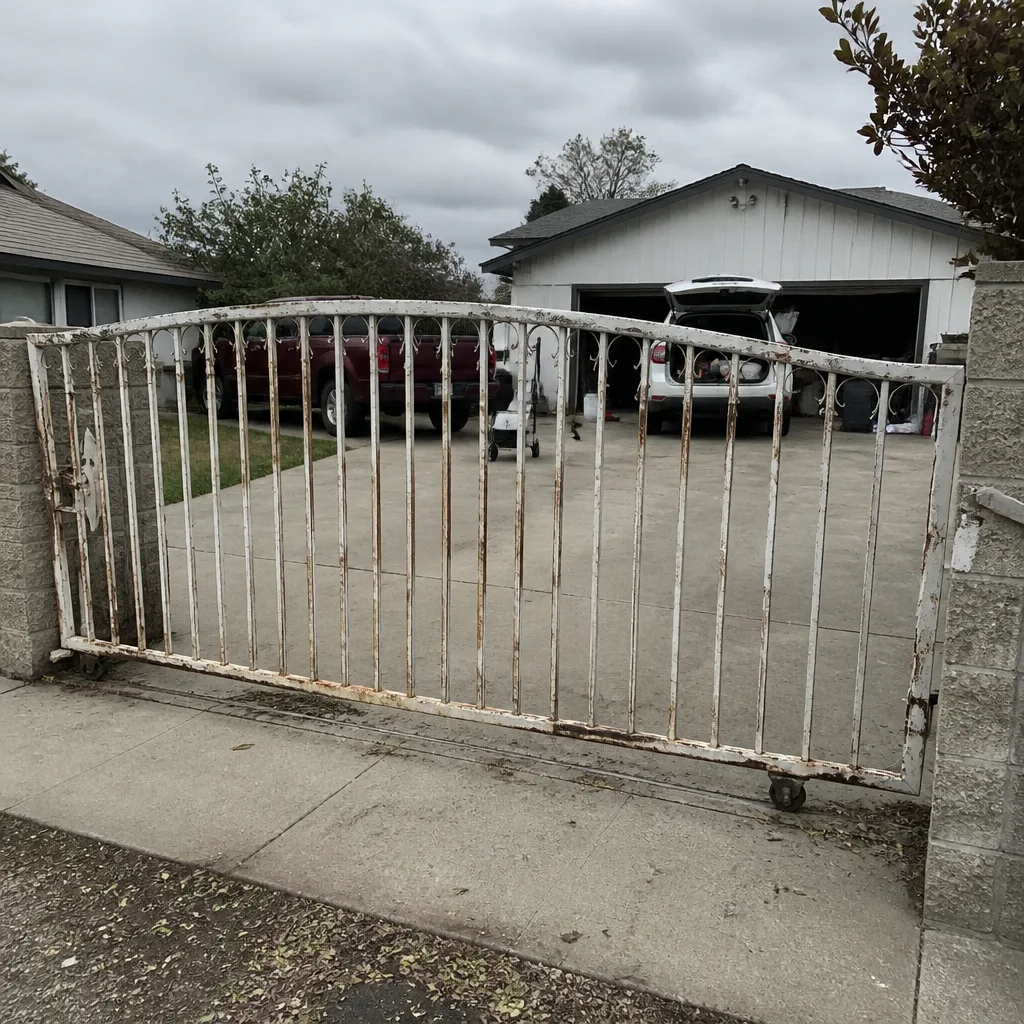 Before
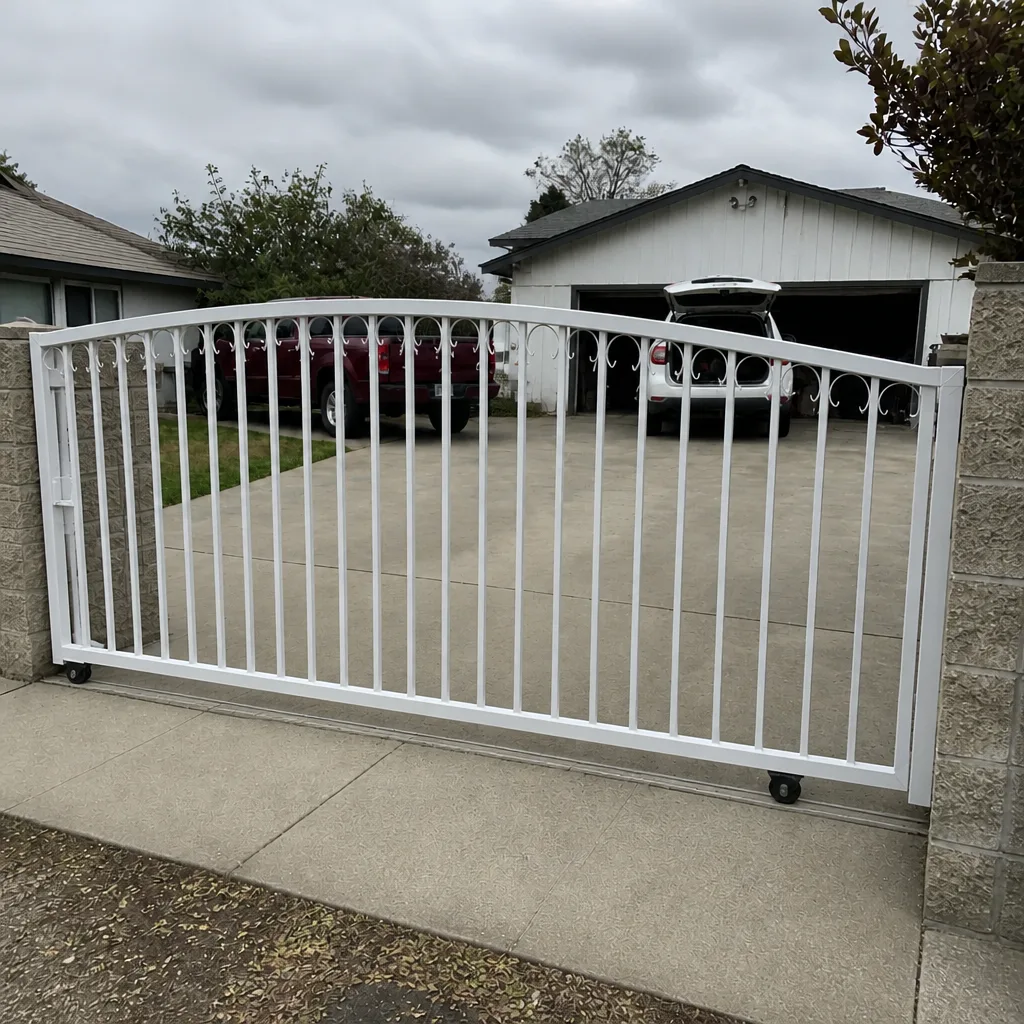 After
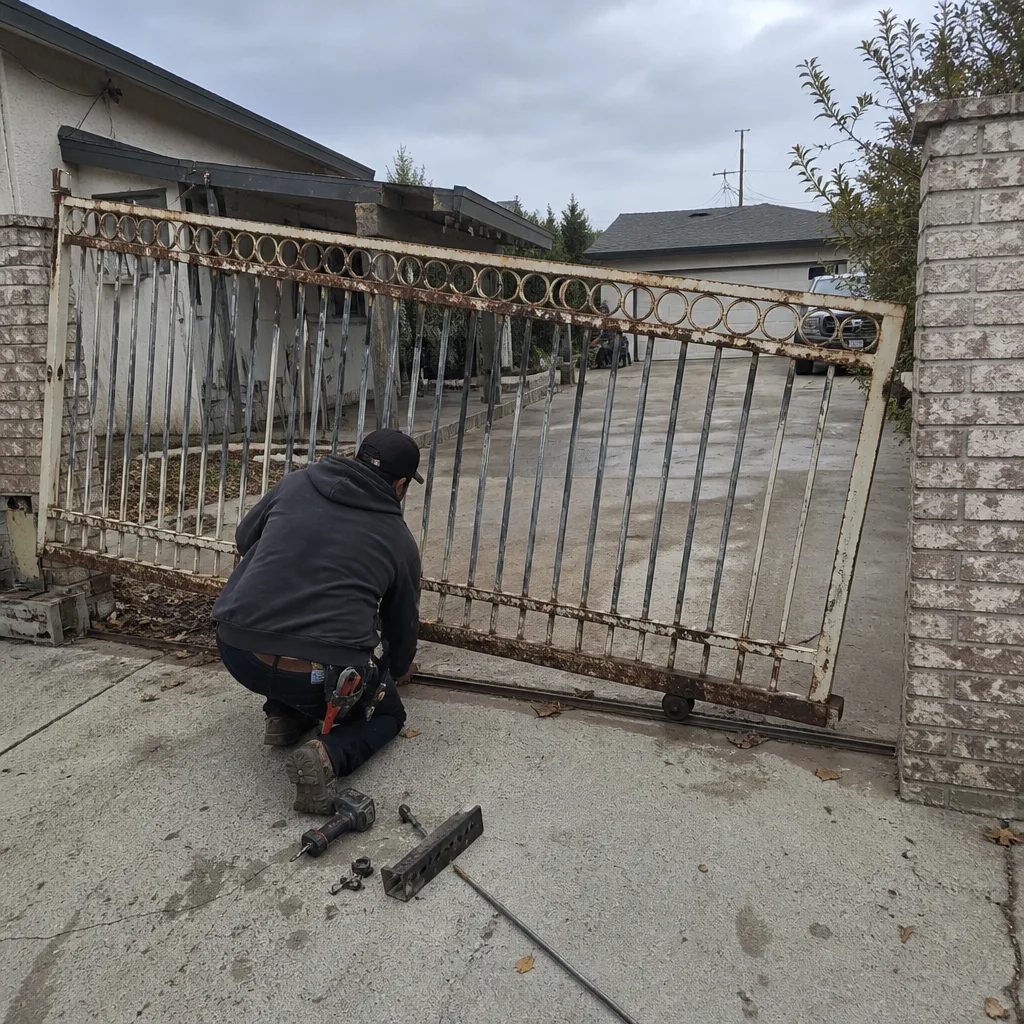 Before
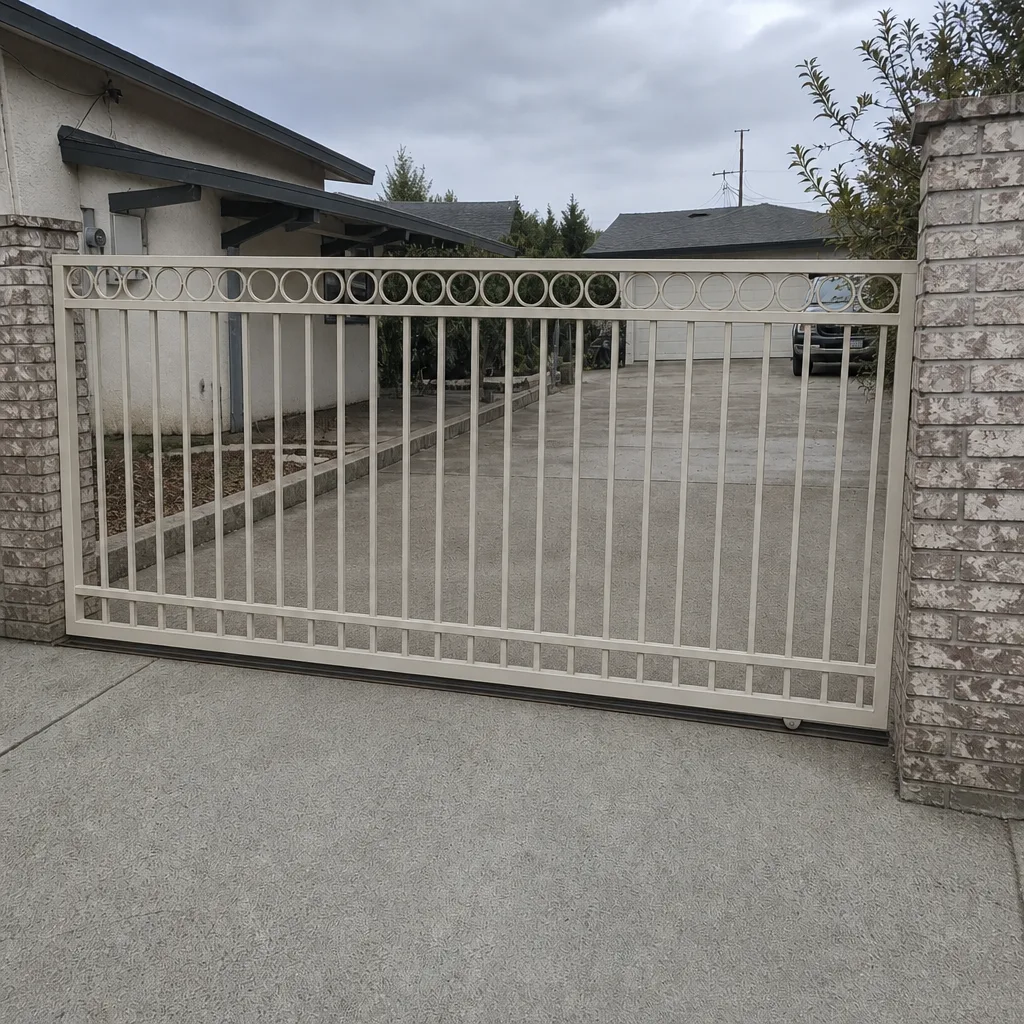 After
When to Call a Professional
Call when the gate won’t reverse on obstruction, when the safety sensor trips at random, when the operator is silent, when the control board shows fault lights, when a heavy panel has dropped or come off the track, when a post is moving, or when a repair in the operator area would require you to guess your way through. Also call when you’re planning an install or a major repair – that’s scheduled work, we measure and quote it in writing, and the price is agreed before anything is ordered. For a repair on an existing gate, we answer 24/7 and can dispatch fast from 7am to 7pm. Gate Repair Visalia offers free estimates in Visalia – call (844) 702-1433. We work on your gate brand, whatever it is, and we diagnose before we replace.
Frequently Asked Questions
You can safely handle the accessories and cosmetic work – remote batteries, track cleaning, visible hinge tightening, painting – but not the operator, safety system, or electrical components. Those involve injury liability, warranty implications, and in California, licensed contractor requirements. When you’re unsure which category a repair falls into, a free estimate will answer it in minutes.
A homeowner may generally work on their own residence, but work involving the electrical system, or work that becomes a regulated construction project, requires a licensed contractor. The liability angle is separate – if you adjust a safety system and someone gets hurt, “I didn’t know the standard” doesn’t protect you. Ask your city’s building department for the specifics on your project.
Often, yes. Most operator warranties – including LiftMaster, FAAC, BFT, and Linear – exclude damage from unauthorized adjustments or unauthorized repairs. Even a technically functional DIY change can compromise a related component claim later. Reading the warranty section of your operator manual before touching anything is the safest way to know where your brand draws the line.
Gate repair costs vary by the fault, the brand, and the parts involved – a sensor adjustment and a control board replacement don’t share a price. What’s consistent is how we price: an on-site estimate is free, the written quote sets the price, and that price is agreed before any work starts. Call (844) 702-1433 for an exact quote. Estimates are free, and there’s no fee for the visit.
No. A gate that fails to reverse on obstruction has a safety system fault, and this is exactly the repair that requires professional execution. The problem could be a misaligned sensor, a dirty photo-eye, a failing receiver, a loop detector issue, or a control board fault – each has a different fix. Improperly handled, you’re removing the system that protects people from the gate. Call for an estimate.
We answer 24/7, and we fast-dispatch from 7am to 7pm. A gate stuck open is a security issue and we treat it accordingly – call (844) 702-1433 and we’ll get you on the schedule or talk you through a safe temporary position while a technician is coordinated. A call outside dispatch hours is booked into the next opening, Sunday through Friday, 7am to 7pm.
In most cases, yes. We’re familiar with LiftMaster, FAAC, BFT, Linear, Viking, Ghost Controls, DoorKing, Elite, and Mighty Mule systems, and we work on existing equipment rather than pushing replacements. If you’re in Visalia and your gate is one of these, we arrive already knowing the quirks. If it’s another brand, tell us what it is and we’ll tell you honestly whether we can help.
The Bottom Line
The DIY decision for gate repair should be made by asking what the work touches, not by asking whether you feel capable. Accessories, cosmetic work, and simple hardware tightening are yours for the taking, and doing them yourself saves real money over time. Anything involving the operator, safety sensors, control boards, or 120-volt power belongs to a gate specialist, because the stakes there are injury, liability, and warranty – not just function. Visalia homeowners who sort their repair into the right tier before starting work come out ahead every time. If you want help sorting it, whether it’s a repair or a new install, our Visalia team is one call away. For an overview of everything we cover, start at Gate Repair Visalia.
Call (844) 702-1433 for a free estimate. We’ll diagnose before we recommend, and the written price is agreed before any work starts. If your gate is stuck, we answer 24/7 with fast dispatch from 7am to 7pm, Sunday through Friday.
Written by the team at Gate Repair Visalia.